Mobility, Evacuation, and Recon Items
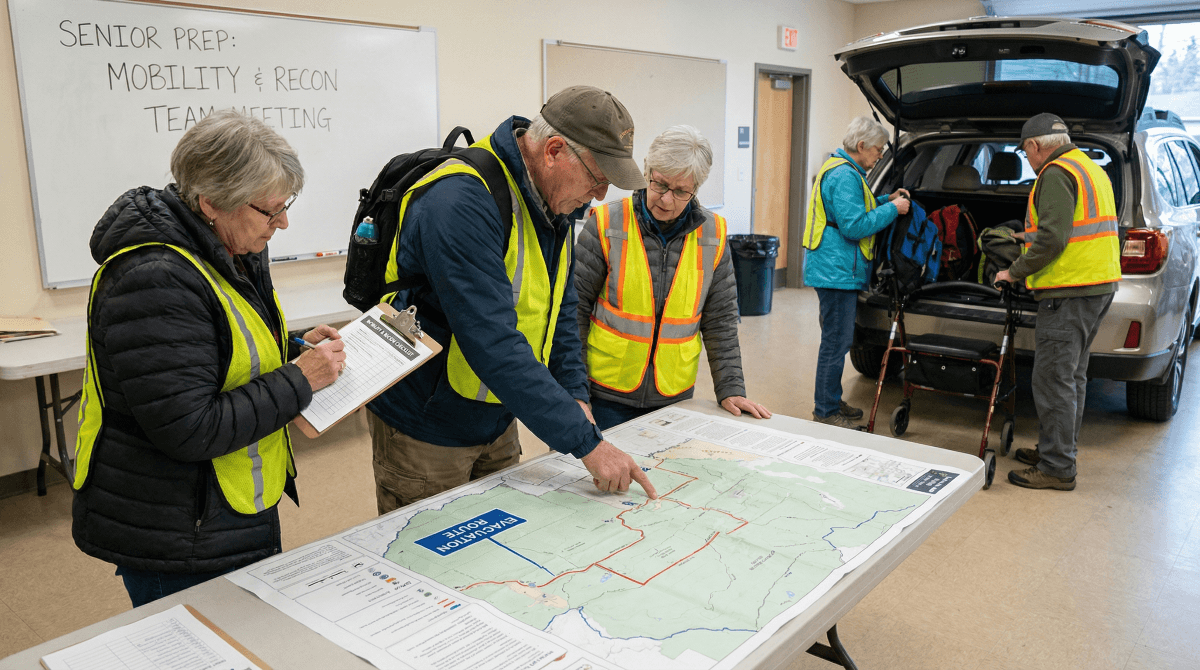
How are You Prepared for Mobility and Recon in Your Evacuation Plans?
Mobility gets taken for granted in most prepping plans. People stock supplies, build bunkers, and stash away gear as they’ll never need to move again. But the reality of a disaster is constant motion. This is the tenth and final section of Key Survival Gear Seniors Often Forget.
Mobility Tools That Make Movement Easier
Fires, floods, riots, disease, and weather all change your plans without asking. You might need to leave home fast. You might need to scout a new area. You might get separated from your group or need to reach a distant cache.
Section 10 is about staying mobile when things change fast: move with purpose, navigate without GPS, scout safely, and carry less weight while staying quiet and hard to spot.
Key Points
- Mobility is survival. If you can’t move under load, your supplies don’t matter.
- Go analog. Paper maps and a compass beat dead batteries.
- Signal and mark silently. Stay coordinated without drawing attention.
- Build caches. PVC tubes with desiccants keep backup gear dry.
- Use pack-lighteners. Carts, folding bikes, and sleds extend range.
- Stay unseen. Quiet footwear and red light reduce detection.
“Most survival isn’t a last stand. It’s getting out before the last stand happens.”View the full “Key Items Preppers Forget” series
Senior tip: test your real distance while carrying weight. Most people overestimate it.
Even if you plan to bug in, you’ll eventually need to go out—for water, food, recon, or rescue. And when that time comes, it won’t be the flashy gear or deep stockpiles that matter. It’ll be:
- what you can carry,
- how far you can go,
- and whether you can do it without being seen or heard.
Mobility is survival.
The ability to move quickly, quietly, and with purpose separates those who adapt from those who get stuck and overrun. But you can’t just assume you’ll figure it out on the fly.
You have to plan for it.
Related: 101 Survival Hacks in a Pinch
That means thinking of movement as a core part of your strategy, not an afterthought. Most preppers get the basics wrong. They forget how hard it is to move under load.
They assume GPS will work.
They don’t test their evacuation routes. They think one backpack is enough to get them where they need to go. It’s not. You need navigation tools:
- gear that reduces your burden,
- a strategy for accessing hidden supplies,
- and clothing that keeps you unnoticed.
Off-grid navigation starts with paper.
GPS is great until the grid fails, the battery dies, or you’re in an area with no signal. Paper maps don’t need power. They can’t crash. They show terrain, roads, rivers, elevation, and alternate paths.
But maps only work if you’ve studied them and marked them up.
Related: Sheltering In or Striking Out: Navigating the Bug-Out Dilemma
Keep both topographical and street-level maps of your region. Laminate them or store them in waterproof sleeves.
- Circle danger zones.
- Highlight water sources.
- Mark your
- cache locations,
- alternate shelters,
- and safe houses.
Paper doesn’t update itself, so do the work now!
A compass is the natural companion.
But don’t assume you know how to use one unless you’ve practiced.
- Bearings,
- declination,
- triangulation—these are skills, not guesses.
If your map says there’s a river three miles north, can you actually walk north?
Most people can’t without drifting. Compasses don’t lie. Humans do. And when the environment looks unfamiliar, or landmarks are destroyed, you’ll need direction more than ever.
Related: Smart Ways to Stay Safe in a SHTF Scenario
Recon Essentials for Safety and Strategy
Signal mirrors serve two roles: communication and survival.
During daylight, they can flash a signal up to ten miles away—toward rescue teams, aircraft, or a distant camp. But they’re also good for checking wounds, signaling your own team, or alerting someone without shouting.
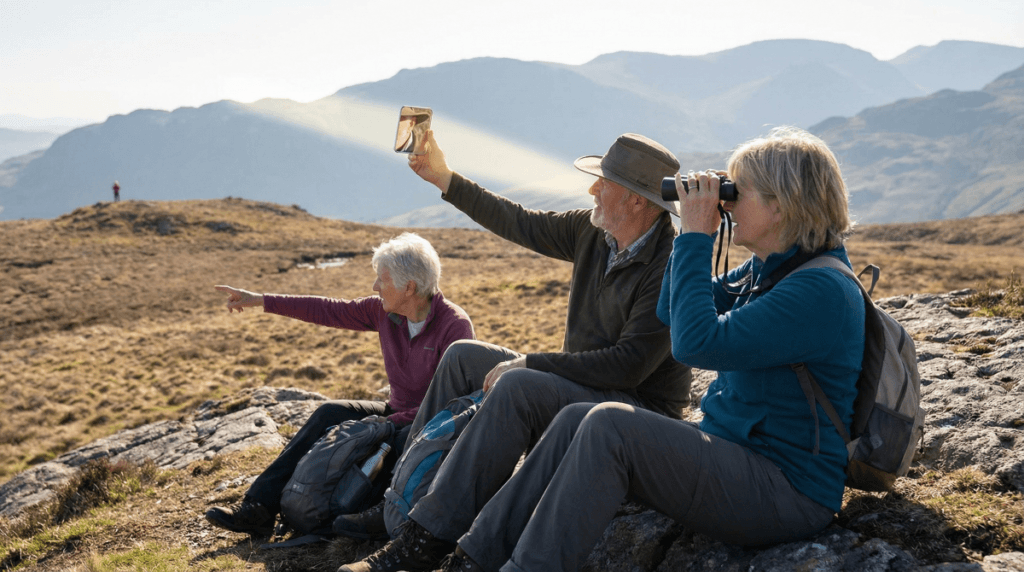
Signal mirrors:
- weigh nothing,
- don’t require power,
- and can hang from a lanyard or zipper.
Keep one with your navigation kit. Practice using it. You won’t hit a target by instinct the first time. It takes alignment and patience.
Markers are another small but powerful addition.
- Permanent markers,
- wax pencils,
- or grease pens can
- leave notes,
- mark trees,
- signal paths,
- or map danger zones.
If you’re in a group, symbols or color codes let you communicate silently across time and distance.
A red X might mean a trap ahead. A green arrow might show a safe path.
You can leave breadcrumbs for yourself or others. When memory fails, markings guide. Keep extras. They run out faster than you think.
Related: Smart Ways to Stay Safe in a SHTF Scenario
Evacuation Aids and Packing Smart
Caches are the safety nets of mobility.
- When your gear gets stolen,
- your shelter burns,
- or your load becomes too heavy, a buried supply can save your life.
But caches only work if they’re protected from the elements and easy to retrieve.
PVC pipe seal kits are a favorite for a reason.
They’re cheap, waterproof, and durable.
You cap one end, fill the pipe, drop in a desiccant to control moisture, and seal the top with another cap or screw lid.
Store food, fire-starting gear, extra IDs, ammo, medicine, tools—anything compact and high-value.
Shallow-bury containers are for faster access.
They sit just below the surface, camouflaged but reachable without an hour of digging.
- Use paint cans,
- toolboxes,
- or small dry bags encased in waterproof material.
Hide them in places you can find again:
- near distinct trees,
- marked rocks,
- or GPS coordinates if power’s available.
Rotate your caches.
Visit them once a year to check seals, swap expired goods, and re-hide. A buried container you can’t access is useless. The point isn’t to hoard gear underground. It’s to give yourself options when plans go sideways.
Desiccants make all of this possible.
Moisture ruins electronics, corrodes metal, spoils medicine, and weakens paper. Packets of silica gel or activated charcoal absorb humidity and protect what’s stored.
Related: Challenges of Senior Emergency Prepping
Use more than you think you need. Refresh them yearly. You’re not just storing things—you’re preserving them for when they matter most. Mobility isn’t just about feet on the ground. It’s about managing weight and fatigue.
Creating and Maintaining Supply Caches
Most people overpack. They load their backs with everything they “might” need, then collapse after two miles. That’s where pack lighteners come in.
Collapsible wagons let you haul gear without breaking your back.
- Look for all-terrain wheels,
- solid frames,
- and fold-down models that fit in your vehicle or shelter.
They shine in urban environments, abandoned roads, or refugee-style evacuations. One person pulling a cart can carry what three people could with backpacks alone.
Folding bikes are another overlooked asset.
They store in closets, trunks, or under beds and deploy in seconds. You can travel five to ten times faster than walking with far less fatigue.
In a bug-out scenario, that can mean
- outrunning trouble,
- scouting ahead,
- or reaching aid faster.
Pair them with panniers or small trailers, and you’ve got mobile supply haulers. In areas with intact roads or even rough trails, they’re game changers.
Sleds serve the same purpose in snow.
Traditional packs weigh you down. A sled distributes that weight and slides it forward. You use less energy. You move faster. You stay upright.
You can even turn a sled into a stretcher or mobile camp.
Don’t wait for a blizzard to buy one. If you live in snow country, it should be part of your gear now. Lightweight pulk sleds or modified kids’ sleds work well. Just reinforce the bottom and use paracord for pulling.
Related: 10 Essential Skills For Senior Survivalists To Master
Silent Movement and Stealth Gear
Silent movement gear rounds out the mobility plan.
Once you’re moving, you want to stay hidden. Felt boot covers eliminate the crunch of leaves or gravel underfoot. They muffle footfalls and help you walk through tight areas without sounding like a parade. Hunters use them for stalking. You can use them for:
- recon,
- escape,
- or just sneaking out of a shelter without waking everyone.
Black-out ponchos do double duty.
They hide your shape and movement from a distance, especially under moonlight or in infrared. They also protect from rain, block wind, and serve as shelter walls.
Standard ponchos rustle and reflect light. A matte, soft-textured poncho keeps you dry without giving you away. They drape easily over packs and gear, disguising your outline. That makes you harder to track or identify at a glance.
Visibility control isn’t just for hiding from enemies. It’s about not being spotted by desperate people who might mistake you for a target.
Map lights or red-beam headlamps are critical for night travel. Standard lights destroy night vision and make you a beacon. Red light keeps your eyes adjusted and doesn’t carry as far.
- You can read maps,
- check gear,
- and move through dark spaces without attracting attention.
If you’re navigating at night, a red light is the difference between seeing your route and being seen. Some models let you toggle between brightness levels. Keep the lowest setting for movement and the brightest for emergencies.
The truth is, you won’t know how mobile you really are until you’re forced to be.
Until you’re tired, bleeding, wet, or dragging a child. Until the road is blocked and you need a new route. Until your bag tears, your car breaks down, or your camp is no longer safe. Then it’s not about how much you packed. It’s about how well you move.
Recon means going ahead of your group or away from shelter to gather information.
Not every threat is obvious. Some take watching. Listening. Scouting a path or checking for signs of danger.
Related: The Gray Man Skills Challenge: Month 6
You need gear that lets you move silently, see clearly, and signal if needed. You need to bring back what others didn’t see. That means:
- good footwear,
- stealth layers,
- light tools,
- and information-gathering materials—
- binoculars,
- notepads,
- radios,
- or even chalk to leave marks.
You don’t fight in recon. You observe. You survive by staying unnoticed.
Evacuation isn’t failure.
It’s a strategy. It means you saw the situation early and acted before you were boxed in. But evacuation only works if:
- it’s been planned,
- rehearsed,
- and equipped.
You don’t want to be packing when the fire’s already visible. You want to be rolling. Pedaling. Sliding. Moving toward safety while others are still deciding what shoes to wear.
- So, prep to move.
- Prep to scout.
- Prep to leave things behind and know where to find them later.
Most survival isn’t a last stand.
It’s getting out before the last stand happens. That takes more than strength. It takes preparation.
- Think like someone who might need to disappear,
- reappear,
- and travel far without drawing a line.
That’s the kind of mobility that keeps you alive.
Prepping isn’t just a checklist. It’s a mindset. It’s the willingness to think beyond the obvious, to spot what most people miss, and to prepare not just for what could happen—but for what always does.
- Gear fails.
- Supplies run low.
- Bodies break down.
- Emotions flare.
And somewhere in the middle of that chaos, the small things you forgot start to matter more than anything else.
The lip balm.
- The duct tape.
- The blackout curtain.
- The spare cable.
These aren’t luxury items. They are for stability. They’re the difference between functioning and falling apart. What gets overlooked usually isn’t flashy.
It’s quiet. It’s cheap. It’s the kind of thing you use every day without thinking—until it’s gone.
Prepping well means shifting your attention to those quiet essentials and giving them the space they deserve in your plans.
A smart prepper doesn’t just hoard. They anticipate. They make life not just survivable but livable under pressure. They prep for:
- discomfort,
- fatigue,
- boredom,
- fear,
- and failure—and give themselves tools to push through each one.
The goal isn’t perfection. It’s readiness. Not the kind that looks good on social media, but the kind that works when everything else doesn’t. If you’re willing to cover the forgotten corners, you’ll always be one step ahead of the crisis. And in survival, one step ahead is everything.
Leave a Comment
What’s your take on this? Have you packed for mobility and readiness? Do you have tips, tools, or stories that could help fellow Golden Survivalists? Drop a comment below—your insight might be precisely what someone else needs. I read every comment and reply when I can. Let’s learn from each other.