
Month 12: SHTF Simulation Challenge
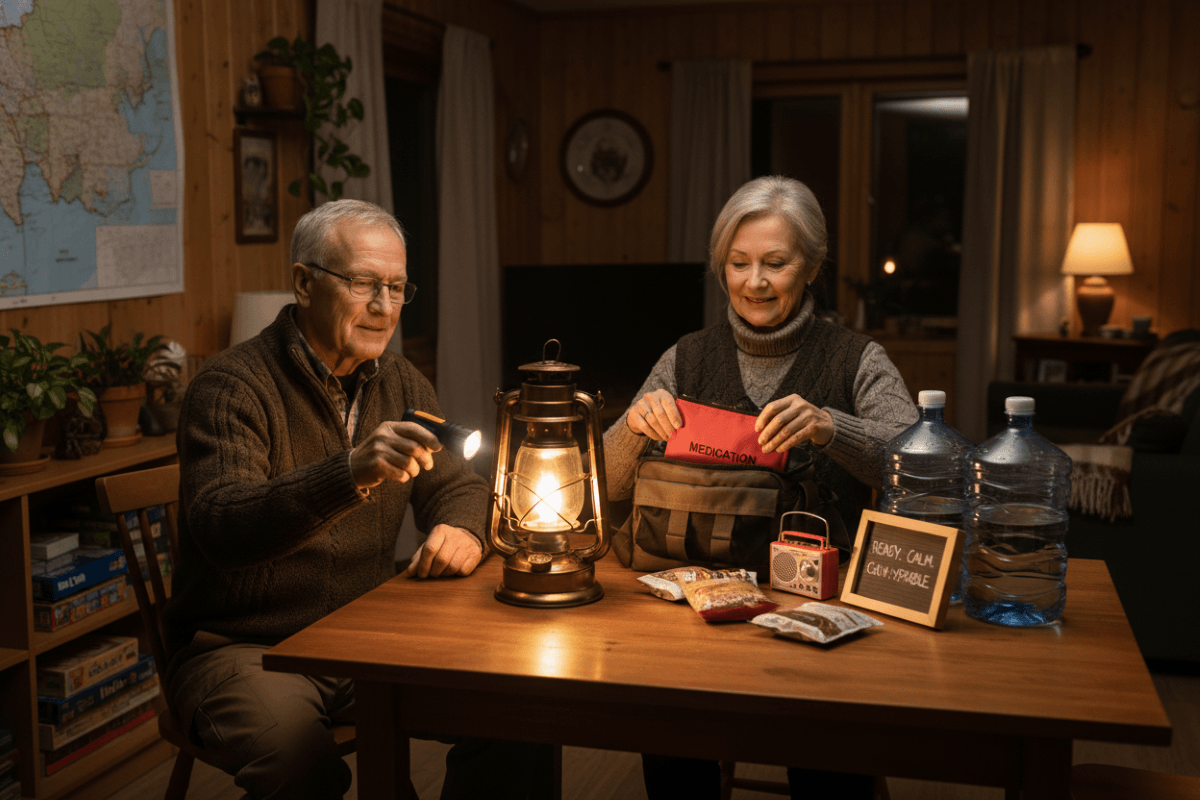
This is your final step. You are not learning new skills. You are testing everything you built. Power can fail. Water can stop. Phones can go silent. This month shows you what actually works.
You’ve built your full system.
Now you test it in real conditions.
🟢 Set Up Your Simulation
Pick one day.
Turn off:
- Power where possible
- Wi-Fi
- Normal routines
Pretend the grid is down.
Stay calm. This is practice.
🟢 Test Your Water
Do not use tap water.
Use only:
- Stored water
- Purified water
Ask:
- Did I have enough
- Was it easy to use
- Can I purify more if needed
Write down problems.
🟢 Test Your Food
Eat only stored food for one day.
Use:
- Canned food
- Dry food
- Ready meals
Cook with:
- Camp stove
- Grill
- Backup method
Ask:
- Was it enough
- Was it easy
- Would I eat this long-term
Trusted Preparedness Resources
Ready to strengthen your preparedness plan? These trusted companies offer emergency food, water storage, and disaster-readiness supplies to help you prepare for the unexpected.
✅ My Patriot Supply
✅ Emergency Essentials / BePrepared
🟢 Check Medications
Gather everything.
Check:
- Supply levels
- Expiration dates
- Storage needs
Put all meds in one place.
Ask:
- Am I missing anything
- How long would this last
🟢 Test Your Lighting
After dark, use only backup lights.
Try:
- Flashlights
- Lanterns
- Headlamps
Walk your home.
Look for:
- Dark areas
- Trip hazards
Fix problems now.
🟢 Test Communication
Limit phone use.
Use:
- Radios
- Notes
- Meeting plans
Ask:
- Could I reach someone
- Do I know how to use my tools
This Challenge Is Part of Something Bigger
Build Your Survival Plan Step by Step
Each month builds on the last so you stay prepared without overwhelm.
🟢 Test Shelter
Pick one room.
Make it your main space.
Add:
- Blankets
- Fans or heaters if needed
Ask:
- Is it comfortable
- Does it stay warm or cool
🟢 Check Safety
Walk your home.
Check:
- Doors
- Windows
- Lights near bed
- Shoes near bed
Ask:
- Do I feel safe
- Is everything easy to reach
🟢 Test Mobility
Run a short exit drill.
Grab:
- Go-bag
- Meds
- Keys
- Pet
Walk to your exit.
Ask:
- Was it too heavy
- Did I lose balance
- Did anything slow me down
🟢 Test Pet Care
Care for your pet without power.
Check:
- Food
- Water
- Carrier or leash
Ask:
- Did my pet stay calm
- What needs to improve
🟢 Check Your Morale
Sit quietly for a few minutes.
Ask:
- Was I stressed
- Did I feel prepared
- What made it easier
Calm thinking is survival.
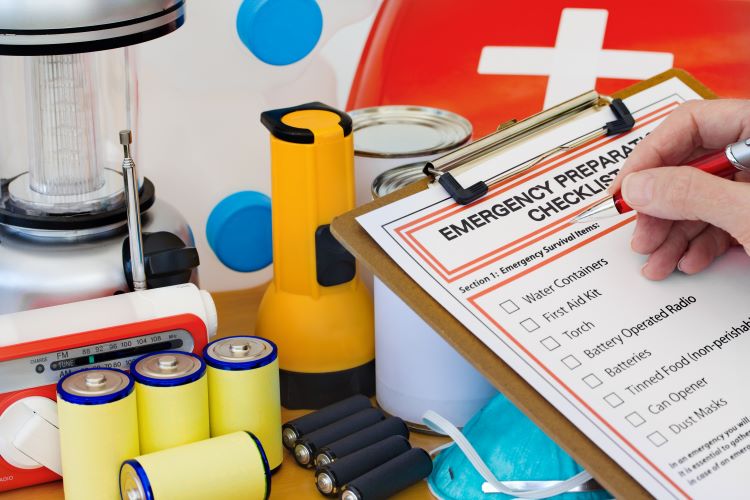
🟢 Your Month 12 Simulation Checklist
Water
□ Turn off faucets
□ Use stored water only
□ Track daily use
□ Test one purification method
□ Check total supply
Food
□ Eat only stored food
□ Use a backup cooking method
□ Test one cooking tool
□ Track calories
□ Note missing foods
Medications
□ Gather all medications
□ Check expiration dates
□ Confirm supply levels
□ Note refrigeration needs
□ Store in one pouch
Lighting
□ Test flashlights
□ Test lanterns
□ Identify dark areas
□ Create safe paths
□ Check batteries
Communication
□ Turn off Wi-Fi and data
□ Use radio or backup method
□ Test contact plan
□ Set a meeting point
□ Send one test message
Shelter
□ Choose one main room
□ Block drafts
□ Add blankets or cooling
□ Test comfort overnight
Safety
□ Check doors and locks
□ Check windows
□ Place light near bed
□ Place shoes near bed
□ Identify safest room
Mobility
□ Grab go-bag
□ Gather medications
□ Gather documents
□ Practice exit
□ Check weight and balance
Pet Care
□ Feed without power
□ Check stored water
□ Prepare carrier or leash
□ Observe behavior
Morale
□ Sit quietly for 10 minutes
□ Notice stress level
□ Practice slow breathing
□ Identify calming method
🧠 Final Thoughts
This is your proof.
You now know:
- What works
- What fails
- What to fix
That is real preparedness.
You are no longer guessing.
You are ready.
💬 Comment Section
Did you try your simulation? What surprised you? What failed? Share below.
This Challenge Is Part of Something Bigger
Follow the Full 12-Month Survival Plan
Preparedness works best when you follow a complete system.
❓ FAQs
What is a survival simulation?
A practice drill where you test your emergency plan in real conditions.
How long should I run the simulation?
Start with one day. Extend it as you gain confidence.
Do I need to turn off all power?
No. Simulate what you can safely.
What should I focus on first?
Water, food, and medications.
Why is this important?
It shows real weaknesses before a real emergency.
How often should I test my plan?
At least once a year.