Barter and Backup Currency
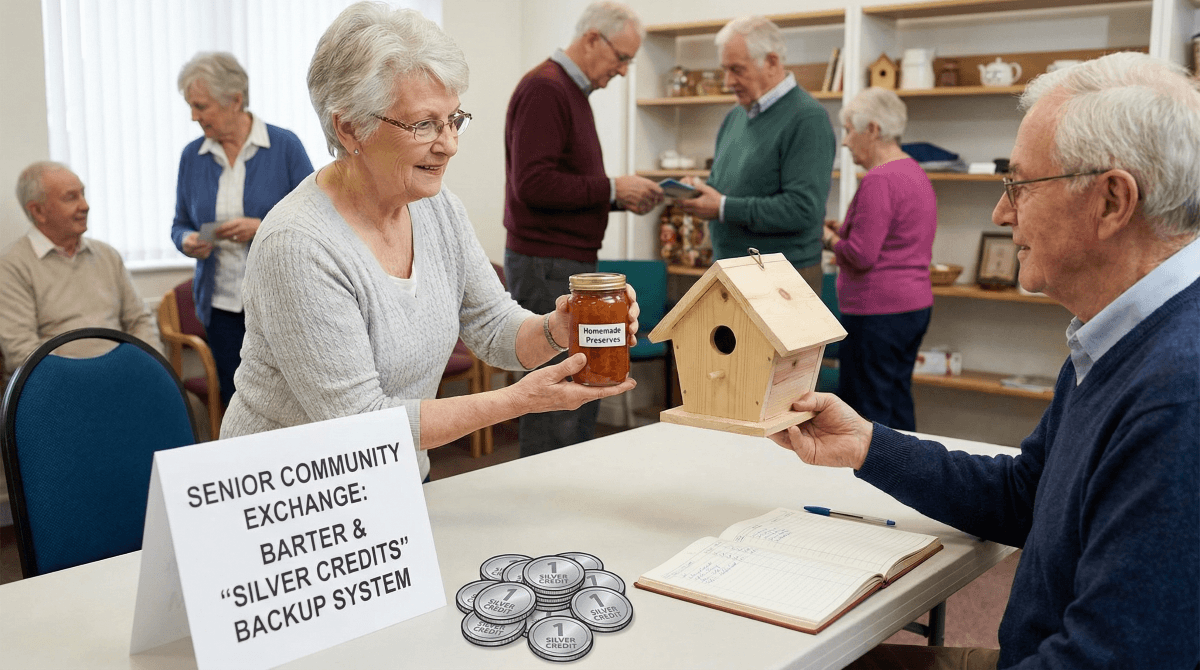
Okay, my peeps. This is an important concept you need to add to you survival preps. Most preppers think about value in terms of survival: food, water, fire, shelter, defense. They prioritize what keeps them alive today. But they often overlook what gets them what they need tomorrow. This is the eighth section for Key Survival Gear Seniors Often Forget.
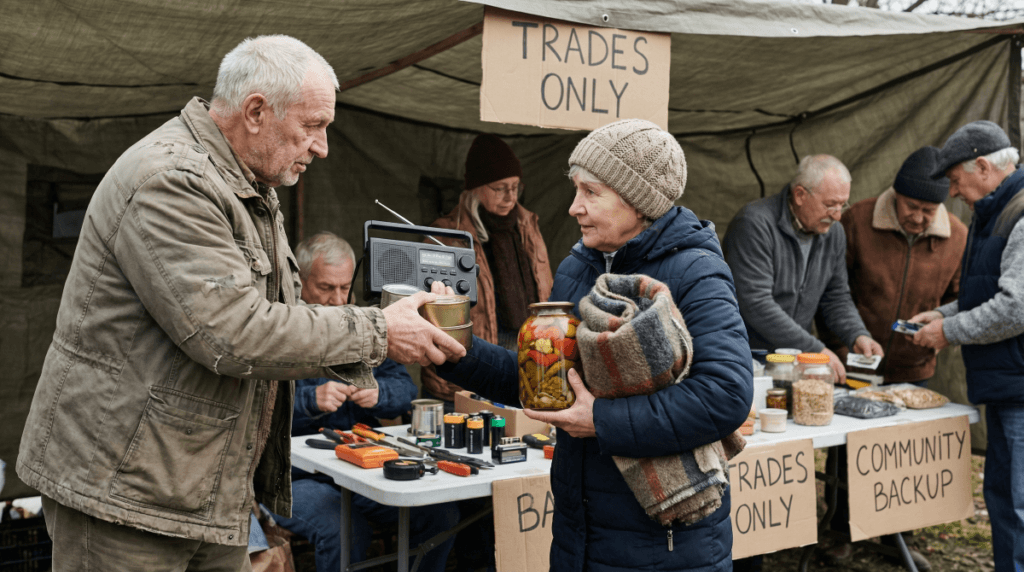
Barter isn’t just some post-apocalyptic novelty.
It’s a fallback currency system that shows up any time normal commerce fails. You see it during blackouts, natural disasters, or economic collapse.
When the cards don’t swipe, and the apps don’t load, people start trading. And not just food for ammo. They trade convenience, comfort, and relief. Not everyone will want what you’ve stockpiled, and you won’t have everything you need. That’s where barter fills the gap.
You can’t rely on your own preps alone forever.
You’ll need others. You’ll want to trade. And when that time comes, nobody’s going to break a gold bar for a box of allergy meds.
Big-value currency like gold and silver sounds good in theory, but in early collapse or localized events, they’re often useless. People want what helps right now. Tangible, usable, small-value trade items are what keep negotiations smooth and relationships civil.
If you can offer someone something that makes their day better—even for a moment—they’ll trade generously. Especially if you’re not asking for their last can of food in return.
Batteries are one of the most valuable barter items.
Batteries are one of the most valuable barter items because almost everyone will need them, and most people will run out. Flashlights, radios, headlamps, toys, thermometers, and even some medical devices rely on them. Stockpiling a variety—AA, AAA, 9V, C, D—ensures you have what people want. Don’t assume everyone’s gear is the same.
Some prep smart. Others prep halfway and forget power entirely. When they come looking, a four-pack of AA batteries becomes the equivalent of a hundred-dollar bill if it keeps their light going one more night.
Liquor and other comfort items.
Liquor mini bottles—those single-shot airline-sized bottles—are ideal barter tools. They’re portable, individually sealed, and of high value without being so valuable that they attract theft or inspire violence.
People use them for stress relief, trade, antiseptics, pain management, or just a morale boost. A mini bottle of whiskey can be traded for far more than it’s technically worth when someone’s nerves are shot, or it’s their birthday and everything else is hell. Full bottles are tempting to carry, but harder to portion out and risk becoming a magnet for trouble. Minis keep the value small and controllable.
Cigarettes function the same way. Even in non-smoking communities, they carry enormous barter power. They’re addictive, portable, and deeply tied to routine and comfort.
A single cigarette becomes a piece of emotional relief for someone detoxing from stress or withdrawal. Like liquor, they also get used for celebrations, calming frayed nerves, or just trading up.
You don’t have to smoke to stock them. Think of them like currency tokens for people who will. Seal them well to prevent them from going stale or absorbing moisture. Vacuum-sealed pouches or tins keep them fresh and compact.
Coffee and tea.
Instant coffee holds both value and comfort. People addicted to caffeine will trade high for even weak brews, and people who aren’t addicted will still find value in the comfort of a hot drink that feels normal.
Coffee has routine power. It signals morning. It gives a reason to sit, think, and plan. In a world where everything is unstable, a cup of instant coffee becomes emotional grounding. Single-serve packets are better for trade. They prevent arguments over portion size and feel safer to accept. Variety helps. Not everyone likes the same type or strength.
Paper cash in small bills.
Paper cash is surprisingly overlooked. In prepping circles, you hear endless debates about gold coins and silver rounds. But the truth is, when electronic payment systems go down, regular old paper money still works—at least for a while.
Especially in the early stages of crisis. If a natural disaster hits your town, stores will keep running as long as they can, and cash becomes the only accepted payment. But not all cash. Small bills are what matter. No one’s giving you change for a hundred during a power outage.
Keep fives, tens, and lots of ones. Hide some in your bug-out bag, your car, your secondary stash. Don’t just stack hundreds in a safe and assume you’ll be fine. You’ll need to buy things off the books, at flea markets, roadside stands, or from people just trying to get by.
Gold won’t matter to someone who wants to sell you six eggs. But six dollars in cash probably will. When they don’t trust your name or your situation, cash is still king—until it’s not. And by then, your barter items take over.
Low-cost luxury trade goods.
Low-cost luxury trade goods hold disproportionate power. Items like Chapstick and Burt’s Bees seem minor until you don’t have any and your lips are cracked and bleeding from wind exposure.
Then it’s the only thing you want. A sealed tube of lip balm can trade like medicine. Gum and hard candy serve a similar purpose. They don’t just taste good. They relieve dry mouth, ease stress, give children something to focus on, and provide a sense of normal. Sugar becomes energy and pleasure in one. I have a big sweet tooth. I’d better be sure I pack sweet items!
Sweets, especially hard candy.
Hard candy lasts long, doesn’t melt easily, and can be portioned out slowly. Pack small varieties in airtight containers. Use mints, peppermints, fruit drops—whatever is compact and individually wrapped.
You don’t want sticky items clumping together or becoming useless. Think variety and shelf life. Candy bars might sound good, but they melt, go stale, and take up more space. Hard candy wins in long-term value.
Tampons and sanitary pads.
Tampons and sanitary pads are high-value barter goods, especially in male-dominated prepping setups where no one thought to store them. They’re not just for menstruation. They’re used for wound absorption, padding, and even fire-starting.
Sealed in plastic or foil, they’re clean, portable, and high-impact. Most people won’t trade away their own stock, but will trade well to get some. You don’t need to hoard a year’s supply—just enough to offer a useful trade when the situation arises. Women will prioritize them. Men who didn’t prep for their partners will panic without them.
Skills and knowledge are currency.
Trade isn’t always about items. It’s also about what you can do. Skills become currency fast when goods run low. If you know how to purify water, repair gear, build shelter, cook with limited ingredients, or treat minor wounds, you have something to trade.
The trick is knowing how to offer your skills without giving them away for free or becoming dependent. Skills aren’t just about usefulness. They’re about timing. The right skill at the right moment is priceless.
You don’t need to be the best. Just competent. Printed cheat sheets give you leverage. A handout on how to plant seeds, build a solar still, fix a tarp, or calculate fuel usage becomes a trade item.
People don’t want long books. They want simple, actionable instructions when they’re stressed and stuck. A waterproof sheet of survival tips, laminated or sealed in plastic, trades well. So do hand-drawn maps, recipes, or scavenged data. In a digital collapse, paper becomes king again.
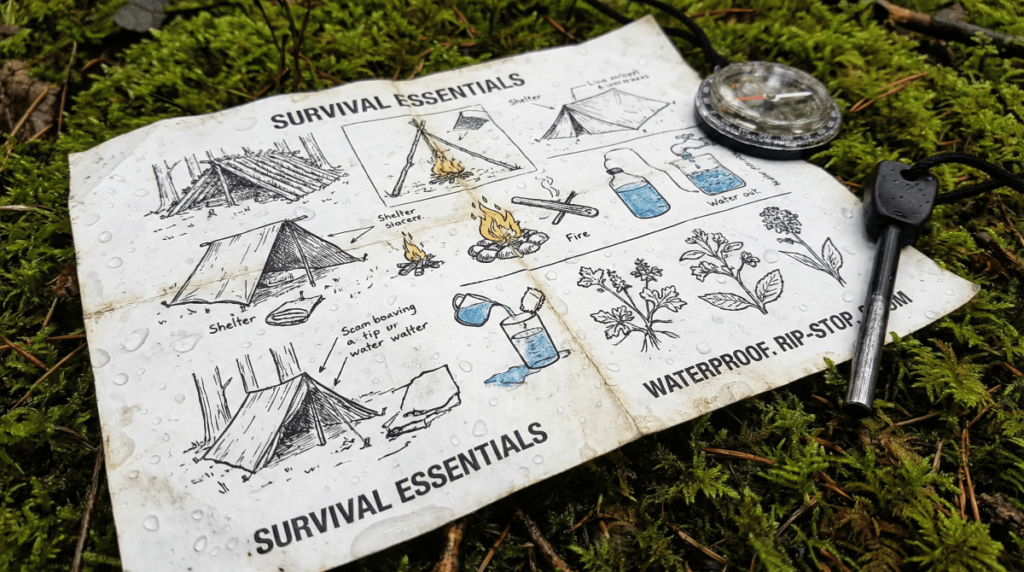
Manuals extend this even further. If you have books or printed PDFs on homesteading, medical care, engine repair, or food preservation, you can trade access, copies, or insight.
The knowledge inside those pages becomes valuable. You don’t have to part with the original. Offer to share a section. Offer to teach. Offer to barter access for goods. In a crisis, people don’t want to feel helpless. Offering them tools to take control again—mental or physical—is powerful.
Your value in barter is defined by what you can offer that others can’t. That doesn’t mean hoarding exotic gear or stocking rare items. It means thinking about daily life. What people miss.
What they rely on. What disappears first from shelves when a storm warning hits. The things that bring comfort, relief, or routine get traded more fiercely than the things that are purely practical. A man with 500 pounds of rice will trade a lot for one cup of coffee if he’s sick of eating in silence.
The psychology of barter.
Barter isn’t about fair. It’s about need. A single tampon might be worth more than a whole flashlight to the person who desperately needs it. A cigarette might get you a hammer if the trader’s hands are shaking from withdrawal.
That’s the psychology of barter. It’s not cold logic. It’s pain, pressure, desire, fear, and scarcity. Understand that, and you trade well. Misread it, and you lose the deal—or worse, offend someone who remembers it later.
Backups to currency aren’t optional. They’re part of real preparedness. When the dollar stops, or when the banks shut down, or when no one’s taking Venmo anymore, what do you have?
A pocket full of silver rounds and nowhere to spend them? Or a pouch of batteries, gum, coffee, and lip balm that makes you a resource instead of a burden? Real prepping means preparing to interact with people—not just hide from them. Trade keeps communities going. It builds bridges. And if done right, it can save lives—yours included.
What’s your take on this? Have you set aside any items for barter or trade? Do you have skills you can use for barter/trade? Drop a comment below—your insight might be precisely what someone else needs. I read every comment and reply when I can. Let’s learn from each other.
Next, go to Security and Self-Defense Gaps