Hardtack – The Survival Biscuit That Can Outlive You
This post may contain affiliate links. If you buy through them, I may earn a small commission at no extra cost to you.
Have you tried or made hardtack?
I’m wondering if my readers have tried or made hardtack. I was born in 1949, so I wasn’t alive during the last World War II, when it was more prevalent. But we are in a time when wars are happening all around, and it’s a bit scary,
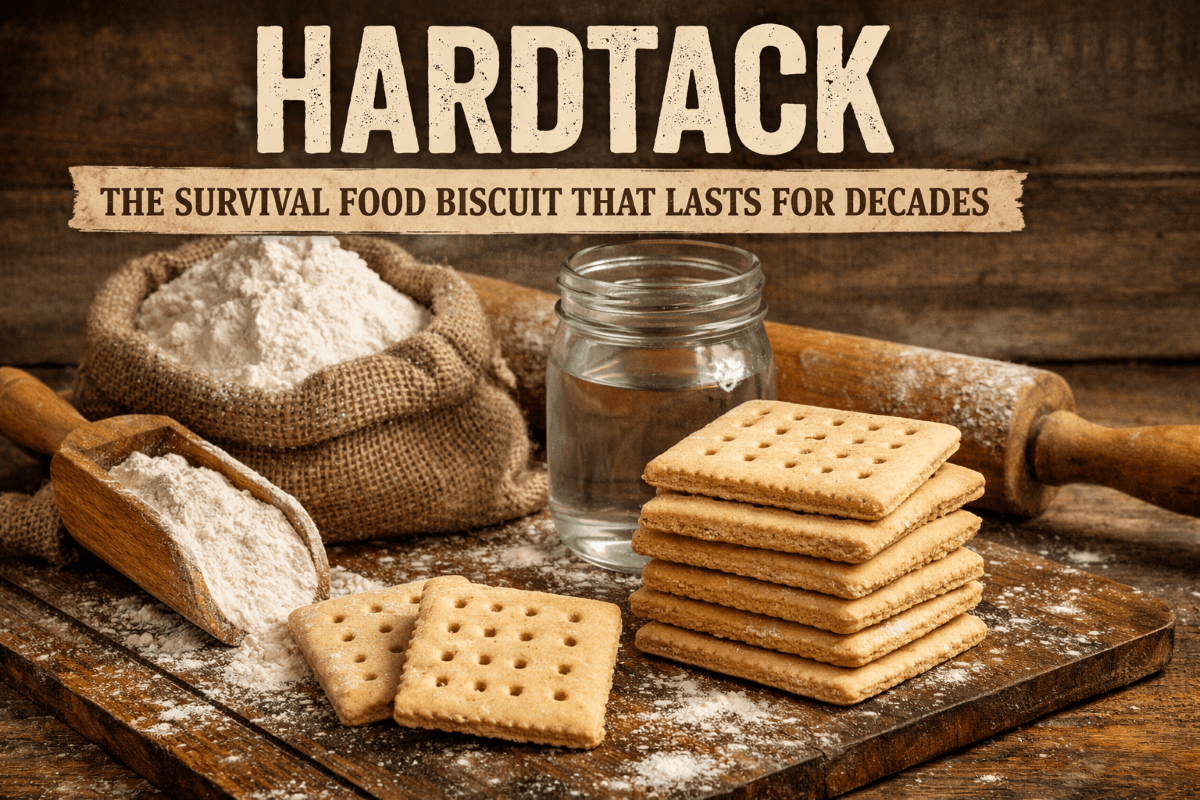
Hardtack is about as simple as food gets. It’s a dry, rock-hard biscuit made from flour and water. No yeast. No fat. No moisture. And that’s exactly why it lasts so long.
When properly dried and kept away from moisture, hardtack can remain edible for decades. In museum collections, some pieces have survived more than a hundred years. That makes it one of the longest-lasting survival foods ever created.
TL;DR
Hardtack is a simple survival biscuit made from flour and water that can last for decades when stored properly. It’s lightweight, inexpensive, and easy to make at home using basic tools. While not flavorful, it provides reliable emergency calories and teaches valuable self-reliance skills.
- Made with only flour and water.
- Extremely long shelf life when kept dry and pest-free.
- High in carbohydrates for emergency energy.
- Can be softened in liquids or cooked for better texture.
Simple food lasts the longest. Reliability beats convenience in a real emergency.
For preppers, that kind of shelf life matters. Hardtack is compact. It’s lightweight. It’s high in carbohydrates and calories, which means it gives you quick energy when your body needs fuel the most. In a real emergency, carbs are not the enemy. They keep you moving, thinking, and warm.
Another advantage is independence. You don’t need special equipment, freeze-dryers, or expensive ingredients. If you have flour, water, and heat, you can make hardtack almost anywhere. Kitchen oven. Camp stove. Grill. Even a carefully managed campfire, if needed.
It’s survival food in its purest form.
A Food That Fed Armies and Sailors
Hardtack isn’t a modern prepper invention. Humans have relied on this food for thousands of years.
Ancient Roman and Egyptian armies carried dried biscuits as rations because they traveled well, didn’t spoil easily, and could survive long marches and storage in harsh conditions. Sailors later depended on hardtack during long ocean voyages when fresh food quickly ran out.
At sea, moisture was the enemy. To prevent mold, biscuits were often baked multiple times until all traces of water were driven out. Even then, they could become so hard that sailors had to soak them in coffee, water, or even pickle brine just to make them chewable.
During the American Civil War, hardtack became a daily ration for soldiers. Union soldiers often received several large biscuits per day. They used them as makeshift plates for meat or stew, then ate the biscuit afterward. Some soldiers joked that the biscuits were harder than bullets and full of insects if stored too long.
The Union Army baked its biscuits twice, then stored them for months before issuing them, ensuring they were completely dry. In the South, flour shortages due to blockades made hardtack production more difficult, but when flour was available, large batches were still produced because nothing stored better.
History proves a simple point: when food preservation matters, simplicity wins.
How to Make Hardtack
Hardtack is one of the easiest survival foods you’ll ever make. No fancy skills required. No kneading. No rising. No timing tricks.
You only need two basic ingredients: Flour and Water
- Start with about two cups of flour in a bowl. Slowly add water a little at a time while mixing. Your goal is a stiff dough that holds together and can be rolled out. If it gets sticky or too wet, sprinkle in more flour. You are not making bread. Don’t knead it. Just mix until combined.
- Lightly flour your work surface and rolling pin. Roll the dough until it’s about ¼ inch thick. Thicker pieces take longer to dry and may trap moisture inside.
- Cut the dough into evenly sized pieces. Uniform size matters so everything dries at the same rate. You can cut squares with a knife and ruler, or use cookie cutters, jars, or glasses.
- Think ahead about how you might store or use them. Larger pieces can double as makeshift plates. Smaller pieces pack easier into containers or bug-out bags.
- Preheat your oven to 250°F.
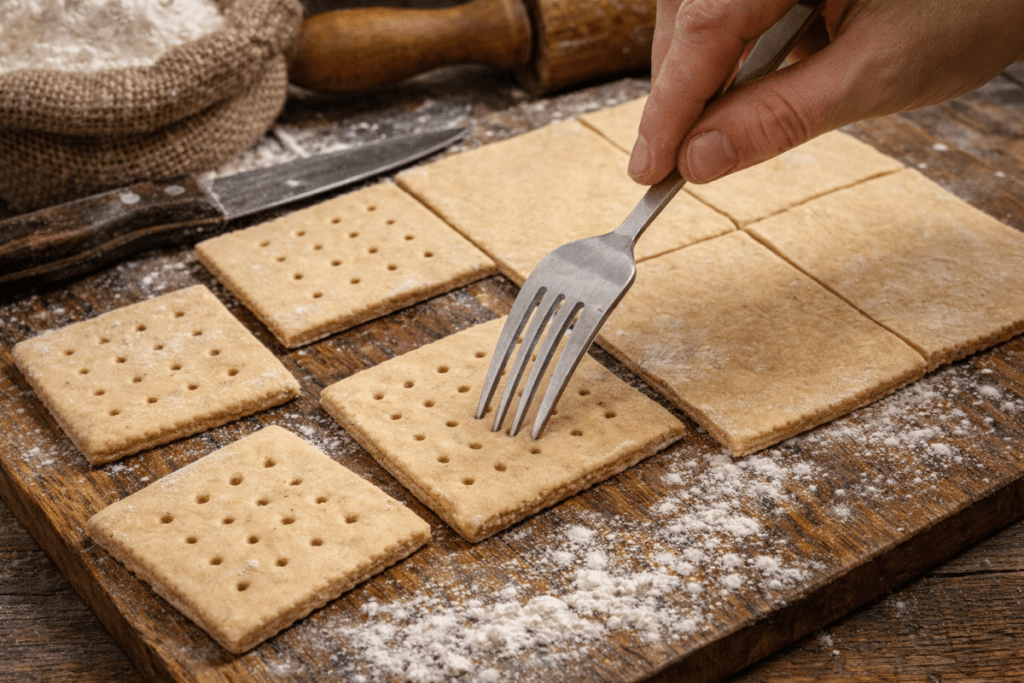
- Before baking, you must “dock” the biscuits. This means poking holes all the way through the dough so steam can escape and the biscuits don’t puff up. A fork works well. So does a nail or skewer. Historically, a 3-inch square biscuit often had 16 holes.
- Place the pieces on an ungreased baking sheet with space between them.
- Bake for two hours. Flip them. Bake another two hours.
- Remove and let them cool completely on a rack until room temperature.
- Repeat the baking process. Two more hours per side at 250°F. Cool completely again.
Yes, it’s a long bake. That’s intentional. The goal is to remove every trace of moisture. When finished, the biscuits should be extremely hard and dry.
Flavor Options (With Caution)
Plain hardtack has almost no flavor. That’s part of why it stores so well. Moisture, oils, and fats are what cause food to spoil.
If long-term storage is your goal, keep it simple.
That said, small modifications can improve taste if you plan to rotate and eat it regularly rather than store it for decades.
Salt is the most common addition. It improves flavor and helps replenish electrolytes.
You can also experiment with small amounts of:
- Whole-grain flours
- Dried herbs or spices
- A touch of honey for light sweetness
Avoid adding fats such as butter, oil, milk, or cream to extend the shelf life. Those will go rancid quickly and significantly shorten storage.
Think of hardtack like emergency fuel, not comfort food.
Storing Hardtack Safely
Hardtack fails for only two reasons: moisture and pests.
Any moisture can cause mold. Once mold appears, the biscuit is trash.
Store hardtack in airtight containers or vacuum-sealed bags. Keep it in a cool, dry place away from humidity, temperature swings, and direct sunlight.
Pests are the second threat. Insects love flour products. Rodents love anything edible.
Use hard containers when possible. Keep storage off the floor. Check periodically if you’re storing for the long term.
If you ever smell mustiness, see discoloration, or notice soft spots, discard it.
How to Eat Hardtack Without Breaking a Tooth
Hardtack is not a casual snack. It’s closer to edible wood.
Most people soften it before eating. You can soak it in:
- Water
- Coffee or tea
- Milk
- Soup or stew
- Vinegar or broth
It can also be added directly into soups and stews to soften and thicken the meal.
Some people soak it first, then fry it in oil or grease. This creates a much more palatable texture and flavor if cooking fat is available.
If you must eat it dry, break off a small piece and let it soften in your mouth before chewing. Never bite straight into a large piece. Keep water nearby. Hardtack absorbs moisture quickly and will dry your mouth.
It’s not fancy. It’s not pretty. But it will keep you alive when options are limited.
And that’s the whole point.
What’s your take on this? Were you alive when hardtack was more available? Did you eat it? Do you have tips, tools, or stories that could help fellow Golden Survivalists? Drop a comment below—your insight might be precisely what someone else needs. I read every comment and reply when I can. Let’s learn from each other.