
Month 2: The Water Resilience Challenge for Seniors
This post may contain affiliate links. If you buy through them, I may earn a small commission at no extra cost to you.
Water is life.
Without it, everything else fails.
Most people don’t realize how quickly clean water disappears during an emergency. Systems fail, contamination spreads, and safe drinking water becomes hard to find. For seniors, this becomes dangerous fast.
This is Month 2 of the 12 Months of Survival Prepper Challenges. Your goal is to build a simple, reliable food system you can depend on.
Water and food go hand in hand. Make sure you are also prepared with Food Shortage Survival Planning for Seniors.
30-Day Water Resilience Plan You Can Follow Step-by-Step
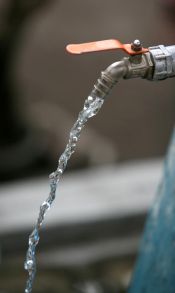
As you work through this month, remember that water affects everything. When contamination hits and supply systems break down, even a full pantry becomes useless. This month focuses on helping you secure, store, and protect your water supply.
This 30-day plan will guide you step by step to build real water resilience with confidence.
30-Day Water Resilience Challenge
Each week builds on the last.
Follow it step by step.
Week 1: Build Your Water Supply
Goal: 7 days of water stored
Day 1
Check how much water you currently have
Day 2
Buy or fill 3 days of water
Day 3
Expand to 7 days total
Day 4
Choose a storage area
Day 5
Store water in proper containers
Day 6
Label and date containers
Day 7
Review and adjust
Week 2: Expand and Organize
Goal: 14–30 days of water + tracking system
Day 8
Add more stored water
Day 9
Add portable water containers
Day 10
Set up backup storage locations
Day 11
Create a simple tracking system
Day 12
Rotate older water
Day 13
Check for leaks or damage
Day 14
Review your full supply
Week 3: Learn Purification Methods
Goal: You can make water safe
Pick ONE:
- boiling
- filtration
- purification tablets
Day 15
Choose your method
Day 16
Get supplies
Day 17
Learn the process
Day 18
Practice once
Day 19
Test your water source
Day 20
Repeat
Day 21
Improve your system
Week 4: Build Backup Systems
Goal: Independent water access
Day 22
Identify 2–3 water sources
Day 23
Learn how to collect water safely
Day 24
Practice filtering or boiling
Day 25
Improve storage setup
Day 26
Identify weak points
Day 27
Fix one weakness
Day 28
Review your system
Day 29
Restock supplies
Day 30
Final review
Trusted Preparedness Resources
Ready to strengthen your preparedness plan? These trusted companies offer emergency food, water storage, and disaster-readiness supplies to help you prepare for the unexpected.
✅ My Patriot Supply
✅ Emergency Essentials / BePrepared
What Can Go Wrong Fast
Most people assume water will always be safe. It won’t.
- contamination spreads quickly
- systems fail without warning
- boil advisories are common
- clean water becomes scarce
Water problems escalate faster than food problems.
When water becomes unsafe, everything changes quickly.
Learn how to protect yourself in Water Contamination Survival Planning for Seniors.
Build a Simple Water System
Stop thinking “just store water.”
Start thinking “full system.”
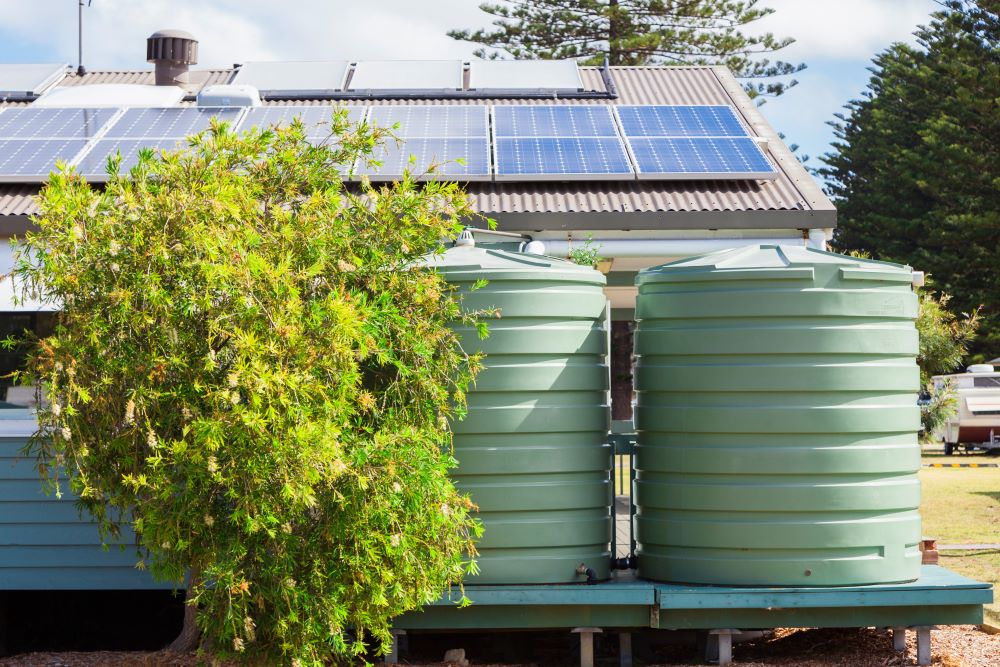
Core Water Storage
Start with:
- bottled water
- food-grade containers
- large storage tanks
Store at least:
- 1 gallon per person per day
Keep water in cool, dark areas.
Don't Face Emergencies Without Water
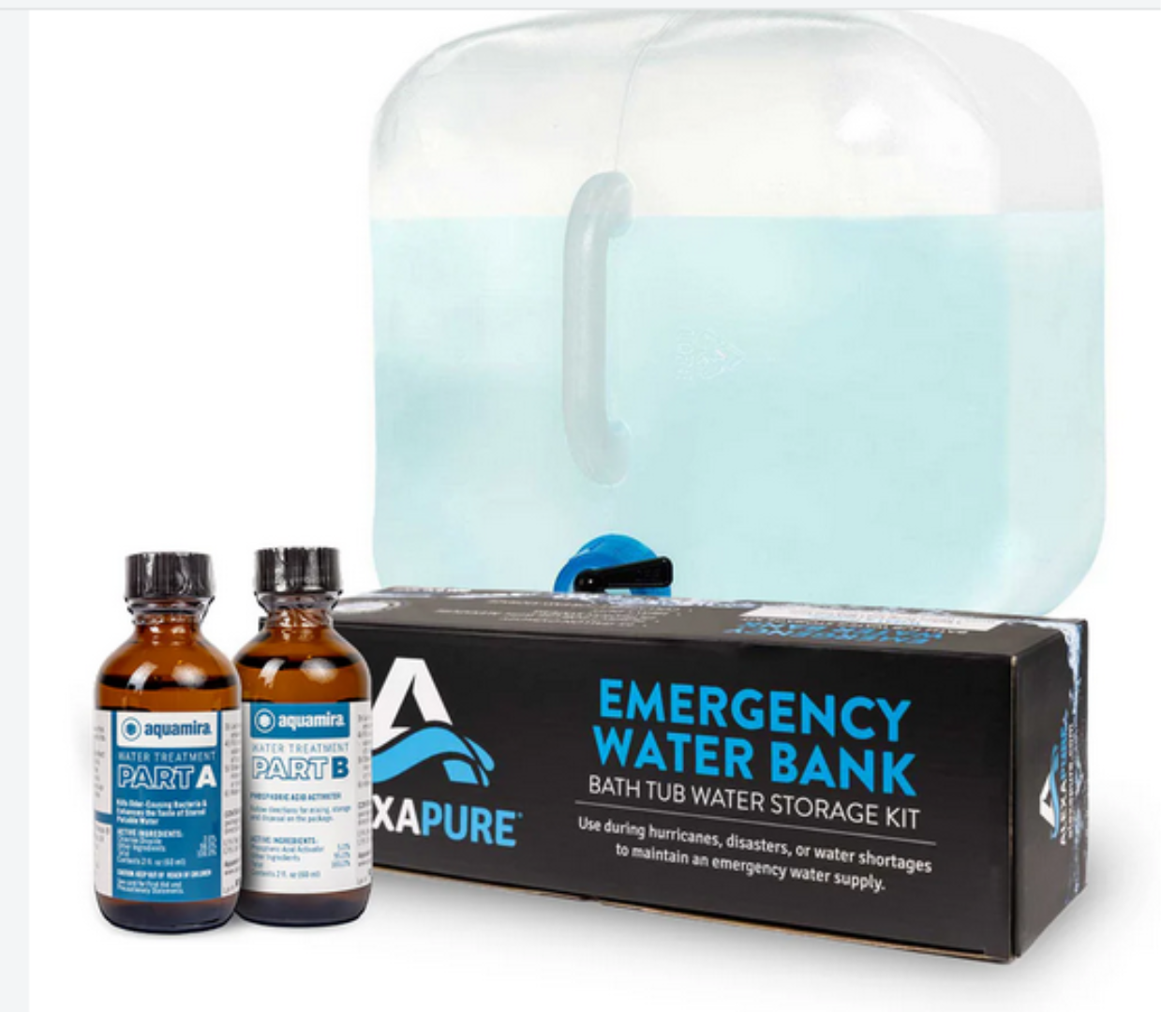
Keep your family hydrated through disasters with our Essential Water Storage Kit which includes:
Aquamira Chlorine Dioxide Water Treatment
Add this Aquamira treatment while you're filling up water containers or to existing water storage for treated water to drink.
Alexapure 5-Gallon Collapsible Water Container
This 5-Gallon Collapsible Water Tote is the best vessel for grab-and-go disaster preparedness you’ll find.
Alexapure Emergency Water Bank
Heavy-duty, BPA-free bathtub liner that fills with water. 65-gallon max capacity. Holds more than a "Big Blue Water Barrel" and takes up very little space.

Storage Rules
- keep containers sealed
- rotate every 6–12 months
- store off the ground
- avoid heat and sunlight
Use this rule:
First in. First out.
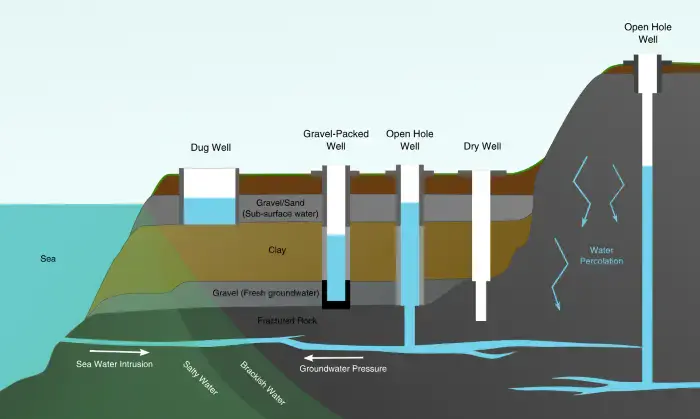
Backup Water Sources
Stored water runs out. Systems matter.
Build backups:
- rain collection
- nearby natural sources
- emergency reserves
Even simple collection methods help.
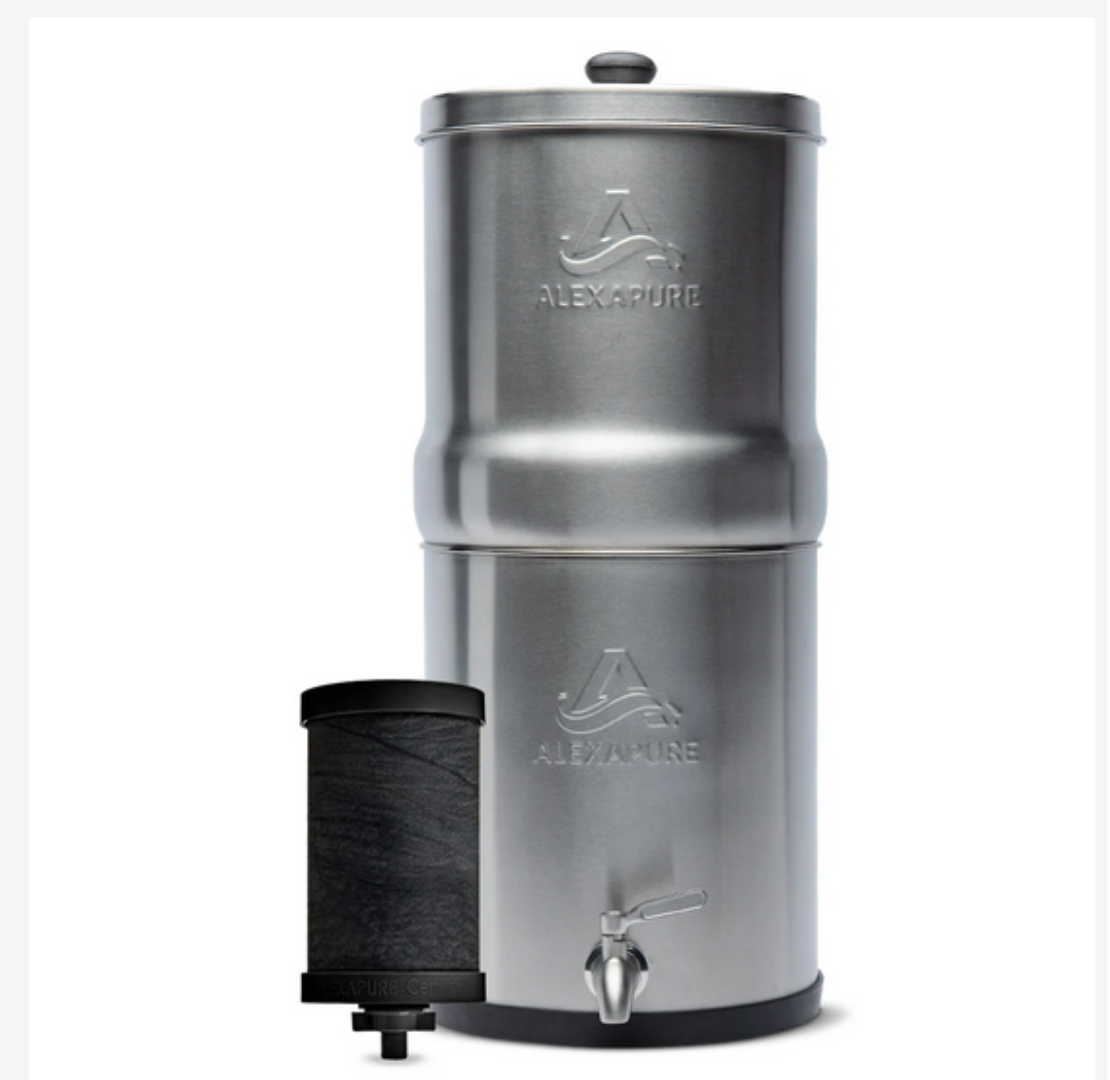
Alexapure Pro® Water Filtration System
The Alexapure Pro transforms water from virtually any freshwater source into drinking water.
It reduces 206 contaminants** commonly found in drinking water:
- Bacteria (> 99.9999%)
- Chlorine (> 99.9%)
- Fluoride (> 97%)
- Pesticides (> 95%)
- Pharmaceuticals (> 95%)
- Viruses (> 99.99%)
- Heavy metals
- Lead
Did You Know?
The Alexapure Pro Water Filtration System filter reduces 200+ contaminants** from water, while preserving essential trace minerals.
Purification Basics
You must be able to make water safe.
- boiling kills pathogens
- filters remove contaminants
- tablets disinfect quickly
Always assume unknown water is unsafe.
Many water systems rely on power, so outages can disrupt supply quickly. See Power Grid Failure Survival Planning for Seniors.
Senior Considerations
This is critical.
Focus on:
- lightweight containers
- easy-pour systems
- simple purification methods
- safe lifting limits
If it’s too heavy or complex, it won’t work.
Quick Action Plan (Start Today)
- store 3–7 days of water
- identify one purification method
- label your containers
- find one backup water source
- test your system
If you are also storing food, review Tips for Easy Canning and Fermenting for Seniors.
End of Month Check
- Do you have 14–30 days of water?
- Can you purify water safely?
- Do you have backup sources?
- Is your system easy to use?
If not, fix weak areas.
This Challenge Is Part of Something Bigger
This is one step in the 12 Months of Survival Prepper Challenges, a complete system designed to help seniors build real preparedness one month at a time.
See All Monthly Challenges →FAQs
How much water should seniors store?
At least 1 gallon per person per day. Aim for 14–30 days.
How long can stored water last?
Properly stored water can last 6–12 months or longer.
What is the safest way to purify water?
Boiling is the most reliable. Filters and tablets are good backups.
Can you drink rainwater?
Yes, but it should be filtered or purified first.
Next Step
Continue strengthening your preparedness by planning for food shortages and long-term supply disruptions.
If you missed it, start with Month 1: Food Security Challenge for Seniors.
Comment Section
What’s your take on this? Have you stockpiled or do you have access to enough water to support you and your family? Do you have a way to purify it? What is your biggest challenge with water storage? Drop a comment below. Your insight might be precisely what someone else needs. I read every comment and reply when I can. Let’s learn from each other.