Pantry-First Food Security for Senior Survivalists
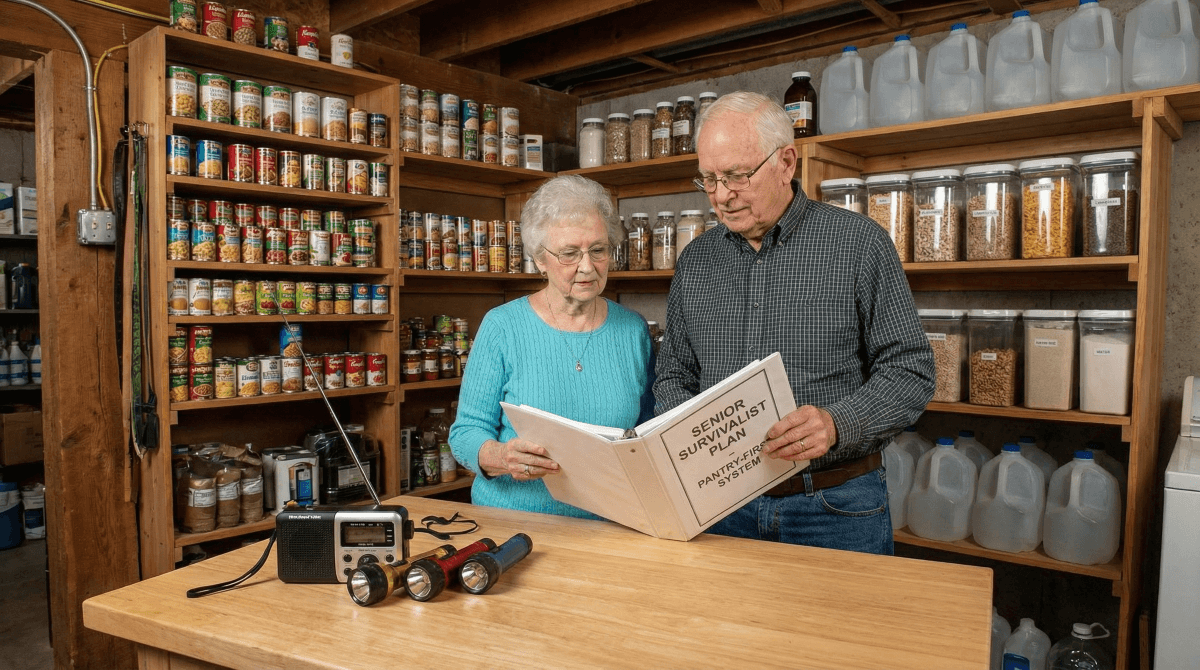
A Practical System That Works Before, During, and After Emergencies
Your pantry should be a safety net, not a junk drawer full of expired cans and half-used ingredients you forgot you owned.
Many people think they’re prepared because they have food on the shelves. But when you look closely, it’s often random. A few sale items. Some extras bought with good intentions. Things that don’t work together and don’t get rotated.
When a storm hits, money gets tight, or you can’t get to the store, that kind of pantry falls apart fast. Meals don’t come together. Items are expired. Energy is low. Stress is high.
For senior survivalists, food security has to be realistic. It must work with limited energy, changing appetites, medical needs, and fixed incomes. That’s where a pantry-first system shines.
This approach turns your everyday groceries into your emergency supply. No separate systems. No expensive specialty food. Just smart planning using food you already eat.
Read this: 17 Things to Do Before Building a Survival Food Stockpile – eBook
Why Pantry-First Makes Sense as We Age
As we get older, our routines matter more.
We may shop less often.
We may cook simpler meals.
We may need food that’s easy to prepare and gentle on the body.
A pantry-first system supports all of that.
Instead of storing food you don’t recognize or don’t enjoy, you store what already fits your life. Your pantry becomes a buffer against storms, illness, power outages, transportation problems, and rising food prices.
The best emergency food is familiar food. Food you know how to cook. Food your body tolerates well.
That’s preparedness with dignity.
Step One: Stock What You Actually Eat
Ignore advice that tells you to store foods you’ve never cooked before. If you’ve never baked bread from scratch, you’re not starting during a crisis.
Start by tracking what you eat for two weeks. Write down meals, snacks, and drinks. This gives you real information instead of guesses.
Look for patterns. Those patterns reveal your true staples.
Read this: Tips for Easy Canning and Fermenting for Seniors – Sustainable Harvest Preservation
Common senior staples often include pasta, rice, oatmeal, canned soup, canned tomatoes, tuna or chicken, peanut butter, eggs, and simple frozen vegetables.
Once you identify your staples, aim to store enough for one to three months. Three months offers strong security without overwhelming your space or budget.
Use real consumption numbers. If you eat two boxes of pasta per week, you need about twenty-four boxes for three months. Guessing leads to waste. Math prevents it.
Shelf Life and Ease of Use Matter More Now
Expired food isn’t just waste. It’s unsafe.
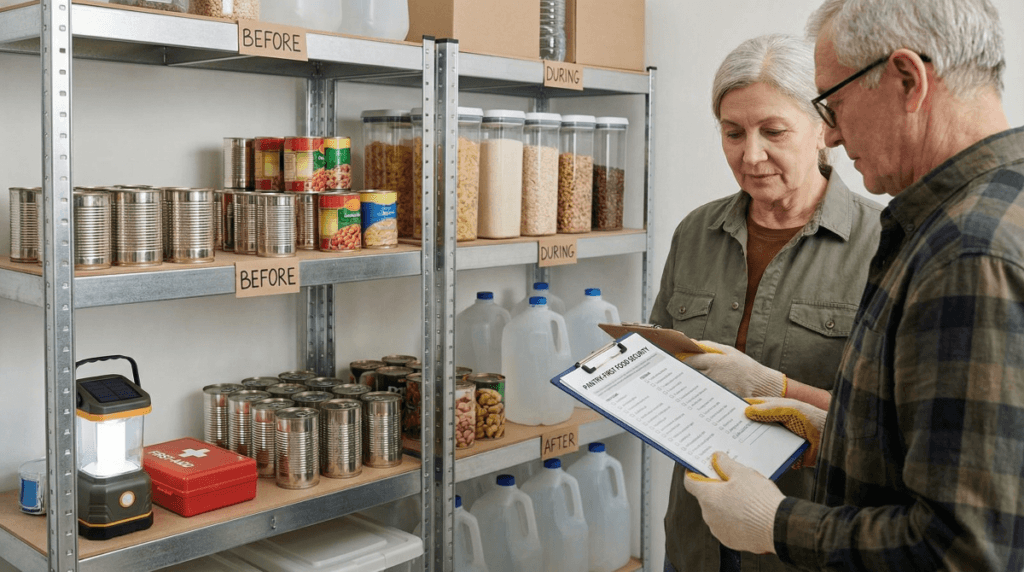
Pay attention to shelf life, especially for oils, sauces, and anything opened regularly. Choose packaging sizes you can comfortably lift and open. Store heavier items at waist height to avoid strain.
If twisting lids or lifting large containers is difficult, choose smaller packages. Convenience is part of preparedness.
A pantry you can’t physically manage is not secure.
Build Meals, Not Random Ingredients
A shelf full of food does not equal meals.
Think in terms of complete dishes you can make entirely from shelf-stable items. Examples include soup with crackers, pasta with canned chicken and sauce, rice with beans and seasonings, or oatmeal with shelf-stable milk.
Read this: Cooking Tips and Recipes for Seniors in Emergencies
Write down ten to fifteen meals you already know how to cook. Then stock the ingredients for those meals in multiples.
This removes decision fatigue, which is especially important during stress, illness, or emergencies.
Comfort Food Is Not a Luxury
Stress changes appetite. During emergencies, people eat less if food feels unfamiliar or unappealing.
Comfort foods matter.
For seniors, familiar snacks and drinks provide emotional grounding and encourage regular eating. Hard candy, crackers, instant coffee or tea, popcorn, and simple desserts all play a role.
You don’t need a large supply. You need enough to remind your body and mind that things are still okay.
Simple Rotation That Doesn’t Rely on Memory
Rotation fails when it depends on remembering dates.
Use a first-in, first-out system that works automatically. Keep older items in front and newer items behind. Group foods by category so nothing gets lost.
If expiration dates are hard to read, write the month and year on packages with a marker when you bring them home.
Once a month, spend fifteen minutes scanning your pantry. Pull items that need to be used soon and plan meals around them.
That’s all it takes.
Special Diets and Medical Needs Come First
Food security must support health.
If you manage diabetes, food allergies, digestive issues, or religious dietary restrictions, your pantry must reflect that reality. Food you can’t eat is not preparedness.
Stock alternatives that work for your body, even if they cost a little more. Include supplements and easy-to-digest foods for sick days.
Preparedness means respecting your medical needs, not ignoring them.
Maintaining the System Without Burnout
Building a pantry is easy. Keeping it functional is about habits.
Replace what you use. Shop with a list. Use a one-in, one-out rule for non-staples like condiments. Do a deeper check every few months to clean shelves and reassess quantities.
Adjust as life changes. If you cook less, stock less. If mobility declines, simplify meals.
Your pantry should evolve with you.
Why This System Lasts
A pantry-first system saves money, reduces waste, and lowers stress. It supports independence and removes fear from daily life.
It doesn’t require perfection or extreme effort. It fits real routines and real limitations.
That’s why people stick with it.
Start Where You Are
If you have one week of food, aim for two. If you have two weeks, aim for a month.
Quantity matters less than organization and rotation.
A well-managed two-week pantry is safer than a chaotic three-month supply.
Pantry-First Food Security FAQ
Is a pantry-first system really enough for emergencies?
Yes. If your pantry is stocked, organized, and rotated, it provides reliable short- and medium-term food security for most real-life emergencies seniors face.
How much food should a senior household store?
One to three months of food you already eat is ideal. A well-managed one-month pantry is better than a large, poorly rotated supply.
Do I need special survival food or freeze-dried meals?
No. Regular grocery foods you know how to cook are safer, cheaper, and less stressful to use during emergencies.
What if I have medical or dietary restrictions?
Your pantry should match your health needs exactly. Food you cannot eat due to allergies, diabetes, or digestion issues does not count as preparedness.
How do I rotate food if my energy or mobility is limited?
Use simple first-in, first-out storage. Keep older items in front, label dates clearly, and do a quick monthly check that takes 10–15 minutes.
Is this system useful even if nothing bad happens?
Absolutely. It saves money, reduces waste, lowers stress, and ensures you always have food on hand during busy or difficult weeks.
Final Thought
Food security is not about fear. It’s about confidence.
It’s knowing you can eat well, calmly, and safely no matter what happens.
That’s real preparedness for senior survivalists.
Click on this link for the Golden Survivalist Pantry System PDF with a Pantry Checklist, Simple Rotation Tracker, and Low-Energy Senior Meal Plan.
What’s your take on this? Are you confident you have your survival pantry set up correctly? Do you have tips, tools, or stories that could help fellow Golden Survivalists? Drop a comment below—your insight might be precisely what someone else needs. I read every comment and reply when I can. Let’s learn from each other.