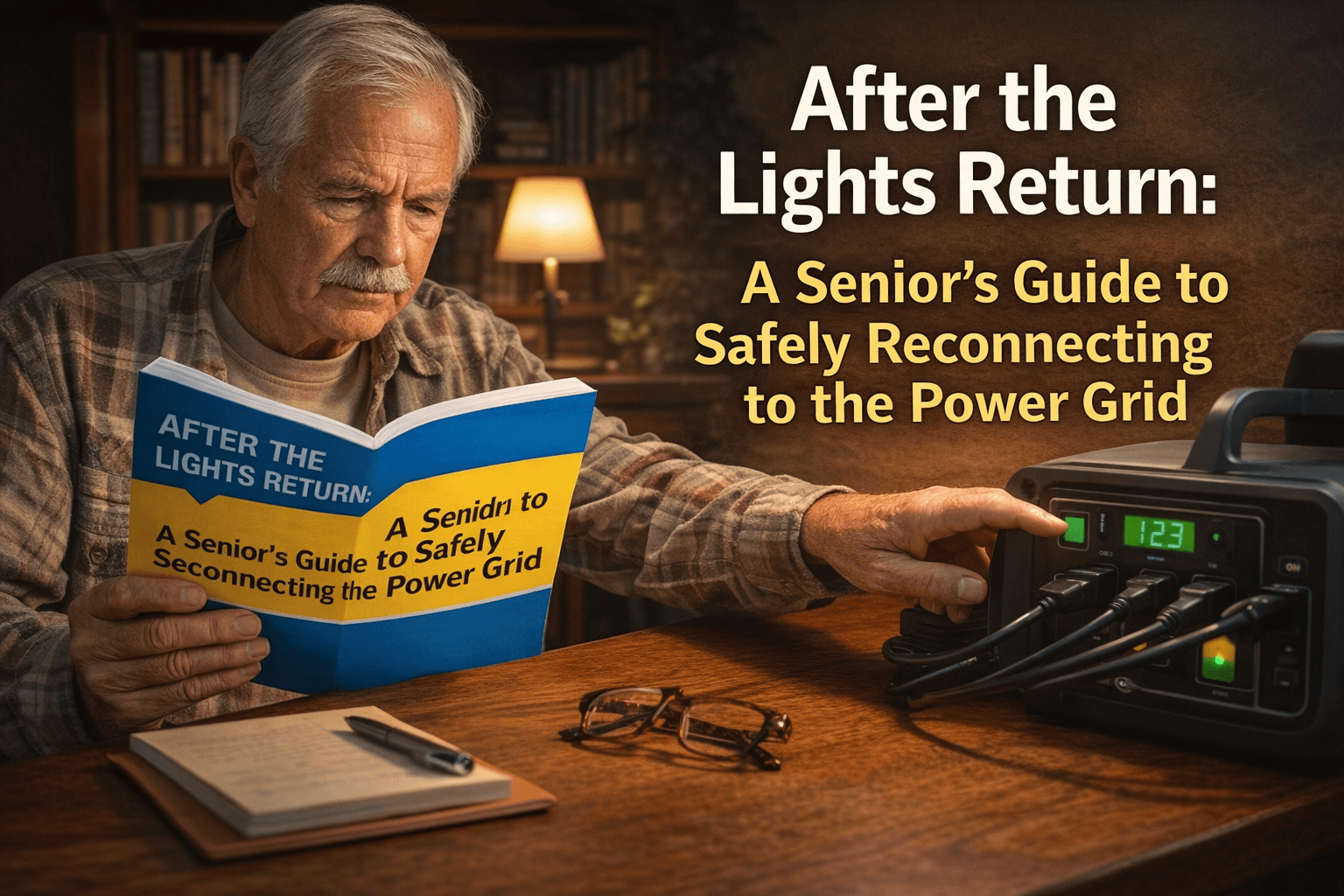
After the Lights Return: Power Outage Recovery and Safe Grid Reconnection for Seniors
This post may contain affiliate links. If you buy through them, I may earn a small commission at no extra cost to you.
Senior emergency preparedness includes knowing how to safely reconnect after a power outage, protect essential equipment, and maintain independence during grid failures. When the power finally comes back on after a long outage, it feels like relief. Lights glow again. The refrigerator hums. Your home begins to feel normal.
But for seniors — and anyone who values preparedness (or lives in Texas!) — this is not the time to relax completely.
Extended outages are often caused by larger grid-failure events, and knowing how to recover safely is critical for seniors to survive them.
Related: Power and Light Prep Gaps for Seniors
A damaged grid is fragile. Power may surge, drop, or cycle on and off. These fluctuations can quietly destroy appliances, medical equipment, and electronics that survived the outage itself.
Large-scale grid failures can result from severe solar storms or electromagnetic pulse events, which is why every senior should understand how to prepare for an EMP or CME grid collapse scenario.
This guide is part of the Ultimate Disaster Survival Guide, where you can explore 29+ emergency scenarios seniors should prepare for to protect their safety, independence, and home. It will help you build a practical plan to survive an economic collapse — especially for those of us navigating our golden years.
TL;DR for Seniors: Reconnect Safely After Power Returns
Power returning after an outage does not mean it is safe yet. Seniors should reconnect slowly to protect appliances, medical equipment, and home safety.
- Wait at least one hour of stable electricity before reconnecting devices
- Reconnect appliances one at a time to prevent power surges
- Disconnect generators fully to avoid dangerous backfeed
- Keep backup systems ready for the next outage
“Patience protects your equipment, your safety, and your independence.”
Rushing to reconnect everything can cause more damage than the outage did.
For older adults living independently, protecting your equipment and maintaining stability is essential for safety, comfort, and peace of mind.
But what happens when the grid goes down? Natural disasters, cyberattacks, or infrastructure failures can plunge entire communities into darkness, leaving people scrambling for solutions.
Why Restored Power Can Still Be Dangerous
When utilities restore electricity after major damage, they do it in stages. This creates unstable power flow.
Voltage may spike or drop unexpectedly. Sensitive devices can fail instantly under these conditions.
Even more serious, improper reconnection of generators or backup systems can send electricity backward into utility lines. This is called “backfeeding”, and it can electrocute repair workers.
Simple patience prevents serious harm.
Remember these key risks:
• Voltage spikes can destroy appliances
• Medical devices may malfunction
• Power may cycle repeatedly before stabilizing
• Improper generator reconnection can create lethal hazards
• Older wiring systems may be more vulnerable to damage
Think of restored power like recovering from illness. Just because you feel better does not mean you should run a marathon immediately.
Your home needs time to stabilize.
Step One: Confirm the Grid Is Truly Stable
When electricity returns, wait before reconnecting everything.
Let the power remain steady for at least one full hour. Several hours is even safer.
Watch for warning signs:
• Lights flickering or dimming
• Appliances starting slowly
• Digital clocks resetting repeatedly
• Unusual buzzing sounds
These signs mean the grid is still unstable.
If you have a voltage monitor, normal household voltage should remain between 110 and 125 volts.
If the voltage moves outside that range, wait longer.
Talk with neighbors as well. Their experience helps confirm whether power is stable across your area.
Step Two: Disconnect Backup Power Safely
Before reconnecting to the grid, make sure all backup systems are fully disconnected.
This includes:
• Portable generators
• Solar systems with grid-tie capability
• Battery backup systems connected to home circuits
Do not simply turn generators off. Physically disconnect them.
This protects:
• Utility workers restoring power
• Your home’s wiring
• Your appliances and electronics
For seniors, this step is especially important if others helped install temporary backup systems during the outage.
Verify everything is properly shut down.
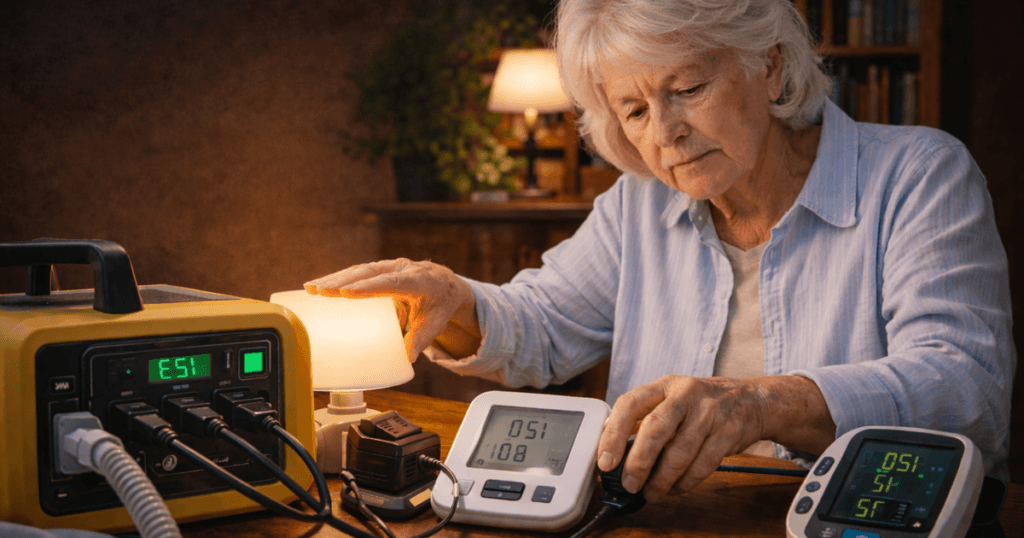
Step Three: Reconnect Your Home Slowly and Methodically
Do not reconnect everything at once.
Electricity must be reintroduced gradually.
Follow this sequence:
Start with basic lighting
Turn on simple lights first. These help confirm stable power without risking expensive equipment.
Wait at least 30 minutes.
Next, reconnect essential appliances one at a time
Allow 15–30 minutes between each device:
• Refrigerator
• Freezer
• Air conditioner or heater
• Medical equipment
These appliances draw large amounts of power during startup.
Spacing them protects both your equipment and your home’s electrical system.
Reconnect sensitive electronics last
Wait until power has proven stable before connecting:
• Computers
• Televisions
• Internet equipment
• Charging stations
Always use surge protectors if available.
This extra layer protects devices from sudden voltage spikes.
Step Four: Inspect Equipment Before Turning It On
Extended outages can cause hidden damage unrelated to electricity.
Before reconnecting devices, check for:
• Rodent damage to wires
• Moisture or condensation
• Dust buildup in vents
• Loose or damaged plugs
Even a quick inspection prevents larger failures.
This is especially important for seniors who rely on critical medical equipment.
When in doubt, ask a family member, neighbor, or electrician to help inspect.
Step Five: Maintain the Independence You Gained
One of the most important lessons from any outage is realizing you can live without the grid—at least temporarily.
For seniors, this independence increases safety and reduces vulnerability.
Developing practical self-reliance skills ensures you remain capable and confident even when modern infrastructure fails.
Do not put away your backup systems and forget them, especially when preparing for large-scale grid threats such as an EMP or CME event that can permanently disable electrical infrastructure.
Instead:
• Keep generators maintained and ready
• Keep batteries charged
• Maintain solar energy systems if available
• Restock emergency food and water promptly using a pantry-first food security system designed for long-term survival readiness.
Many seniors discover critical vulnerabilities only after experiencing an outage, which is why reviewing commonly forgotten survival preparedness items strengthens your long-term resilience.
Many seniors benefit from hybrid systems, where critical equipment runs on battery backup even while grid power is available.
This provides seamless protection during future outages.
Lessons Seniors Should Record and Remember
While the experience is fresh, write down what you learned.
Ask yourself:
• What worked well?
• What was difficult?
• What equipment proved essential?
• What would make the next outage easier?
Preparedness improves through experience.
Each outage becomes training.
Your goal is not fear. Your goal is confidence.
Senior-Friendly Grid Reconnection Checklist
Use this simple checklist when power returns:
Before reconnecting
• Wait at least one hour of stable power
• Disconnect generators and backup systems
• Watch for flickering or instability
Reconnect in stages
• Lights first
• Major appliances next (15–30 minutes apart)
• Sensitive electronics last
Protect your future readiness
• Keep backup systems ready
• Restock supplies
• Document lessons learned
Frequently Asked Questions for Seniors After Power Returns
How long should seniors wait before reconnecting appliances?
Wait at least one hour after power returns. If possible, wait several hours. This allows voltage to stabilize and protects appliances and medical equipment.
Why should appliances be reconnected one at a time?
Large appliances draw heavy startup power. Connecting them all at once can overload circuits, damage equipment, or cause breakers to trip.
Is it safe to leave surge protectors plugged in?
Yes, but surge protectors may weaken after absorbing spikes. Replace older surge protectors if they experienced heavy use during the outage.
Should seniors keep their generator ready after power returns?
Yes. Maintaining backup systems ensures you are prepared for future outages. Regular maintenance prevents failure when you need it most.
What appliances should be reconnected first?
Start with simple lighting. Then reconnect refrigerators and medical equipment. Sensitive electronics like computers should be reconnected last.
Related: Pantry-First Food Security and Rotation System
Final Thought: The Grid Will Fail Again—Be Ready Without Fear
Power restoration marks the end of the emergency—but not the end of preparedness.
For seniors, the goal is stability, safety, and independence.
Reconnect slowly. Protect your equipment. Maintain your backup systems.
The outage proved something important.
Every outage also reinforces the importance of deciding whether to stay home or evacuate, which is why understanding bug-in versus bug-out survival strategy planning is essential.
You are more capable than you thought. And next time, you will be even more ready.
Safe reconnection is not just about restoring electricity. It is a core part of senior emergency preparedness and long-term survival planning.
Comments
What’s your take on this? Have you been in a grid-failure situation? Do you have tips, tools, or stories that could help fellow Golden Survivalists and survival preppers? Drop a comment below—your insight might be precisely what someone else needs. I read every comment and reply when I can. Let’s learn from each other.