
Tornado Survival Planning for Seniors: Staying Safe During Violent Storms
This post may contain affiliate links. If you buy through them, I may earn a small commission at no extra cost to you.
Tornadoes: Plan to Outlast the Twister
A huge swath of bad weather, with many devastating tornadoes, just passed through the southern states. We were lucky. It passed just above us a bit to the north. We seem to be in a somewhat protected area, but with climate change making these natural disasters even more deadly, I’m not taking chances. I’m getting packed to do whatever.
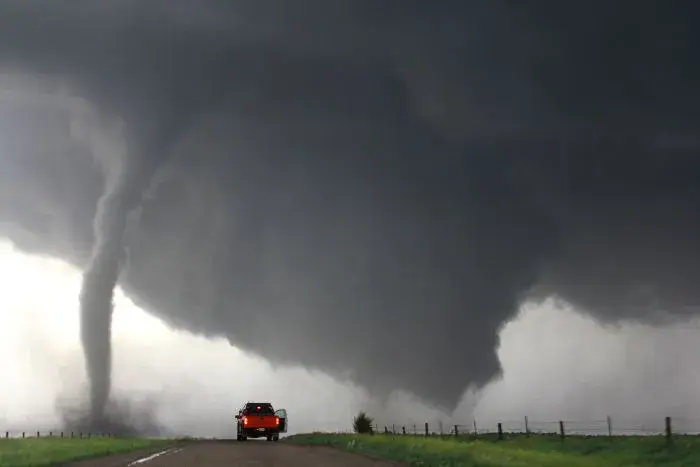
Tornadoes are among nature’s most unpredictable and destructive forces. With winds exceeding 200 miles per hour, they can level homes, uproot trees, and turn everyday objects into deadly projectiles in mere seconds.
I’m more scared of tornadoes than I am of hurricanes! They happen so quickly and can happen anywhere. Being a Floridian, I’ve been through many hurricanes. Where we have lived, the worst of the extreme weather seems to just go over our place. Fingers crossed it will stay that way.
Tornadoes don’t happen in isolation.
A tornado is just one of many emergencies seniors should prepare for. Build your full plan with our complete disaster guide.
See All Disaster Plans →Do You Know What to Do to Prepare for a Tornado?
For those who value preparedness, planning for a tornado isn’t just a good idea—it’s a necessity. Whether you live in Tornado Alley or an area where twisters are less common, having a solid strategy can mean the difference between life and death. Here’s your step-by-step guide to getting ready, brought to you by GoldenSurvivalist.com.
This guide is part of the Ultimate Disaster Survival Guide, where you can explore 29+ emergency scenarios seniors should prepare for to protect their safety, independence, and home. It will help you build a practical plan to survive an economic collapse — especially for those of us navigating our golden years.
Step 1: Understand the Threat and Know the Signs
Before preparing, you need to know what you’re up against. Tornadoes often form during severe thunderstorms, and while modern meteorology has improved forecasting, they can still strike with little notice.
Recognizing the warning signs is your first line of defense. Look for a dark, greenish sky—a telltale hue caused by hail and atmospheric conditions.
Large hail is another red flag, as are low, rotating clouds or the unmistakable sight of a funnel cloud dipping toward the ground. If you hear a loud, continuous roar, like a freight train barreling toward you, it’s time to act fast.
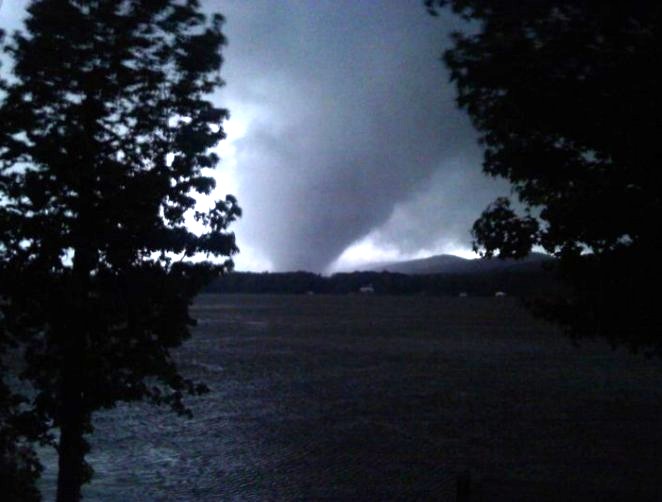
Stay connected to reliable sources like NOAA Weather Radio, which provides real-time alerts. Smartphone apps and local news stations are also valuable, but don’t rely solely on sirens—they’re designed for outdoor warnings and may not reach you indoors. Knowledge is power; in this case, it’s your early warning system.
Step 2: Develop a Foolproof Family Plan
A tornado doesn’t care if you’re caught off guard, so your plan needs to be second nature. Start by identifying your safe spot. The ideal location is a basement or storm shelter, but if those aren’t available, choose an interior room on the lowest floor with no windows—like a bathroom or closet. Reinforce this space if possible; a sturdy table or mattress can shield you from falling debris.
We have a semi-truck body on our property. Many places in our HOA have them. We are all on 5-10 acres each, so we can hide them behind trees if necessary. Our semi has been here for so long that trees have grown around it, keeping it tight, so we feel secure when we are in it during severe storms.
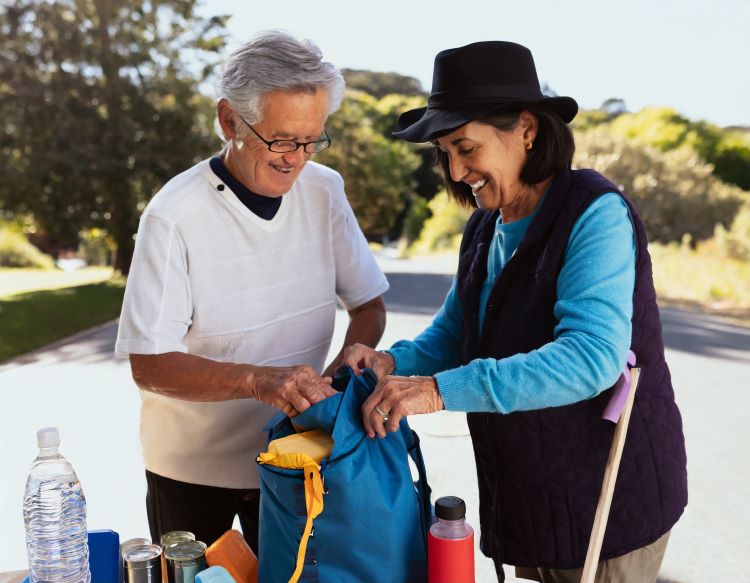
Walk through the plan with your family, including kids and pets, and run drills at least twice a year. Time how quickly everyone can get to the safe spot—every second counts when a tornado is bearing down.
Assign roles: one person grabs the emergency kit, and another secures the pets. If you’re away from home, know the nearest shelters or safe buildings, like a friend’s basement or a community center. Write down your plan, including emergency contacts, and keep it accessible.
After a tornado, the power grid is unstable. Electricity may surge, drop, or flicker on and off. These swings can damage appliances, medical devices, and electronics, even if they survived the storm.
This is why planning for grid instability matters just as much as the storm itself. Learn how to protect your home and devices in our Ultimate Disaster Survival Guide.
At this point, be sure you have a solid emergency evacuation plan in place.
Preparation isn’t just gear—it’s practice.
Step 3: Build a Robust Emergency Kit
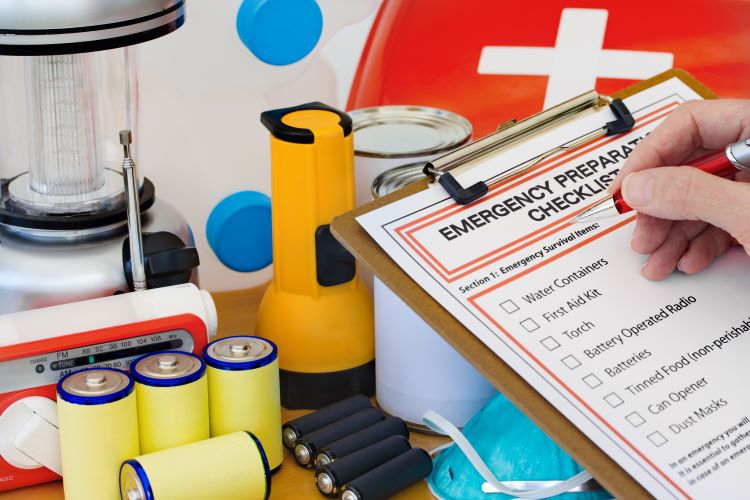
When a tornado hits, you might be hunkered down for hours—or even days—waiting for rescue or power restoration. Your emergency kit is your lifeline. Aim to sustain yourself for at least 72 hours. Stock it with:
- Water: One gallon per person per day for drinking and sanitation.
- Food: Non-perishable items like canned goods, protein bars, or dried fruit. Include a manual can opener.
- Lighting: Flashlights with extra batteries, or hand-crank flashlights. Avoid candles—fire risks are high in damaged structures.
- First Aid: Bandages, antiseptics, medications, and any personal prescriptions for at least a week.
- Comfort: Blankets, clothing, sturdy shoes, and a battery-powered or hand-crank radio for updates.
Store your kit in a waterproof container in your safe spot. Check it every six months to rotate food and batteries. Add personal touches—games for kids, a spare phone charger—to keep morale up during the wait.
Trusted Disaster Preparedness Resources
Whether you’re preparing for hurricanes, floods, power outages, food shortages, or other emergencies, having reliable preparedness resources can make planning easier. These trusted companies offer emergency food, water storage, and preparedness supplies to help you build resilience before disaster strikes.
✅ My Patriot Supply
✅ Emergency Essentials / BePrepared
Step 4: Fortify Your Property
You can’t stop a tornado, but you can reduce its impact. Start outside: trim overhanging branches and remove loose yard items like patio furniture that could become missiles. Inside, secure heavy furniture—bookcases, water heaters, TVs—to walls with straps or bolts. Reinforce windows with storm shutters or plywood; heavy curtains can at least slow flying glass if that’s not an option.
Consider long-term investments such as a safe room or a reinforced garage. These can be pricey, but for frequent tornado zones, they’re worth every penny. Check with local building codes—some areas offer grants for such upgrades. Every layer of defense buys you time and safety.
Step 5: Stay Informed and Adaptable
Tornado season varies by region—spring and summer in the Midwest, late fall in the Southeast—but freak storms can happen anytime. The weather patterns have changed a lot in the past few years.
Monitor weather forecasts daily, especially during unstable conditions like heat waves or cold fronts. Learn your community’s warning system—some use sirens, others rely on phone alerts. Sign up for text notifications from your county’s emergency management office.
Post-tornado, assess damage cautiously. Avoid downed power lines, gas leaks, or unstable structures. If you’re trapped, signal for help using a whistle or by tapping on pipes. Adaptability is key—conditions can shift fast, and so should your response.
FAQs
What is the safest place to go during a tornado?
The safest place is a basement or storm shelter. If unavailable, go to a small interior room or hallway on the lowest floor away from windows.
What should seniors do when a tornado warning is issued?
Go to your safe place immediately. Do not wait. Cover your head and neck and stay in place until the danger passes.
Do you need a tornado emergency kit/bug-out bag?
Yes. A basic kit should include water, medications, a flashlight, a weather radio, and essential personal items.
How can seniors prepare for tornadoes in advance?
Create a simple plan, choose a shelter location, practice reaching it quickly, and ensure you can receive alerts at all times.
Is it safe to stay in a mobile home during a tornado?
No. Mobile homes are not safe during tornadoes. Leave early and go to a sturdy building or designated shelter.
What should you do if you are outside during a tornado?
Find the lowest ground, such as a ditch, lie flat, and cover your head. Avoid vehicles and overpasses.
Should you open windows during a tornado?
No. Opening windows increases danger by allowing wind and debris inside.
Final Thoughts
Planning for a tornado isn’t about paranoia; it’s about empowerment. At GoldenSurvivalist.com, we believe that preparation turns chaos into control. Take these steps today—learn the signs, craft your plan, build your kit, secure your home, and stay informed. You’ll be ready when the winds howl, and the sky turns dark. Stay vigilant, stay safe, and keep surviving!
Comments
Have you been in a tornado? Were you prepared? What happened to you or others you may know? Please reply with your experiences in the comments area below.