
Survival Gardening Basics for Growing Your Own Food
This post may contain affiliate links. If you buy through them, I may earn a small commission at no extra cost to you.
When grocery shelves empty, storms delay deliveries, or prices keep rising, a small garden can become more than a hobby. It can become part of your emergency food plan.
This is Tip #11 for the 12 Months of Survival Prepper Challenges series on Golden Survivalist.
Survival gardening helps seniors build food security one step at a time. You do not need a farm. You do not need perfect soil. You do not need to grow everything you eat.
You only need to start.
A few containers, one raised bed, or a sunny corner of the yard can produce food, confidence, and peace of mind.
Start Small So You Do Not Burn Out
Many new gardeners make one big mistake.
They try to grow too much at once.
That leads to weeds, wasted money, sore backs, and frustration.
Start with a small garden you can actually care for. One raised bed is enough. A few containers are enough. A porch herb garden is enough.
Good beginner crops include:
- Potatoes
- Beans
- Tomatoes
- Peppers
- Lettuce
- Spinach
- Kale
- Carrots
- Herbs
If you are older, have joint pain, or struggle with bending, raised beds and containers are your friends.
They bring the garden up to you.
That matters.
A survival garden should make life easier, not harder.
Choose Crops That Earn Their Space
In a survival garden, every plant should have a job.
Pretty plants are nice. Food plants are better.
Focus on crops that give you one or more of these benefits:
- Calories
- Nutrition
- Storage value
- Fast harvest
- Seed saving
- Repeat harvests
Here are good choices:
| Need | Good Crops |
| Calories | Potatoes, sweet potatoes, beans |
| Fast food | Lettuce, radishes, spinach |
| Long storage | Dry beans, potatoes, winter squash |
| Easy nutrition | Greens, tomatoes, peppers |
| Flavor and medicine | Basil, oregano, thyme, mint |
| Repeat harvests | Kale, herbs, green beans |
Do not plant only salad crops.
Lettuce is useful, but it will not keep you full during a long emergency.
You need a mix of quick food, filling food, and food you can store.
Know Your Sun, Soil, and Water
A garden depends on three basic things:
- Sun
- Soil
- Water
Most vegetables need at least 6 hours of sun each day.
If your yard is shady, grow herbs, greens, or container crops in the brightest spot you have.
Soil matters too. Poor soil grows weak plants. Weak plants attract pests and disease.
Improve your soil with:
- Compost
- Aged manure
- Mulch
- Leaves
- Grass clippings that have not been sprayed
If possible, test your soil. If not, start adding compost and organic matter. That is the safest first step.
Water is the third piece.
In Florida heat, soil dries fast. Mulch helps hold moisture. It also protects roots from heat stress.
Use Raised Beds and Containers for Senior-Friendly Gardening
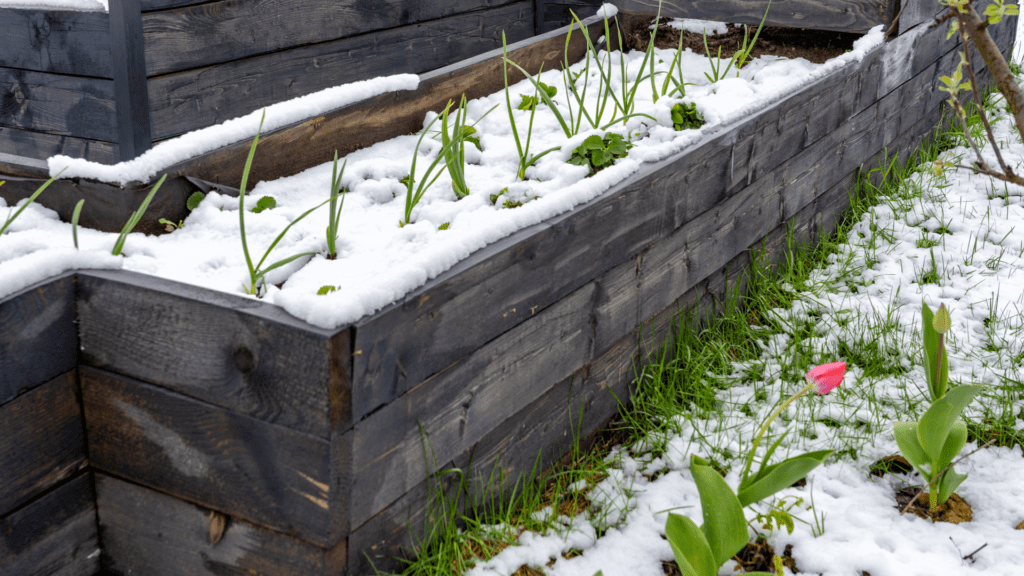
A survival garden should fit your body.
If kneeling, bending, or carrying heavy tools is hard, change the garden setup.
Helpful options include:
- Raised beds
- Waist-high planters
- Grow bags
- Large pots
- Vertical trellises
- Rolling garden carts
- Soaker hoses
- Drip irrigation
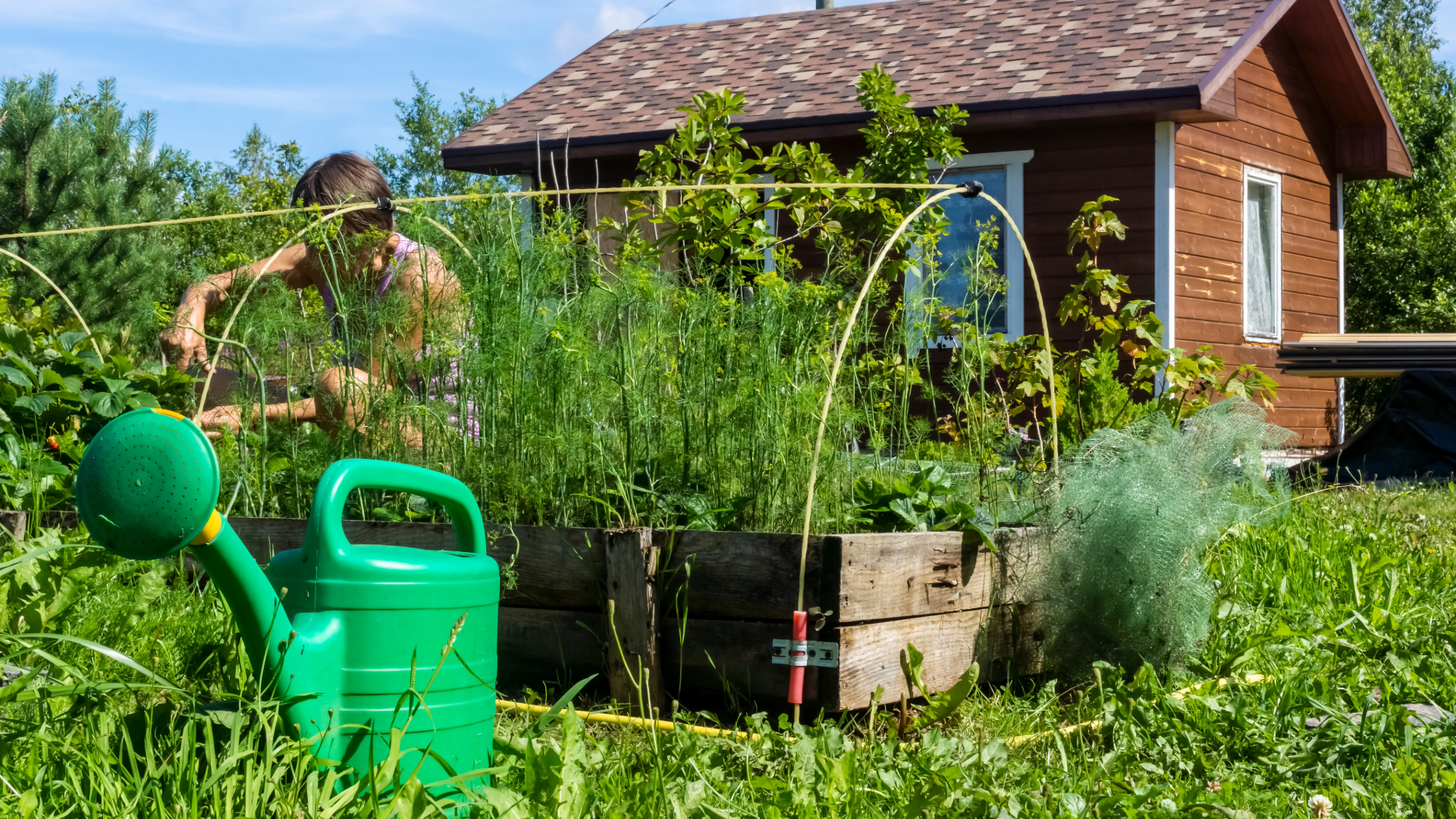
Raised beds are easier to weed. Containers are easier to place near the house. Trellises help crops grow upward instead of spreading across the ground.
Keep your most-used crops close.
Put herbs, greens, and daily harvest plants near the kitchen door if possible.
That one change can make gardening easier to keep up with.
Add Perennial Food Plants
Perennial plants come back year after year.
That makes them valuable for long-term preparedness.
Good perennial food plants include:
- Blueberries
- Blackberries
- Mulberries
- Figs
- Grapes
- Asparagus
- Rhubarb
- Fruit trees
- Walking onions
These plants take time to establish, but they become long-term food assets.
Think of them like a food savings account.
You plant once, care for them, and they keep paying you back.
Save Water Before You Need It
Water is one of the weak points in any garden.
During drought, power outages, or water restrictions, your garden may suffer unless you plan ahead.
Ways to save water include:
- Mulch deeply around plants
- Water early in the morning
- Use drip irrigation or soaker hoses
- Collect rainwater where legal
- Group thirsty plants together
- Grow drought-tolerant crops
- Use shade cloth during extreme heat
Mulch is one of the easiest wins.
It keeps soil cooler. It reduces evaporation. It slows weeds.
For seniors, that means less watering and less work.
Protect Your Garden Naturally
During a long emergency, you may not be able to run to the store for sprays and supplies.
Learn natural pest control now.
Helpful methods include:
- Companion planting
- Hand-picking pests
- Netting
- Row covers
- Neem oil
- Garlic spray
- Beneficial insects
- Healthy soil
Companion planting can help.
Examples:
- Marigolds near tomatoes
- Basil near tomatoes
- Beans near corn
- Flowers near vegetables to attract pollinators
Do not expect companion planting to solve every problem.
It helps, but it is not magic.
The real goal is balance. Healthy soil grows stronger plants. Stronger plants handle stress better.
Preserve What You Grow
Growing food is only half the job.
You also need to keep it from going to waste.
Food preservation turns a short harvest into long-term security.
Useful methods include:
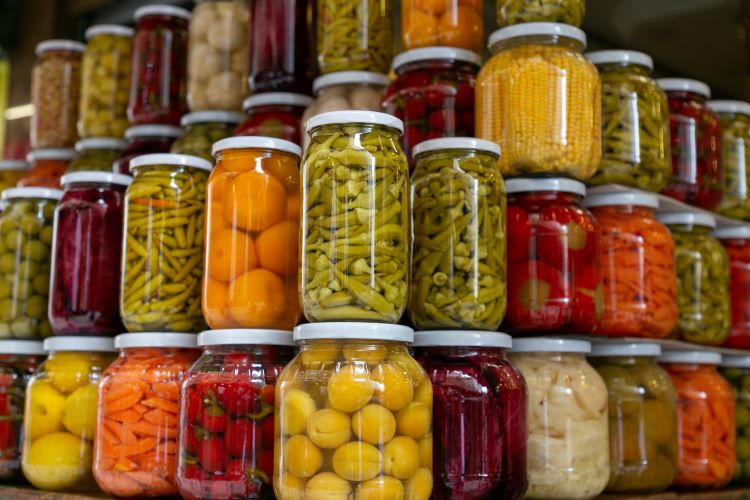
- Canning
- Dehydrating
- Freezing
- Fermenting
- Root cellaring
- Drying herbs
- Saving dry beans
Start simple.
Dry herbs first. Then try dehydrated vegetables. Then learn water bath canning for high-acid foods like jams, tomatoes with added acid, and pickles.
Pressure canning is needed for low-acid foods like green beans, meats, soups, and many vegetables.
Do not guess with canning safety.
Use tested recipes.
Food poisoning is not preparedness.
Save Seeds for Future Gardens
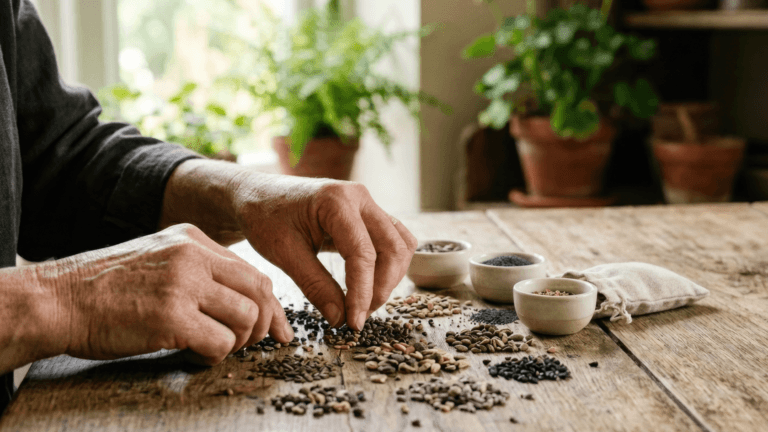
Seed saving is one of the most important survival gardening skills.
It helps you grow food without depending on stores every season.
Good beginner seeds to save include:
- Beans
- Peas
- Tomatoes
- Peppers
- Lettuce
- Okra
Label everything.
Write down:
- Plant name
- Variety
- Date saved
- Where it grew
- Any notes about taste or production
Store seeds in a cool, dry, dark place.
Over time, seeds saved from your own garden may adapt better to your local conditions.
That is a quiet kind of independence.
Build a Garden That Helps during Real Emergencies
A survival garden should support your emergency plan.
Ask yourself:
- What can I grow if grocery trips become harder?
- What foods can I preserve?
- What crops grow well in my climate?
- What can I manage physically?
- What can I water during a power outage?
- What can I protect from animals and pests?
This keeps your garden practical.
You are not trying to impress anyone.
You are trying to build a food backup system.
Gardening Helps the Mind, Too
A garden feeds more than the body.
It gives you routine. It gives you purpose. It gets you outside. It helps reduce stress.
During uncertain times, that matters.
Pulling weeds, watering plants, and harvesting food can remind you that you still have control over something.
That is powerful.
Preparedness is not only about supplies.
It is also about confidence.
A prepared household is good.
A prepared neighborhood is better.
Gardening gives you something useful to share.
You can share:
- Seeds
- Cuttings
- Extra vegetables
- Gardening tips
- Composting ideas
- Local growing knowledge
This builds trust before emergencies happen.
And trust is one of the most valuable survival tools you can have.
Final Thoughts
A survival garden does not need to be large.
It needs to be useful.
Start with what you can manage. Grow food you will actually eat. Build better soil. Save water. Preserve your harvest. Learn seed saving one crop at a time.
Every seed you plant gives you a little more independence.
Every harvest gives you a little more confidence.
And every season teaches you something useful for the next emergency.
Continue the 12 Months of Survival Prepper Challenges
This tip is part of the 12 Months of Survival Prepper Challenges series on Golden Survivalist.
Each tip helps seniors build practical skills for food, water, shelter, safety, health, and long-term preparedness.
Explore the full challenge series here:
Comment Section
Do you grow any food at home now? Do you use raised beds, containers, or a backyard garden? Share below what has worked for you. Your experience may help another senior start small and feel more prepared.
FAQs
What is the easiest survival crop for beginners?
Potatoes, beans, tomatoes, herbs, and leafy greens are good beginner crops. They are useful, productive, and easier to manage than many other foods.
Can seniors grow food without a large yard?
Yes. Seniors can grow food in raised beds, containers, grow bags, patios, porches, and balconies. Even a small space can produce herbs, greens, peppers, and tomatoes.
What crops are best for long-term food security?
Potatoes, sweet potatoes, dry beans, winter squash, fruit trees, berry bushes, and herbs are strong choices because they provide calories, nutrition, or storage value.
How can seniors make gardening easier?
Use raised beds, containers, drip irrigation, mulch, lightweight tools, and garden carts. Keep the garden close to the house when possible.
Why is seed saving important for survival gardening?
Seed saving helps you grow food again without depending on stores. It also helps build a supply of seeds suited to your local growing conditions.