

Sustainable Food Sovereignty For Seniors
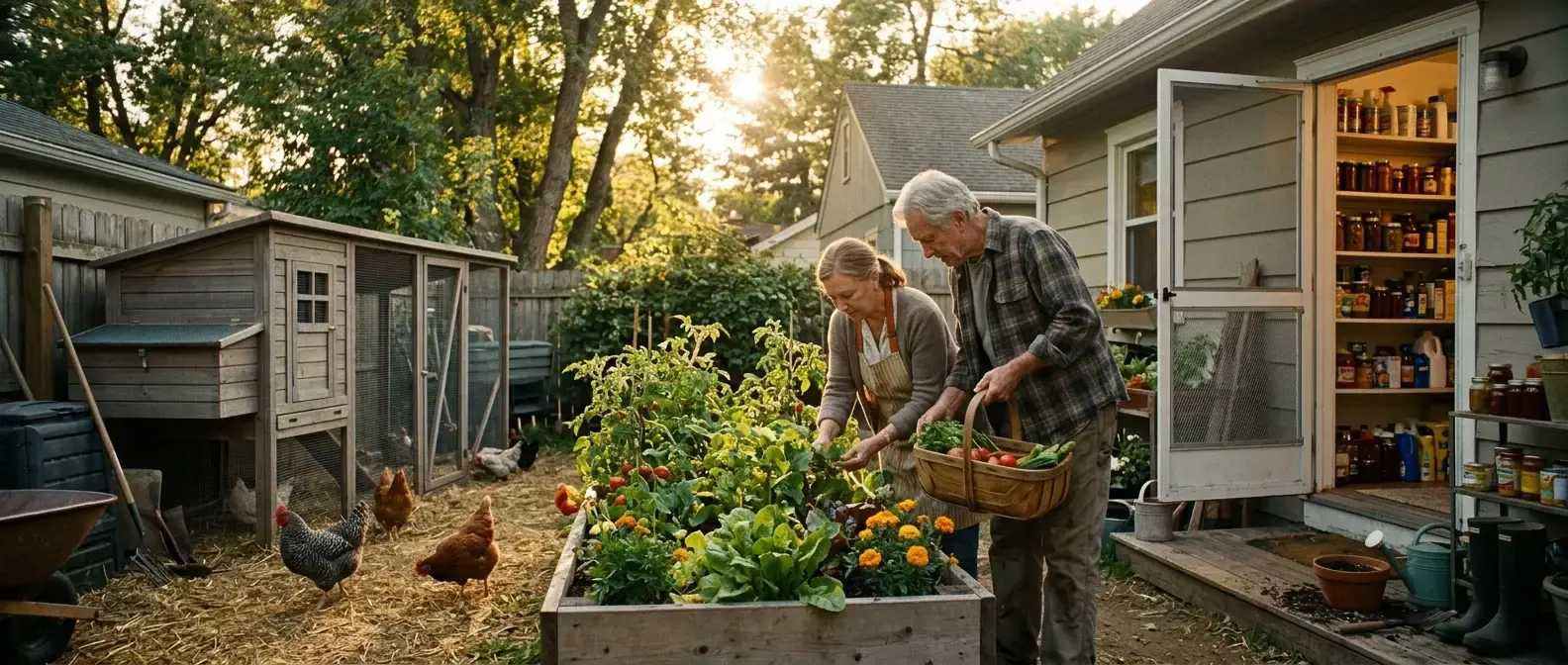
Welcome to Food Sovereignty for Seniors
Food sovereignty does not have to mean doing everything yourself. For most seniors, it is about creating a few dependable systems that reduce how much you rely on stores, deliveries, and outside help when something goes wrong. The goal is greater resilience, not perfection.
🌿 From My Homestead
Living on five rural acres has taught me that food security usually comes from small systems working together: growing some food, keeping a dependable pantry, preserving what you can, and planning ahead.
As I’ve gotten older, I’ve also learned to make self-reliance easier on the body. My goal with this series is to help you build more control over your food supply in practical ways that fit your space, budget, energy, and abilities.
The tips I share come from real experience, along with research and current homesteading best practices. My goal is simple: help you keep homesteading safely, comfortably, and for many years to come.
Food sovereignty doesn’t happen overnight, and you don’t need to tackle everything at once. Let’s explore the simple steps that can help you build a more dependable food supply while making everyday life a little easier.
TL;DR for Seniors: Sustainable Food Sovereignty
Food sovereignty means building small, dependable food systems you control so you are less vulnerable to shortages, rising prices, transportation problems, or supply disruptions.
🌿 Key Points:
✅ Grow what you can in raised beds, containers, or vertical systems that are easier on your body.
✅ Keep a dependable pantry and store foods you already use.
✅ Consider small-scale protein sources, such as hens, if they fit your space and abilities.
✅ Preserve and process food in small, manageable batches.
✅ Choose tools and systems that reduce lifting, bending, gripping, and repetitive strain.
✅ Build gradually so your food system stays realistic for your budget, energy, and daily routine.
🌻 Takeaway: You do not need to become completely self-sufficient. Every dependable food source you add gives you a little more control, flexibility, and resilience when normal supplies are disrupted.
Why Food Independence Matters For Aging Preppers
Food shortages don’t always begin with a disaster in your own neighborhood. Transportation problems, delayed deliveries, and supply disruptions can affect grocery availability. My guide to Food Shortage Survival Planning for Seniors explains how to build a practical reserve without excessive stockpiling.
Older adults face a different kind of food risk than younger households:
- Fixed incomes mean price spikes hit harder and faster.
- Reduced mobility can turn a routine grocery trip into a genuine obstacle during a disruption.
- Many seniors manage health conditions that require specific foods, consistent nutrition, or medication schedules tied to meals.
That combination makes ‘just wait it out’ a riskier strategy than it sounds.
Keeping a dependable pantry also means storing food safely and reducing waste. Nutrition.gov’s Safe Food Storage resources provide helpful guidance for organizing and maintaining household food supplies.
Food sovereignty addresses this by shifting control closer to home. Instead of relying entirely on a supply chain with multiple points of failure, you build smaller, redundant systems:
- a garden bed,
- a few hens,
- a stocked pantry,
- a way to process what you grow.
None of these need to replace grocery shopping entirely. They need to reduce how much any single disruption can hurt you.
There’s also a practical argument tied to independence itself. A senior who can produce even a portion of their own food has more leverage in a crisis: more time before a shortage becomes an emergency, and more options when prices or availability shift. That margin is worth building deliberately, not hoping for.
Vertical Gardening And Low Impact Growing Techniques
For more ways to grow food without putting unnecessary strain on your body, explore Smart Gardening for Seniors: Growing More. Hurting Less.. If space is limited, you’ll also find practical ideas in Growing Food in Small Spaces.
Traditional row gardening asks a lot of the body, especially if you have knee or back limitations: kneeling, bending, hauling water buckets across a yard. Vertical and container growing sidestep most of that while still producing real food.
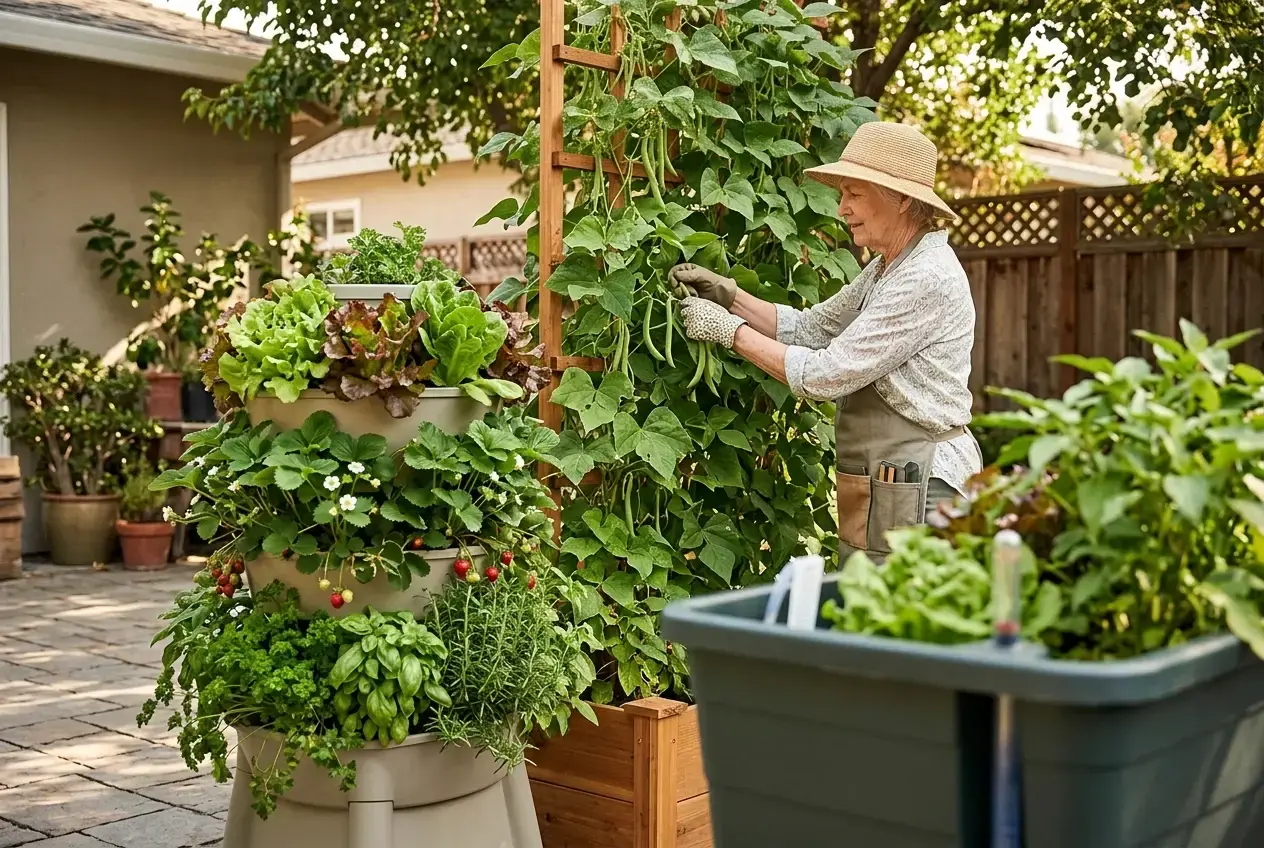
A few approaches worth considering:
Raised vertical towers let you grow herbs, lettuce, and strawberries at waist or chest height, so you don’t have to bend to harvest. Many commercial towers use a small footprint of a few square feet and can be set up on a patio or balcony.
Trellised vining crops like beans, peas, and cucumbers can be trained upward along a fence or frame, keeping the harvest within easy reach and reducing the ground space needed.
Self-watering containers cut down on how often you need to carry water, since a reservoir at the base supplies the plant gradually. This matters more than it sounds for anyone managing arthritis or limited grip strength.
Hanging planters for herbs and small greens work well on a porch rail or hook, keeping frequently used ingredients within arm’s reach of the kitchen door.
Low impact doesn’t mean low yield. A well-managed set of vertical containers can produce a meaningful amount of fresh greens, herbs, and some fruiting vegetables across a growing season.
The key is matching the technique to what your body can sustain week after week, not what looks most productive on paper.
Tool choice matters here too. A trowel with a built-up grip, a stool with armrests for seated weeding, and a hose with an easy-trigger nozzle all reduce the physical cost of maintaining a garden.
For a fuller rundown of how to adapt the rest of your equipment, the guide on adapting survival tools for aging hands covers modifications for grip strength, joint stress, and reach that apply well beyond the garden bed.
Local workshops can also shorten the learning curve considerably, especially for techniques like succession planting or preserving a harvest once it comes in. If one exists near you, it’s often worth the afternoon. There’s more detail on what these sessions typically cover in the piece on gardening and food preservation workshops for seniors.
Every small step toward growing, storing, or preserving your own food helps build a more secure and independent future.
Small-Scale Livestock For Protein
Vegetables solve part of the food sovereignty problem. Protein is the harder piece, and it’s where small-scale livestock earns its place in a senior’s plan.
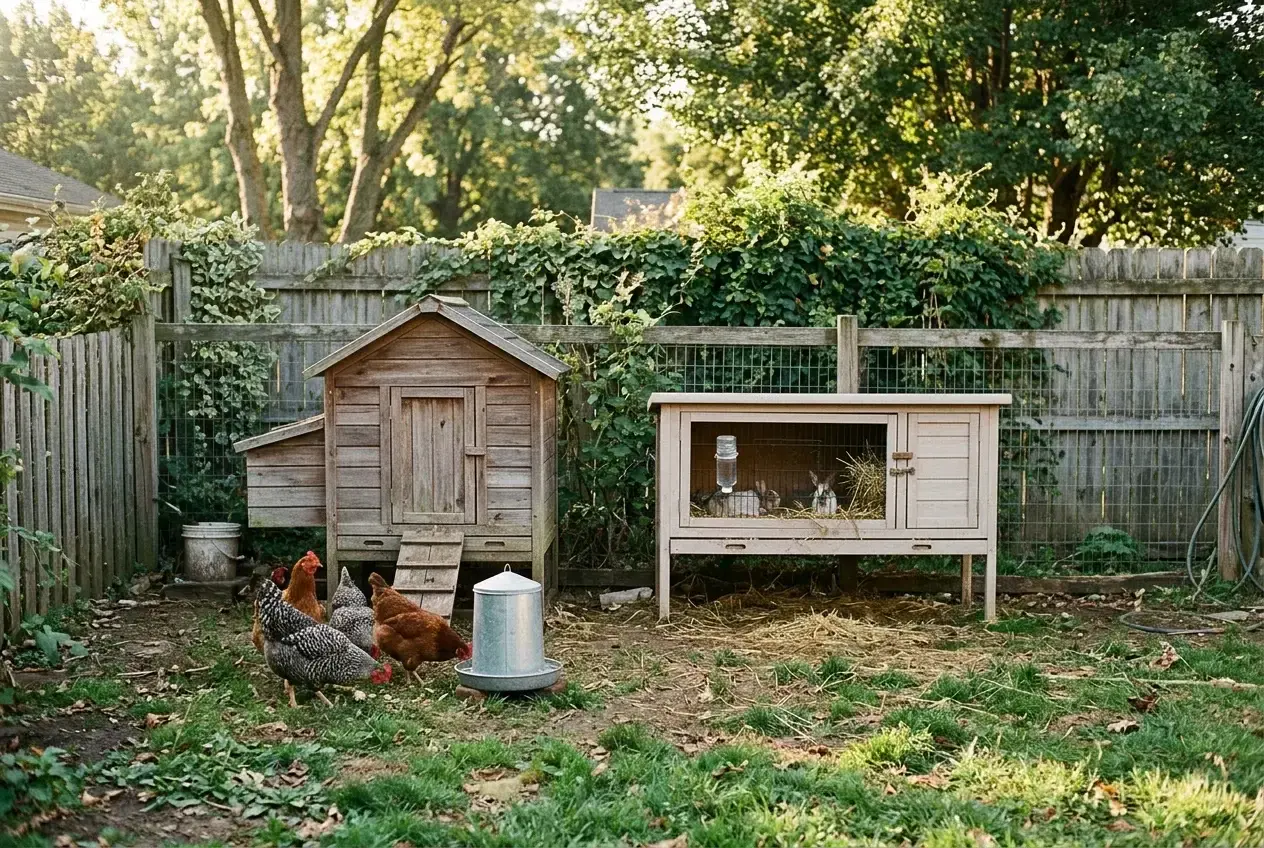
Backyard hens are the most common entry point, and for good reason. Three or four hens in a secure coop can reliably supply eggs, require daily attention measured in minutes rather than hours, and don’t demand heavy lifting beyond carrying feed and water. Check local ordinances before committing, since some municipalities restrict flock size or require permits.
Rabbits are another option worth serious consideration. They’re quiet, take up little space, breed reliably, and provide lean meat without the noise or zoning complications that come with larger livestock. The hutches are light enough to manage, and the animals themselves are far easier to handle physically than goats or pigs.
We had rabbits when I was 9-11 years old. We started with 3 rabbits. A male and 2 females which quickly grew to 25+ rabbits. I was allowed to keep 2 rabbits as pets. I had a large grey male I called Bugsy and a tan female I called Sweety.
I loved these rabbits, but to keep them, I had to learn to process them for the freezer. That ‘process’ was from living to death, skinning them and packing for the freezer. I did this at 10 years old.
Insects deserve a mention too, and for seniors specifically, they solve several problems at once: minimal space, minimal noise, minimal physical strain, and a genuinely useful protein source once you get past any initial hesitation.
Crickets and mealworms, in particular, can be raised in stackable bins that fit in a garage or spare room, with no outdoor enclosure needed at all. If this sounds like it might fit your situation, the breakdown in top 5 insects to cultivate for protein walks through which species tend to work best and why.
Whatever you choose, scale it to what you can maintain consistently, not what you can set up once and forget. A single hen left without water on a hot day is a bigger problem than an empty garden bed.
Match the commitment to your actual daily routine, including the days when mobility or energy is lower than usual.
Safe Manual Grain Processing At Home
Grain is one of the most overlooked pieces of a home food system, partly because processing it has traditionally meant heavy equipment: large mills, hand-crank grinders that demand real shoulder strength, or electric mills that fail the moment the power goes out.
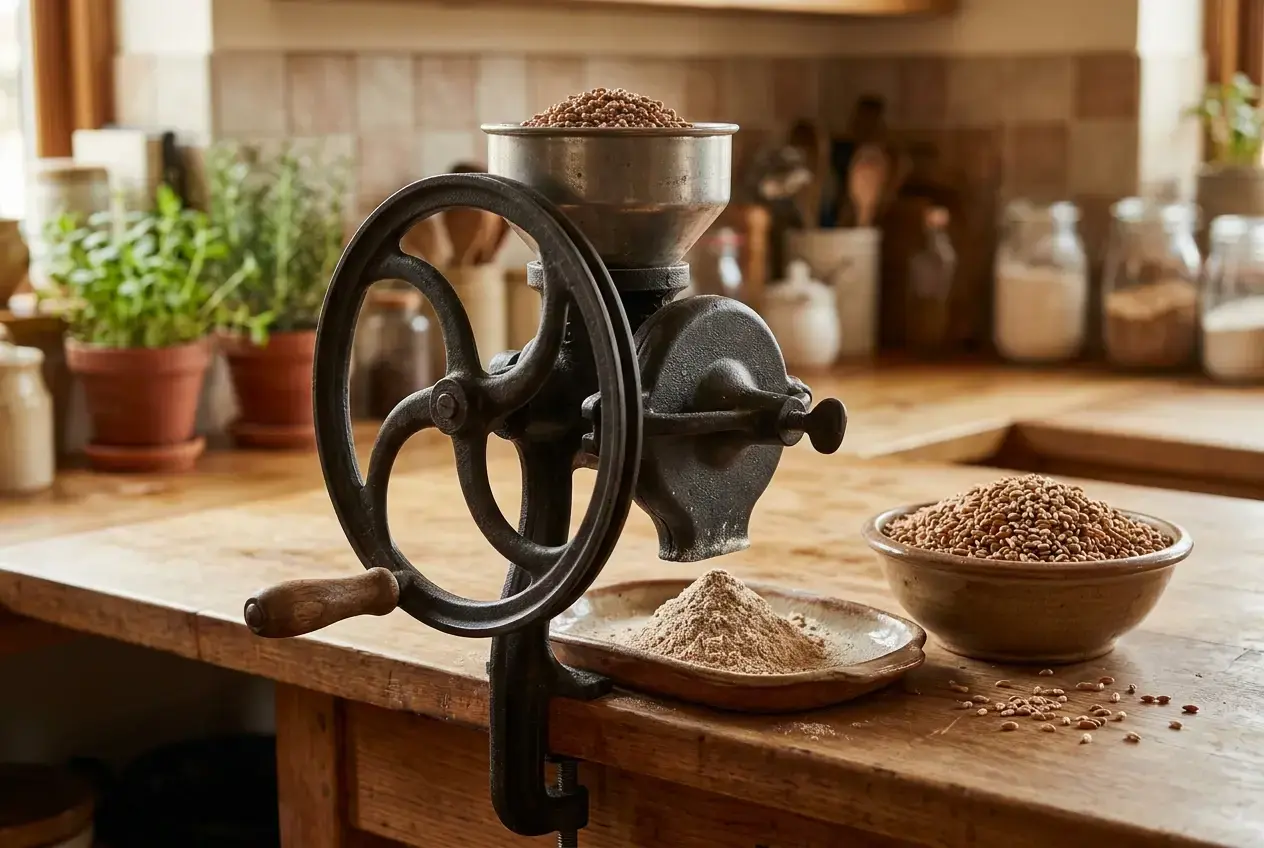
Gentler paths can achieve the same result.
Manual grain mills with a flywheel design spread the grinding effort over a longer, lower-resistance crank stroke, which is much easier on the hands and shoulders than a compact hand-crank model. Mounting the mill at a comfortable seated or standing height, rather than on the floor, also significantly reduces strain.
Soaking grains before grinding softens them, which cuts the force needed to process them by hand. This works well for grains destined for porridge or soft baked goods, where you don’t need perfectly fine flour.
Small batch processing beats trying to mill a month’s supply in one sitting. Grinding what you need for a few days at a time keeps each session short and manageable, and it also keeps the flour fresher, since whole-grain flour loses nutritional value fairly quickly once ground.
A mortar and pestle remains a legitimate option for small quantities, particularly for cracking grain rather than producing fine flour. It requires no setup or electricity and can be done seated at a table.
Storage matters as much as processing. Whole grains keep far longer than ground flour, so the safest approach is usually to store grain whole and mill only what you’ll use soon. This also means your grinding equipment doesn’t need to process large volumes quickly, opening the door to gentler, lower-effort tools.
If grip strength or joint pain is a concern with any manual tool, revisit the equipment adaptations covered in the tools guide mentioned earlier, since many of the same modifications that help with garden tools apply directly to grain mills and kitchen equipment. Or, read this: Best Ergonomic Gardening Tools for Seniors: Garden with Less Strain.
The Psychology Of Food Security
Food sovereignty isn’t only a logistical project. It’s also psychological, and that side gets less attention than it deserves.
Food independence doesn’t have to mean working alone. Neighbors can exchange produce, supplies, and practical skills. My article on How Bartering Can Help You Survive During Emergencies explains how to build those relationships before you need them.
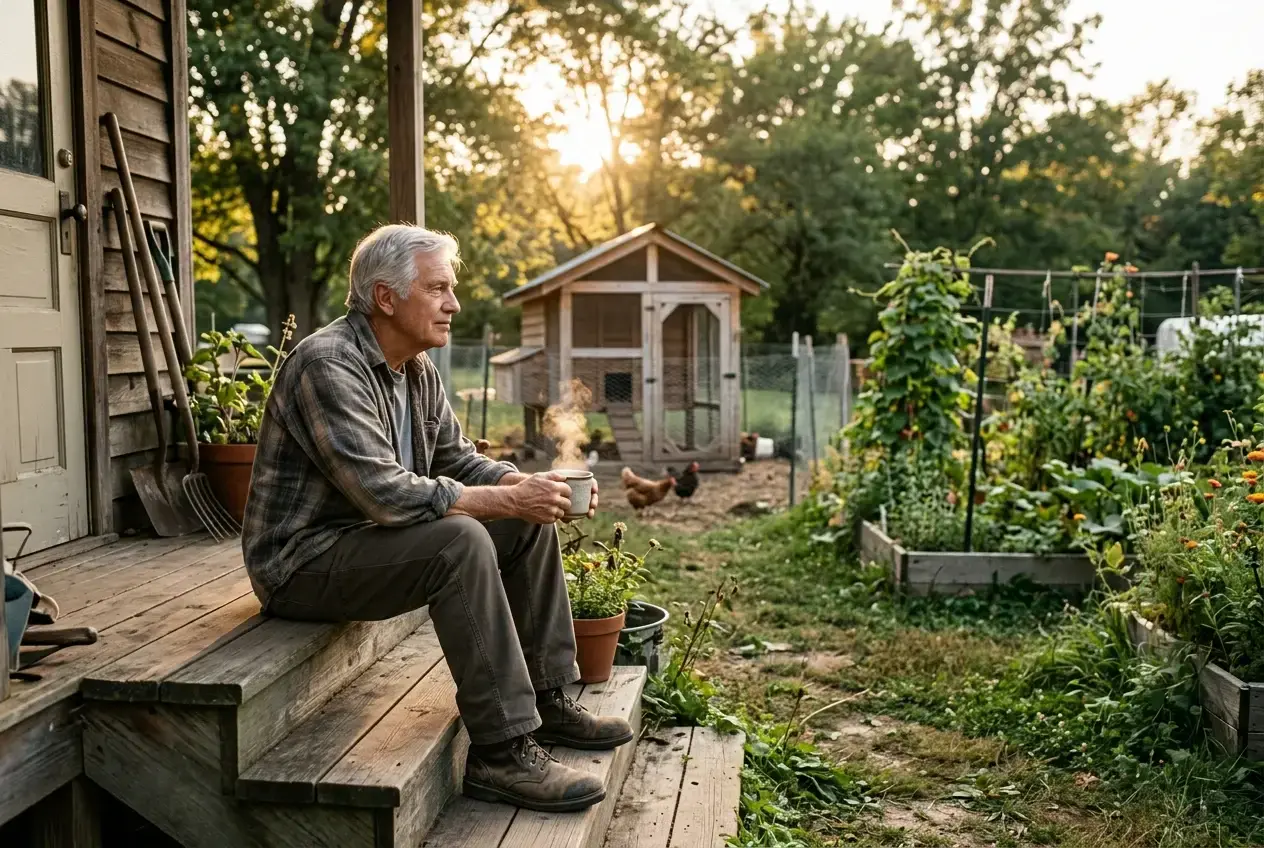
Knowing where your next meal is coming from, independent of a store’s hours or a truck’s schedule, changes how a person experiences uncertainty.
Anxiety around shortages, price spikes, or disruptions often centers on a loss of control. A garden bed, a few hens, a stocked pantry: these don’t just produce food; they produce a sense that you have options when circumstances shift.
This matters particularly for seniors managing chronic stress or health conditions where anxiety has a direct physical cost. Whether a person feels prepared or exposed affects sleep, blood pressure, and overall resilience during a crisis.
A food system you’ve built and understand, even a modest one, tends to lower that baseline anxiety simply because you know its shape. You know how many eggs the hens lay in a week, how long the stored grain will last, how much the garden typically produces by midsummer.
There’s a community dimension here too. Growing, raising, or processing food is rarely purely solitary, even when you’re doing it alone most days. Sharing a surplus of eggs or vegetables with a neighbor, trading skills with another local grower, or simply talking through a problem with someone who keeps hens themselves all reinforce the sense that you’re not managing this in isolation.
For more on building that kind of local support network, the guide on community preparedness covers how to find and build those connections without overcommitting your time or resources.
The goal isn’t to eliminate every worry about food security. It’s to replace a vague, unexamined fear with a specific, manageable set of tasks:
- water the beds,
- check the coop,
- mill what you need for the week.
Specific tasks are easier to carry than vague dread, and that shift alone is worth building the system in the first place.
🌿 Trusted Food Sovereignty Sources
Building food independence is easier when you have the right tools and systems. These trusted products can help make growing, storing, preserving, and preparing food more manageable while reducing unnecessary lifting, bending, gripping, and strain.
Whether you’re working with a small garden, building a dependable pantry, preserving a harvest, or adding simple food-production systems at home, these are practical products worth considering.
-
 $89.95Buy Now
Starter Kits Set for Beginners -
Stainless Steel Water Bath Canner Kit & Rack-Rack, XL Ladle, Measuring Cups, Kitchen Funnel
The BEST canning pot and rack in the market that comes with a food-grade stainless steel canning kit + ½ pint (8 oz) canning scoop + 6 measuring cups - steelcore core porcelain lightweight chemical free pot (Assembled in USA, 365 day back warranty, US & UK based 24/7 customer care).
*Customers usually keep this item.
We earn a commission if you make a purchase, at no additional cost to you.
10/31/2026 10:07 pm GMT -
 $109.90Buy Now
400lbs Weight Capacity, Gardening Cart Bench, Ergonomic Backrest & Tool Storage, for Yard, Patio
We earn a commission if you make a purchase, at no additional cost to you.
10/31/2026 10:09 pm GMT -
 $89.99Buy Now
13 in All Terrain Tires, 4-in-1 Yard Wagon Cart with Removable Side Panels for Outdoor Lawn, Yard
I've owned one like this for 22 yrs!
We earn a commission if you make a purchase, at no additional cost to you.
10/29/2026 08:39 pm GMT -
 $59.77Buy Now
Pack of 3 BPA Free Food Storage Containers, Made in USA- 3 Colors (Aqua, Blue, Gray, Black lids)
These 5 Gallon buckets are Food Grade, bucket with lid and can be used as cleaning bucket, water bucket, paint bucket, Fermentation bucket, wash bucket.
These food storage buckets can be used for many foods. Easy open lid can be opened and closed easily.
*Customers usually keep this item.
We earn a commission if you make a purchase, at no additional cost to you.
10/29/2026 09:49 pm GMT -
 $62.99Buy Now
Cucumber Trellis with High-Density Rhombus SteelGrats for Climbing Plants, Tomatoes & Raised Beds, Outdoor Use
Strong enough to support heavy cucumbers, melons, pumpkins, and dense foliage without bending or collapsing. Built to handle several times of ordinary garden trellises.
We earn a commission if you make a purchase, at no additional cost to you.
10/29/2026 09:53 pm GMT -
 $103.17Buy Now
COMPLETE HOME AND GARDEN TOOLKIT - Tackles indoor and outdoor maintenance jobs with a comprehensive 6-piece set featuring ergonomically designed PowerGear Lopper, 9-in-1 Shears, Bypass Pruner, Folding Saw, IsoCore Hammer, and Utility Knife
We earn a commission if you make a purchase, at no additional cost to you.
10/29/2026 09:58 pm GMT -
 $79.99Buy Now
Equipped with easy-lock handle, built-in cutter, sealed hose, 1 roll + 15 vacuum bags for food preservation Black Silver
95kPa Powerful Suction - 50% faster than standard sealers
With a 230W high-power motor and high-quality heating wire, the QKWXV vacuum sealer achieves a tight vacuum seal in 8–18 seconds under 95kPa suction force—50% faster than standard sealers. Its upgraded silicone sealing ring prevents leaks, enhances vacuum performance, and extends machine durability after rigorous 3,000+ cycle testing.
We earn a commission if you make a purchase, at no additional cost to you.
10/29/2026 09:59 pm GMT -
 $49.99Buy Now
350W | Expandable to 7 Trays, 48H Timer, for Jerky, Fruit, Herbs, Meat, Veggies and Dog Treats, 50-Recipes Book Included, White
Love this! Great price 🙂
We earn a commission if you make a purchase, at no additional cost to you.
10/29/2026 09:20 pm GMT -
 $68.99Buy Now
Premium Corn-Grinding Mill and Grain Grinder, Made in Colombia
MANUAL MILLING MACHINE: This grain mill has a durable cast-iron hand crank with a wooden handle and high-performance white iron discs for grinding all types of grain. Simply adjust the screw to change the coarseness and fineness of your milling.
VERSATILE GRINDER: Use this grain grinder for home brewing, corn, barley, grains, coffee, cheese, vegetables, seeds, nuts, coconut, spices, dried beans, cooked meats, and more. Please note that this grinder cannot grind to a superfine texture and will not grind whole wheat into a fine powder.
Looks like the meat grinder my grandmother left me!
We earn a commission if you make a purchase, at no additional cost to you.
10/29/2026 09:36 pm GMT -
 $99.95Buy Now
15" Tall Large Plant Pots with Trellis for Flowers Plants Decor, Cream White
Innovative Watering System in Raised Garden Planter: A reliable and efficient solution for delivering water to your plants without having to worry about overflow.
The water storage volume of the tomato planter box is about 9L, fill it once to water your planter for up to 1.5 months! This innovative design gives new gardeners a hassle-free way to start growing!
We earn a commission if you make a purchase, at no additional cost to you.
10/29/2026 09:45 pm GMT

Why This Matters for Preparedness
Food sovereignty gives you something every preparedness plan needs:
Options –
- A productive garden,
- a dependable pantry,
- stored staples,
- preservation skills,
- or even a few hens can buy you valuable time when
- prices rise,
- shelves empty,
- transportation becomes difficult,
- or normal deliveries are interrupted.
You do not have to produce everything you eat. The goal is to become less dependent on any one source of food and more confident in the systems you can manage yourself.
Whether you’re canning, freezing, or dehydrating, always follow tested food preservation instructions. The National Center for Home Food Preservation offers research-based recommendations for safely preserving food at home.
Building Your Own System, One Piece at a Time
If growing food is your starting point, begin with Survival Gardening Basics. Then explore the Best Vegetables to Grow for Survival to choose useful crops suited to your climate, space, and abilities.
You do not need to build your entire food-security system at once. Start with what fits your life now. That might be:
- one raised container this season,
- a better-organized pantry,
- learning to dehydrate a few foods,
- or adding a small flock later.
Each step gives you a little more control over your food supply. Let your system grow as your skills, confidence, space, and energy allow.
Whether you’re canning, freezing, or dehydrating, always follow tested food preservation instructions. The National Center for Home Food Preservation offers research-based recommendations for safely preserving food at home.
🌱 Continue the Food & Water Sovereignty Series
Every household’s food and water security plan looks a little different. These related articles can help you build yours one practical piece at a time.
As I complete these associated posts, the link will be underlined.
Popular Guides
🌱 10 Low-Lift Root Cellar Tips for Seniors With Bad Backs and Shoulders.
🌼 Off-Grid Water Filtration for Joint Health
🧰 Building a 90-Day Pantry on a Fixed Income
🪶 Dehydrating and Canning When Standing Too Long Hurts
🛒 Seed Saving Basics for a Self-Sufficient Pantry
🥕 Bartering and Local Food Networks for Seniors Who Prep Alone
🗺️ Your Local Food Backup Plan: Who Will Still Have Food After a Disaster?
📋 A Caregiver’s Emergency Food and Information Plan for an Older Adult
👉 See Every Food Sovereignty Article
Discover practical food sovereignty tips that make growing, storing, preserving, and preparing food easier, safer, and more manageable for older adults.
FAQs
1. What does food sovereignty mean for seniors?
Food sovereignty means having greater control over where your food comes from and how you obtain it. For seniors, this might include growing vegetables, keeping a well-stocked pantry, preserving seasonal produce, or buying directly from local farmers. You don’t have to produce all your own food. The goal is to become less dependent on outside sources while maintaining a dependable food supply.
2. Can seniors become more food-independent without owning land?
Absolutely! You don’t need a farm or even a backyard to improve your food security. Container gardens, patio planters, indoor herbs, and community gardens offer opportunities to grow food in small spaces. Building a pantry, learning food preservation, and supporting local growers are equally valuable ways to become more self-reliant.
3. How can seniors build food security on a fixed income?
Start by purchasing a few extra shelf-stable foods you already eat whenever your budget allows. Watch for sales, buy seasonal produce, and reduce food waste by using older supplies first. A rotating pantry helps prevent expired food and unnecessary spending. Even small, consistent additions can build a useful emergency food supply over time.
4. How much emergency food should seniors store?
A practical starting goal is enough familiar, easy-to-prepare food for three days. Gradually increase that supply to two weeks, then consider building a 30-day or 90-day pantry if your space and budget permit. Include foods that meet your dietary needs, require little preparation, and can be eaten during a power outage. Store enough safe drinking water, too.
5. What are the easiest ways for older adults to grow their own food?
Container gardening, elevated raised beds, and small vertical gardens are excellent options. Leaf lettuce, radishes, bush beans, herbs, and other crops suited to your climate can provide fresh food without requiring a large garden. Choose methods that minimize bending, heavy lifting, and repetitive movements. A smaller, manageable garden is often more productive than one that’s too difficult to maintain.
6. What food preservation methods are best for seniors with limited mobility?
Freezing and dehydrating can be convenient options, especially when working in small batches. Canning is another possibility, but it requires following tested food safety instructions and safely handling heavy, hot equipment. Choose a comfortable work surface, use lightweight containers where appropriate, and divide preparation into shorter sessions. Never change tested canning procedures to make them easier.
7. Can seniors improve food security without gardening or preserving food?
Yes! Gardening and food preservation are only two parts of food sovereignty. Maintaining a rotating pantry, purchasing from local farmers, joining a food cooperative, arranging grocery-sharing with neighbors, and building community food networks can all improve food security. The most dependable approach combines several methods that fit your abilities and circumstances.
8. How does food sovereignty help seniors prepare for emergencies?
A dependable food system provides more options when severe weather, power outages, supply disruptions, or transportation problems make shopping difficult. Stored food, safe drinking water, local food connections, and the ability to grow some produce can reduce your dependence on a single source. Food sovereignty isn’t about preparing for the worst every day. It’s about building practical independence and greater peace of mind.
Which part feels most realistic for you to start with: a garden bed, a better pantry, food preservation, or perhaps a few hens?
Tell me in the comments what you’re working on and what part of the country or climate you’re gardening in. Your experience may give another reader an idea they can use too.
If you’d like a structured place to start, sign up for our newsletter to receive our food storage checklist, a practical first step toward a pantry and growing system built around your actual needs.