
Off-Grid Water Filtration for Joint Health: A Senior-Friendly Guide

Clean Water, Healthy Hydration, and Greater Independence
Most of us don’t give much thought to the water coming out of our kitchen faucet. We turn on the tap, fill a glass, and go about our day.
But what happens when the electricity goes out, a well pump stops working, or your local water supply becomes unsafe?
Living in the country has taught me that a dependable water supply matters just as much as a well-stocked pantry. We have an above-ground salt-water pool that we have for more that just swimming and lying in the sun; it’s also a backup water supply.
As we get older, staying hydrated becomes especially important. Water supports many normal body functions, including those that help keep our joints functioning.
That’s why I believe every senior should understand how to obtain safe drinking water when the usual systems aren’t available.
The good news? You don’t need an expensive off-grid water system or heavy equipment to get started.
🌿 From My Homestead
Living on five rural acres has taught me that food security usually comes from small systems working together: growing some food, keeping a dependable pantry, preserving what you can, and planning ahead.
As I’ve gotten older, I’ve also learned to make self-reliance easier on the body. My goal with this series is to help you build more control over your food supply in practical ways that fit your space, budget, energy, and abilities.
The tips I share come from real experience, along with research and current homesteading best practices. My goal is simple: help you keep homesteading safely, comfortably, and for many years to come.
Clean drinking water is one of the foundations of food independence. A dependable off-grid water plan can help you stay hydrated, prepare meals, and manage everyday needs during an interruption. The trick is choosing equipment you can safely operate and maintain, even when your hands, shoulders, or back aren’t cooperating.
TL;DR for Seniors: Off-Grid Water Filtration
Off-grid water filtration can provide an additional way to prepare drinking water when electricity or normal water service is unavailable. However, not every filter removes every contaminant. Choosing a safe system depends on your water source and the particular contaminants you need to address.
🌿 Key Points:
✅ Safe drinking water supports hydration and normal joint function.
✅ A water filter cannot cure arthritis or reverse joint damage.
✅ Gravity filters can operate without electricity, but their contaminant-removal abilities vary.
✅ Many portable filters do not remove viruses.
✅ Boiling kills disease-causing germs, but it does not remove harmful chemicals.
✅ Lightweight pitchers, accessible spigots, and manageable containers help reduce physical strain.
✅ Stored drinking water should be your first backup.
✅ Test private well water and follow local water advisories.
🌻 Takeaway: Start with stored safe drinking water, then choose a practical treatment method suited to your water source, health needs, and physical abilities.
Why Hydration Matters for Aging Joints
Your body needs water for far more than satisfying thirst.
Water helps regulate temperature, transport nutrients, support digestion, and maintain the normal function of muscles and joints.
Inside many joints is a lubricating substance called synovial fluid.
Think of it as part of your body’s natural cushioning system. It helps reduce friction as your joints move.
Water is also an important component of cartilage and other tissues.
When you’re dehydrated, your body cannot function as efficiently. Some people may experience increased discomfort or stiffness.
But I want to make an important distinction.
Drinking more water will not cure arthritis, replace damaged cartilage, or reverse years of joint deterioration.
And expensive alkaline, mineral-enhanced, or specially filtered water has not been shown to repair arthritic joints.
What matters most is getting enough safe fluids for your individual needs.
For older adults, dehydration can become a concern because thirst signals may become less noticeable with age.
Certain medications, illnesses, and hot weather can also affect fluid balance.
If you have kidney disease, heart failure, or another condition requiring fluid restrictions, follow your healthcare professional’s instructions rather than increasing your water intake on your own.
Making Hydration Easier
I like the idea of making water easy to reach instead of turning drinking it into another chore.
Keep a lightweight drinking bottle or cup near your favorite chair.
Consider a container with an easy-grip handle.
If opening tight lids hurts your hands, choose a simple flip-top design or an easy-pour pitcher.
And if you take medication with water, keep an appropriate supply available when preparing your daily medications.
The easier something is, the more likely we’ll keep doing it.
What Does Off-Grid Water Filtration Actually Mean?
Off-grid filtration means treating water without relying on conventional household electricity.
Some systems use gravity to move water through filter elements.
Others use a hand-operated pump or a squeeze mechanism.
A few systems use solar power, although those typically introduce additional equipment and maintenance.
But a filter and a purifier aren’t necessarily the same thing.
Filtration Versus Purification
Filtration physically removes certain particles or contaminants as water passes through a material or membrane.
Purification generally refers to treatment capable of addressing disease-causing microorganisms to a specified performance level.
A filter might remove dirt and some parasites while allowing viruses to pass through.
A different filter might reduce lead or certain chemicals but not make untreated river water microbiologically safe.
That difference matters enormously.
Water can look perfectly clear and still contain dangerous organisms or chemicals.
Never assume a filter makes all water safe simply because its advertising says it removes impurities.
1. Gravity Water Filters: A Convenient Off-Grid Option
For seniors who want a countertop system that doesn’t require electricity, gravity filters are worth investigating.
These typically consist of two chambers.
You pour water into the upper chamber, and gravity moves it through one or more filter elements into the lower chamber.
Filtered water is dispensed through a spigot.
No electrical outlet is required.
Why Seniors May Like Gravity Systems
You don’t have to repeatedly squeeze a bottle or operate a hand pump.
A spigot may be easier on arthritic hands than lifting and pouring a large container.
The system can remain on a sturdy countertop at a comfortable height.
Some models also allow you to replace individual filter elements rather than moving the entire unit.
What You Must Check
Not all gravity filters are equivalent.
Before purchasing, determine:
- Which exact contaminants the filter is tested and certified to reduce.
- Whether it removes bacteria, parasites, and viruses.
- Whether it can reduce the chemicals relevant to your water supply.
- How often the elements need replacement.
- Whether cleaning requires strong gripping or twisting.
- How much the unit weighs when full.
- Whether it is intended for already safe tap water or untreated water.
Many gravity filters are useful for improving water quality, but that does not automatically make them suitable for contaminated surface water.
If the filter cannot address all relevant microorganisms, follow an appropriate additional disinfection procedure.
Senior-Friendly Tip: Don’t fill a large gravity system all at once. Use a small, lightweight pitcher to add water gradually.
2. Portable Pump and Squeeze Filters
Small portable filters are popular with hikers and campers.
They can also serve as emergency equipment, although some require more hand strength than others.
Hand-Pump Filters
These use a manual pump to draw water through a filter.
They may work well for someone with good hand and arm strength.
However, repeated pumping can become uncomfortable when you have arthritis, shoulder problems, or weak hands.
Squeeze Filters
These usually attach to flexible containers.
You push water through the filter by squeezing the container.
They’re compact and lightweight.
But a model that works beautifully for a younger backpacker may be frustrating for someone with painful fingers.
Gravity-Fed Camping Filters
Some portable systems use a hanging water bag to move water through a filter.
Once properly set up, they may require less repetitive hand effort.
The downside is that the bag must be filled and hung securely, which may involve lifting or reaching.
For a senior with physical limitations, a tabletop arrangement may be preferable if the manufacturer supports that configuration.
Senior-Friendly Tip: Test your chosen filter at home before an emergency. If operating it hurts your hands or shoulders, choose something easier.
3. Ceramic, Carbon, and Membrane Filters: What’s the Difference?
Water filters use different technologies because contaminants behave differently.
Understanding the basics helps you avoid buying the wrong system.
Ceramic Filters
Ceramic elements use very small pores to trap certain particles and microorganisms.
Their effectiveness depends on the actual pore size and design.
Some can be cleaned and reused according to the manufacturer’s instructions.
However, a ceramic filter should not be assumed to remove viruses or dissolved chemicals.
Activated Carbon Filters
Activated carbon can reduce certain substances that affect water taste and odor.
Some certified carbon-based systems also reduce specific chemicals.
But a basic carbon filter does not automatically remove dangerous microorganisms.
This is why an ordinary pitcher filter should not be treated as an emergency purifier.
Membrane Filters
Membrane systems use extremely small openings to separate certain contaminants from water.
Microfiltration and ultrafiltration may remove some microorganisms, depending on membrane design and performance.
Nanofiltration and reverse osmosis can address additional contaminants, including certain dissolved substances.
However, many household reverse-osmosis systems need pressurized water and may produce wastewater.
That makes them less straightforward as truly off-grid systems.
Which Type Should You Choose?
Don’t choose by technology name alone.
Choose by the contaminants you actually need to remove.
A filter suitable for treated municipal water may not be suitable for untreated lake water.
A system that removes bacteria may still leave viruses.
And a filter that improves taste may not provide meaningful protection during a water contamination emergency.
4. How to Read Water Filter Certifications
This is where I want seniors to become careful shoppers.
A manufacturer’s advertisement might say a filter removes hundreds of contaminants.
But the important question is whether those claims have been independently verified.
Look for certification to applicable NSF/ANSI standards or NSF protocols.
| Standard or protocol | What it generally addresses |
| NSF/ANSI 42 | Aesthetic effects, such as taste and odor |
| NSF/ANSI 53 | Specific contaminants with health effects |
| NSF/ANSI 58 | Reverse-osmosis system performance |
| NSF/ANSI 401 | Certain emerging contaminants |
| NSF P231 | Microbiological purifier performance |
These aren’t rankings.
A higher number doesn’t mean a better filter.
And certification to one standard doesn’t mean the product removes every contaminant covered by that standard.
Look for the specific reduction claim, not simply the certification logo.
For example, if lead is your concern, verify that the exact model is certified for lead reduction.
If you’re treating water that might contain viruses, verify appropriate microbiological performance.
You can learn more through NSF’s guide to water treatment standards.
Every small step toward growing, storing, or preserving your own food helps build a more secure and independent future.
5. Can You Safely Filter Rainwater, Pond Water, or Well Water?
This is one of the most important questions in off-grid preparedness.
Different sources carry different risks.
Rainwater
Rainwater can pick up contaminants from the atmosphere, roofs, gutters, storage tanks, and collection equipment.
Bird droppings, insects, roof materials, and chemical residues can affect its quality.
Do not assume harvested rainwater is safe to drink.
Treatment needs to address the actual contamination risks, and in some cases an alternative source is safer.
Pond, Lake, or Stream Water
Even clear water may contain bacteria, parasites, and viruses.
A portable filter may remove some of these organisms, but many do not remove viruses.
Additional treatment may be necessary.
Avoid water suspected of containing agricultural runoff, pesticides, fuel, harmful algal blooms, or industrial contamination.
A simple outdoor filter is not a dependable way to make chemically contaminated water safe.
Private Well Water
A private well can provide greater independence, but it also brings responsibility.
Unlike public drinking water systems, private wells generally aren’t monitored by the government for routine water safety.
Well owners should arrange appropriate testing.
Flooding, storms, equipment problems, and nearby contamination can affect water quality.
If your well becomes flooded, don’t assume that a countertop filter will solve the problem.
Use a safe alternative supply until the well has been properly assessed and treated.
For more information, see CDC’s guidance on treating private well water.
Senior-Friendly Tip: If you have a private well, store safe drinking water before storm season. A filtration system cannot make a well pump operate without electricity.
6. What to Do When the Water Supply Becomes Unsafe
During an emergency, the safest action depends on the type of contamination.
If the Concern Is Disease-Causing Germs
Use commercially bottled water when available.
If local authorities advise boiling, follow their instructions.
The CDC recommends bringing clear water to a rolling boil for one minute, or three minutes at elevations above 6,500 feet.
Let the water cool before storing it in clean, sanitized containers.
If the water is cloudy, allow particles to settle or pass it through a clean cloth or coffee filter before boiling.
That first step removes visible particles. It does not make the water safe on its own.
When boiling isn’t possible, use a treatment method appropriate for the microorganisms involved and follow official instructions.
Some portable filters require an additional disinfection step because they do not remove viruses.
If Chemicals Are Suspected
This requires a different approach.
Boiling does not reliably remove heavy metals, fuel, pesticides, or many other chemicals.
Neither does ordinary emergency disinfection.
If authorities issue a do not drink or do not use advisory, follow the specific instructions.
Use commercially bottled water or another verified safe supply rather than experimenting with an unverified filter.
Don’t try to solve unknown chemical contamination with a homemade charcoal-and-sand filter.
You can read more in Water Contamination Survival Planning for Seniors.
7. Make Water Filtration Easier on Your Hands, Back, and Shoulders
A filtration system is only useful if you can operate it.
I know from personal experience that equipment can look simple until you have to grip, twist, reach, or lift something repeatedly.
For seniors with arthritis, shoulder replacements, or back problems, those details matter.
Use Smaller Water Containers
Water becomes heavy surprisingly quickly.
A full five-gallon container weighs more than 40 pounds before including the weight of the container.
That’s not something I want to carry around the kitchen.
Choose smaller pitchers or bottles that you can handle comfortably.
Keep the System at a Convenient Height
A gravity filter placed too high may require reaching upward to fill it.
One placed too low may require bending every time you want water.
Position it on a sturdy surface where the spigot and filling opening are comfortable to use.
Look for Easy-to-Operate Spigots
Test how much hand pressure the spigot requires.
A simple lever may be more comfortable than a small knob that must be twisted.
Avoid Repeated Heavy Lifting
Use a small pitcher to refill the unit.
If you need to move water between rooms, consider a stable rolling cart.
Don’t put a tall, heavy filter on an unstable cart.
Check the Maintenance Routine
Some filters require frequent cleaning, forceful twisting, or complicated replacement procedures.
If you cannot perform those tasks safely, choose a different system or arrange assistance.
Senior-Friendly Tip: When comparing filters, pay as much attention to the maintenance instructions as the contaminant-removal claims.
8. How Much Water Should Seniors Store?
Here’s where preparedness becomes practical.
Even a dependable filter can break, clog, freeze, or become unusable when the source water is unsafe.
That’s why stored drinking water should remain your first line of protection.
The CDC recommends storing at least one gallon of water per person per day for a minimum of three days.
A two-week supply is preferable when possible.
You may need more in hot climates, during illness, or when caring for animals.
A Simple Water Storage Plan
For one person:
- Three-day minimum: 3 gallons
- One-week supply: 7 gallons
- Two-week supply: 14 gallons
For two people, double those amounts.
These are general emergency planning amounts for drinking and basic needs, not personal daily drinking prescriptions.
If you have pets, plan for their water needs separately.
Keep water in commercially sealed bottles or appropriate food-grade containers.
Store it in a cool location away from chemicals.
Don’t use containers that previously held pesticides, fuel, or other hazardous substances.
Senior-Friendly Tip: Several smaller containers may be safer to handle than one enormous water barrel. If larger storage is needed, consider professionally installed dispensing or pumping arrangements.
For a step-by-step approach, see Month 2: The Water Resilience Challenge for Seniors.
9. Maintaining an Off-Grid Filtration System
A water filter isn’t something you purchase once and forget.
It needs regular inspection and maintenance.
Some filter cartridges must be replaced after a certain amount of water has passed through them.
Others have time-based replacement schedules.
Ceramic elements may require cleaning.
Filters exposed to freezing temperatures, damage, or biological contamination may need replacement even if they haven’t reached their advertised service life.
Follow the manufacturer’s instructions for your exact model.
Keep a Small Maintenance Record
Record:
- The date the filter was purchased
- Its model and cartridge type
- When cartridges were installed
- When they should be replaced
- The amount of water filtered, if relevant
- Cleaning and inspection dates
- Any damage or unusual changes
Keep replacement supplies where you can reach them.
Don’t assume an unused filter stored for many years will remain dependable indefinitely. Follow its storage and shelf-life guidance.
For people with weakened immune systems, filter replacement may present an exposure risk. Ask a qualified person to handle the task when appropriate.
Senior-Friendly Tip: Keep a printed copy of the operating instructions near your equipment. Internet service may be unavailable during an emergency.
10. Build a Two-Layer Water Plan Instead of Depending on One Filter
I believe in small systems that support one another.
That applies to food, gardening, and water.
Instead of depending entirely on one filtration device, build a simple backup plan.
Layer One: Stored Safe Water
Keep enough commercially bottled or properly stored drinking water to cover an initial emergency.
This is the most dependable option when contamination is unknown.
Layer Two: A Verified Treatment Method
Choose equipment that addresses the specific risks associated with your expected water source.
This might be a suitable off-grid microbiological purifier, a filtration-and-disinfection combination, or a properly designed household treatment system.
Learn how to use it before you need it.
Know When Neither Layer Is Enough
If water contains unknown toxic chemicals, fuel, or other dangerous substances, your usual emergency filter may not be suitable.
Use a different safe water source and follow local health guidance.
This is why I don’t believe in spending hundreds of dollars on a system just because the advertisement calls it a survival filter.
What matters is whether it protects you from the problems you’re actually likely to encounter.
A Practical Starting Checklist
Start by identifying the water sources you have, then:
- Determine what could make each source unsafe.
- Store a basic emergency reserve.
- Choose a suitable treatment method.
- Then practice using it.
Make sure you can fill, operate, clean, and maintain the equipment comfortably.
A system that is too heavy or difficult to use isn’t the right system for you.
Safe Water Comes First
Filtered water isn’t automatically safe water. Know what your system removes, keep a separate emergency drinking water supply, and choose equipment you can operate without painful lifting or gripping. Good preparedness means having dependable options, not relying on one gadget.
Why This Matters for Preparedness
Food sovereignty isn’t just about growing vegetables or filling pantry shelves.
It also depends on reliable access to safe water.
You need water to drink, prepare meals, clean utensils, wash produce, and take many medications.
Some preserved and dehydrated foods also require water during preparation.
A pantry full of dried beans and rice won’t be nearly as useful if your drinking water supply disappears.
For older adults, there is another important consideration.
A filtration system requiring repeated heavy lifting or difficult maintenance may not be practical during an emergency.
That’s why I prefer a simple approach.
Store safe water first.
Choose a treatment method suited to your actual water risks.
Keep containers small enough to manage comfortably.
And learn how everything works while the power and water are still on.
For more ways to build a dependable food and water plan, visit Sustainable Food Sovereignty for Seniors.
The goal isn’t to live without help from anyone.
It’s to have more choices when everyday systems stop working.
Trusted Food Sovereignty Resources
🌿 Trusted Food Sovereignty Sources
Building food independence is easier when you have the right tools and systems. These trusted products can help make growing, storing, preserving, and preparing food more manageable while reducing unnecessary lifting, bending, gripping, and strain.
Whether you’re working with a small garden, building a dependable pantry, preserving a harvest, or adding simple food-production systems at home, these are practical products worth considering.
My Favorite Tools for Easier Water Preparedness
Water preparedness shouldn’t require hauling oversized containers, twisting painful handles, or struggling with complicated equipment.
I’ve chosen practical supplies that may help make emergency water storage and treatment easier for older adults.
These include manageable water containers, gravity filtration equipment, easy-pour pitchers, and useful accessories.
Remember that filtration products need to be evaluated for their specific contaminant-removal abilities. Not every product is suitable for unsafe untreated water.
Select any product below to learn more.
-
 $32.99Buy Now
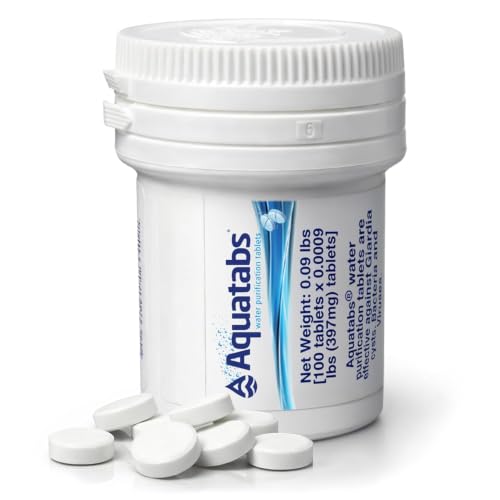
Water Filtration System for Boating, Marine, Survival Kit. Easy-to-use purifier treatment for safe drinking water
TRUSTED WATER PURIFICATION TABLETS - Aquatabs are the world's leading water purification tablets for drinking; the ultimate choice for portable water treatment & emergency drinking water; Removes 99.9999% Bacteria, 99.99% Viruses, & 99.9% Cysts (Giardia).
We earn a commission if you make a purchase, at no additional cost to you.
10/31/2026 10:05 pm GMT -
 $138.99Buy Now
304 Stainless Steel Countertop System with 2 Filters and Stand, Reduce 99% Chlorine, 2.25G
3-Stage Filtration - The Purewell gravity water filter system adopts a composite filter technology, can reduce most contaminants.
We earn a commission if you make a purchase, at no additional cost to you.
10/31/2026 11:22 pm GMT -
 $670.99Buy Now
Well Water Pump for Off-Grid Living, Power Outages, Disasters & Survival No Electricity Required Easy DIY Use
All-in-One Emergency Well Pump Kit for 100 Ft Wells: This complete manual system includes a 100ft pump, length adjustment kit, casing clamp with gripper nut, and a protective cover to keep your well clean and sealed—no electricity required.
We earn a commission if you make a purchase, at no additional cost to you.
10/31/2026 11:22 pm GMT -
 $219.99Buy Now
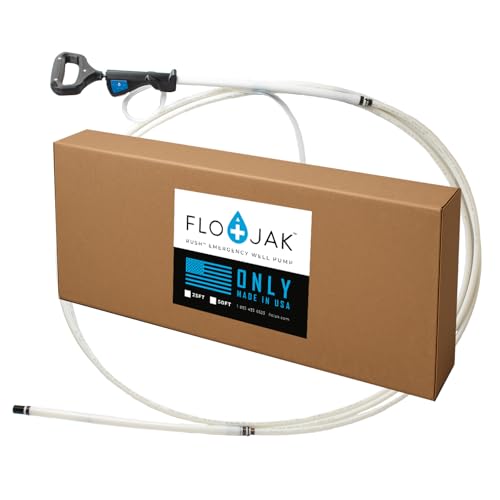
For Off-Grid Living, Power Outages, Disasters, and Survival
No Electricity Required Easy DIY Use - Only Made in USA (25 Feet; also comes in 50 Feet)
Compact, Lightweight, and Ready for Any Emergency: slim, portable design makes it perfect for emergency preparedness kits, bug-out bags, and mobile use—easy to store, transport, and deploy wherever reliable water access is needed, whether at home or off-grid.
We earn a commission if you make a purchase, at no additional cost to you.
10/31/2026 11:23 pm GMT -
 $91.90Buy Now
Countertop Water Filtration System
Reduces Lead and up to 99% of Chlorine, with 2 Carbon Filters/Spigot/Stand, for Home, Camping, RV
We earn a commission if you make a purchase, at no additional cost to you.
10/31/2026 10:45 pm GMT -
 $179.99Buy Now
HOLDS 60 GALLONS: Captures ample rainwater to conserve resources and supports a sustainable lifestyle
MESH SCREEN FILTER: Stainless steel screen allows maximum water flow while filtering very fine particulate, also a highly durable 3/4” brass spigot (included) with a classic, aesthetic appeal
We earn a commission if you make a purchase, at no additional cost to you.
10/31/2026 11:24 pm GMT -
 $16.97Buy Now
For Long Term Readiness, Self Reliance and Emergency Preparedness (Self Reliance Essentials)
In a world where unpredictability is a constant, the importance of water becomes strikingly clear.
We can live weeks without food, but only a few days without water – it's not just essential; it's vital for our survival.
We earn a commission if you make a purchase, at no additional cost to you.
10/31/2026 11:24 pm GMT -
 $69.88Buy Now
Family Use Ultra-Light Personal Filter Straws | Backpacking, Travel, Bug-Out Bags, Emergency Preparedness
The water filter has passed multiple certifications. Every component is made with food-grade materials (BPA-free), giving you peace of mind whether it’s tossed in a dusty backpack, packed for a road trip, or stored in your home emergency kit for unexpected water disruptions. A small, reliable tool that earns your trust over time.
We earn a commission if you make a purchase, at no additional cost to you.
10/31/2026 11:42 pm GMT

🌱 Continue the Food & Water Sovereignty Series
Every household’s food and water security plan looks a little different. These related articles can help you build yours one practical piece at a time.
As I complete these associated posts, the link will be underlined.
Popular Guides
🌱 The Senior Survivalist Guide to Root Cellars
🌼 Off-Grid Water Filtration for Joint Health
🧰 Building a 90-Day Pantry on a Fixed Income
🪶 Dehydrating and Canning When Standing Too Long Hurts
🛒 Seed Saving Basics for a Self-Sufficient Pantry
🥕 Bartering and Local Food Networks for Seniors Who Prep Alone
👉 See Every Food Sovereignty Article
Discover practical food sovereignty tips that make growing, storing, preserving, and preparing food easier, safer, and more manageable for older adults.
Additional Off-Grid Water Filtration Resources
- CDC: How to Make Water Safe in an Emergency
- CDC: Choosing Home Water Filters
- EPA: Emergency Disinfection of Drinking Water
- NSF: Standards for Water Treatment Systems
- CDC: How to Create and Store an Emergency Water Supply
FAQs
1. Does filtered water improve joint health?
Safe drinking water supports normal hydration, which is important for overall health and joint function. However, filtered water does not cure arthritis, repair cartilage, or reverse joint damage. The main benefit of filtration is reducing specific contaminants when the filter is suitable for that purpose.
2. What is the best off-grid water filter for seniors?
The best system is one that addresses the contaminants in your water and is easy for you to operate. A countertop gravity system may reduce pumping or squeezing, but you must verify its actual contaminant-removal performance. No single filter works for every situation.
3. Do gravity water filters remove viruses?
Some specialized systems may address viruses, but many ordinary gravity filters do not. Check independent performance testing and certification for the exact model. If viruses are a concern, additional treatment may be necessary.
4. Can I drink rainwater after filtering it?
Not automatically. Rainwater can contain germs and chemicals from roofs, gutters, air pollution, and storage containers. Its safety depends on the source and the treatment method. When contamination risks are unknown, use a verified safe alternative.
5. Can you make contaminated water safe by boiling it?
Boiling is effective against disease-causing bacteria, viruses, and parasites when performed correctly. It does not remove harmful chemicals, heavy metals, or fuel contamination. Follow official water advisories.
6. How much emergency drinking water should seniors store?
The CDC recommends at least one gallon per person per day for a minimum of three days, with two weeks preferred when possible. Store additional water for hot climates, medical needs, and pets.
7. Can a household pitcher filter make untreated pond water safe?
No ordinary pitcher filter should be assumed to make pond water safe. Many improve taste or reduce specific chemicals but aren’t designed to remove all disease-causing organisms. Use an appropriate treatment system and follow public-health guidance.
8. What should seniors with arthritis look for in a water filter?
Consider lightweight refill containers, comfortable spigots, manageable maintenance, large easy-to-read instructions, and minimal twisting or squeezing. Water safety and verified contaminant removal must remain the first priorities.
Join the Conversation
How Do You Prepare for Water Outages?
Do you have a gravity water filter, a private well, or another way to access safe drinking water during an emergency?
I’d love to hear what works for you.
And if you deal with arthritis, shoulder problems, or weak hands, have you found a filtration system that’s especially easy to operate?
Share your experiences in the comment section below. Your ideas may help another senior prepare without adding unnecessary physical strain.