
Seed Saving Basics for a Self-Sufficient Pantry
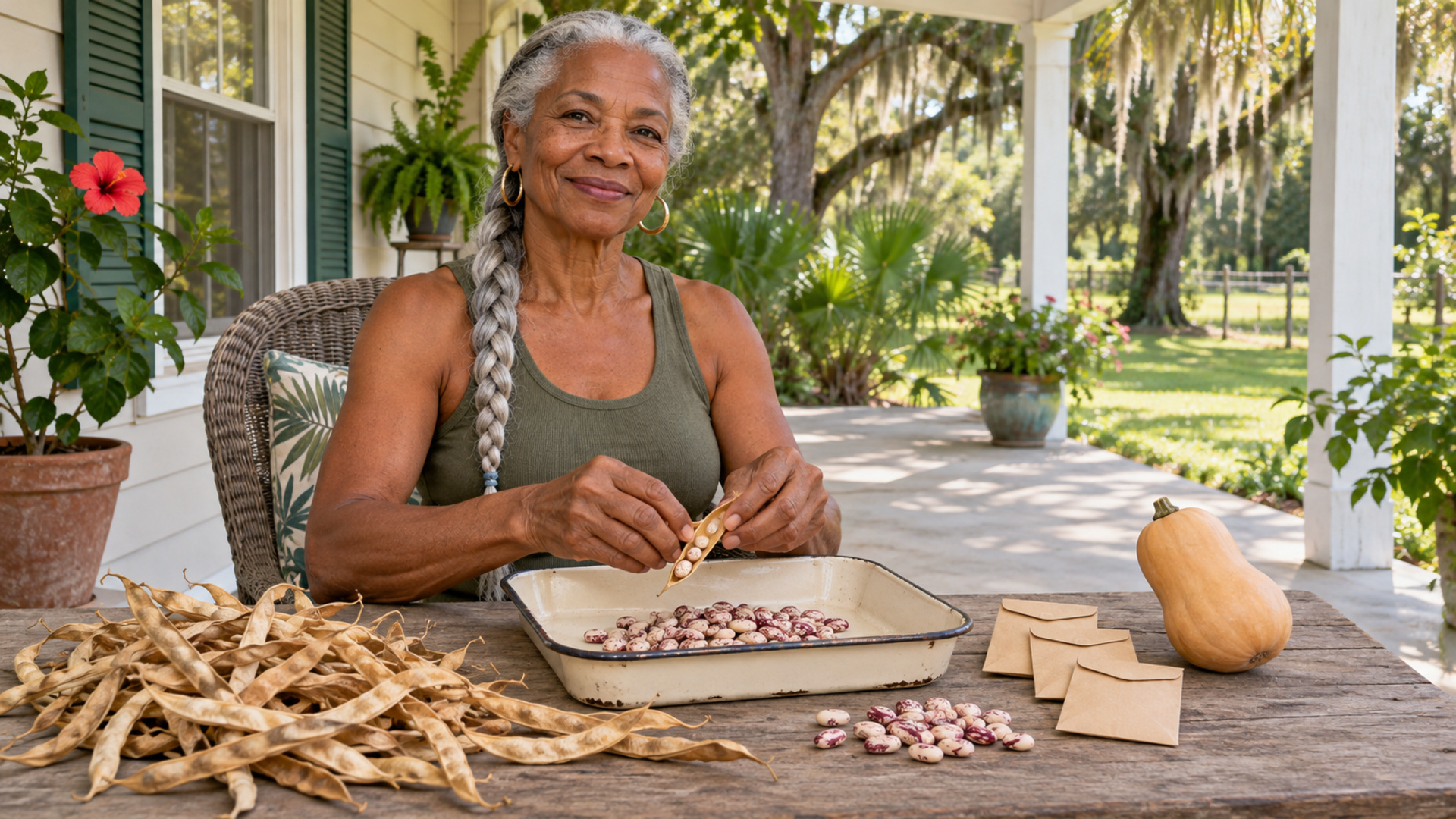

If you make bean soup every winter, one of the most useful things you can grow might be a bean that dries right in its pod. Most of the harvest can go into the kitchen. A small, separate portion can become next year’s planting seed.
That’s seed saving for a self-sufficient pantry. You start with a meal you already make, grow an ingredient that fits your garden, and set a little aside to plant again. One crop is plenty for your first try.
🌿 From My Homestead
Living on five rural acres has taught me that food security usually comes from small systems working together: growing some food, keeping a dependable pantry, preserving what you can, and planning ahead.
As I’ve gotten older, I’ve also learned to make self-reliance easier on the body. My goal with this series is to help you build more control over your food supply in practical ways that fit your space, budget, energy, and abilities.
The tips I share come from real experience, along with research and current homesteading best practices. My goal is simple: help you keep homesteading safely, comfortably, and for many years to come.
Here in North Central Florida, I have a small garden. I like the idea of starting with what I actually cook. Give me one bean I’ll put in a pot of soup over a drawer full of seeds I’ll forget to plant.
Start with dinner. Think of one meal you make often. Could you grow one ingredient for it and set aside enough seed for another planting?
For the nuts and bolts of collecting different kinds of seeds, see Seed Saving for Beginners. Here we’ll start with the pantry shelf and work backward to the garden.
TL;DR for Seniors: Seed Saving Basics
Seed saving gives you a way to grow another batch of a food you already use.
🌿 Key Points:
✅ Start with one familiar crop. An open-pollinated bush dry bean is an easy first choice.
✅ Mark a few healthy plants before harvest. Set aside seed for a full planting and a small backup.
✅ Dry seeds completely. Label and store them separately from food.
✅ Test a few seeds before planting time so you have time to buy a replacement packet if you need one.
🌻 Takeaway: Grow one ingredient you’ll use, keep some seed for next season, and build your pantry a little at a time.
Choose the Crop by What You Cook
Open the pantry and look at what needs replacing most often. Dry beans for soups? Squash for roasting? Tomatoes for sauce? Choose one ingredient that earns its place on the shelf or in the freezer.
Then ask three questions.
1. Will it mature where I live? Look at the seed packet and your local planting calendar. A bean you pick green can be ready well before a bean you leave to dry.
Make sure your planting window is long enough for mature seed.
2. Can I handle the harvest comfortably? A compact bush bean can fit in a container. A sprawling squash needs room, and a heavy fruit can be awkward to carry or cut.
Look for a smaller variety if squash sounds good but a big one would sit on the counter for a week waiting for help.
3. Where will the food go? Plan a dry pantry spot for dry beans, a suitable storage spot for whole winter squash, or freezer space for tomato sauce.
Decide before planting so you know how much to grow.
| Crop | How it earns its pantry space | What to know before saving seed |
| Bush dry beans | Beans for soup, chili, or rice bowls | Choose a dry-bean variety. Mark healthy plants and let the pods mature and dry. |
| Winter squash | Whole squash for roasting or soup | Choose a manageable size. Varieties of the same species can cross, so check pollination before relying on saved seed. |
| Paste tomatoes | Sauce or soup base you can freeze in meal-size portions | Use fully ripe fruit from healthy plants. Tomato seeds need a separate cleaning and drying step. |
If I were starting with a single container or a corner of a raised bed, I’d pick the bush dry bean. It has a simple seed-saving routine.
The same mature harvest gives you beans for cooking and beans for planting, with no wet seed cleaning.
Start with Seed You Can Grow Again
Look for open-pollinated on the packet. If pollination is managed so the variety stays true, saved seed is more likely to grow like the parent plants.
An heirloom is an open-pollinated variety with a history of being passed down.
An open-pollinated variety can be a good choice even if it’s fairly new.
A packet marked F1 contains hybrid seed. You can grow a good crop from it. Its saved seeds can sprout, but the next plants may vary in size, flavor, maturity, or other traits.
If you’re counting on a particular bean for the pantry, start with a known open-pollinated variety.
Common dry beans and tomatoes usually self-pollinate, although crossing can still happen.
Squash is a bigger project because insects carry pollen between plants.
If a neighbor grows a different squash variety of the same species, it can cross with yours. The squash you pick this season can still look familiar. The difference shows up in plants grown from its seeds.
For a first season, it’s fine to save bean seed and buy squash seed again. You can still enjoy the squash harvest while you learn.
If you want to save squash reliably, follow Seed Savers Exchange’s squash guide for isolation or hand-pollination.
Decide how much seed you want before the beans go into the kitchen jar. If your bed has room for 12 plants and you normally sow 16 seeds to allow for gaps,
- set aside enough for that sowing,
- a small germination test,
- and a backup.
One simple target would be 30 seeds.
- That gives you 16 for sowing,
- 10 for testing,
- and four in reserve.
Save more if you’d like enough for a second full sowing.
Mark several healthy, typical plants of the same variety if you have room.
Collecting from several plants helps you avoid depending on one plant for the whole next crop.
- Skip plants that show signs of disease.
- Note which plants matured on time and which beans you liked once you cooked them.
- Those are useful details when you decide what to plant again.
Dry beans.
- Let the marked pods mature until they turn brown and dry.
- The beans may rattle inside.
- Bring dry pods indoors to finish drying in a well-ventilated place.
- Shell over a shallow tray.
Keep the beans you’ll plant separate from the batch you’ll cook.
Winter squash.
- Save seed from a fully mature fruit only when you know the variety and have a plan to manage crossing.
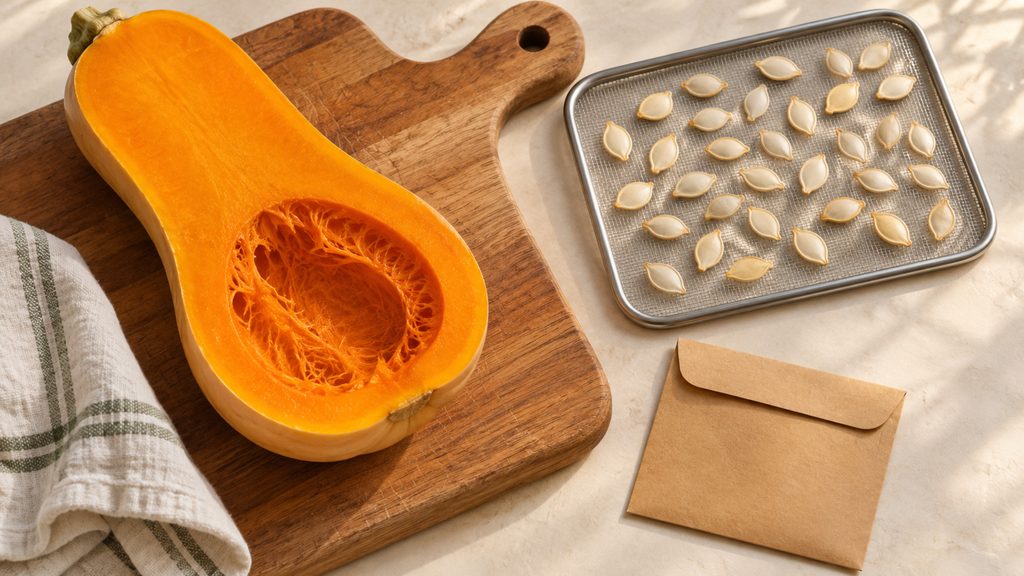
- When you open the fruit for a meal, scoop out the seeds, rinse away the pulp, and spread the seeds in a single layer to dry.
- For harvest timing and post-harvest ripening, check the squash guide for your variety.
Paste tomatoes.
- Pick ripe fruit from healthy plants of a known open-pollinated variety.
- Before preparing the tomatoes for sauce, set aside the seeds and surrounding gel.
- Follow the University of Maine Extension tomato seed instructions for fermenting, rinsing, and drying them.
- A coffee filter can make small dried tomato seeds easier to remove.
Every small step toward growing, storing, or preserving your own food helps build a more secure and independent future.
Keep a kitchen jar and a seed envelope.
Once your seeds are dry, mark the envelope “FOR PLANTING.”
Give it a separate home so next spring’s beans don’t go into this winter’s soup.
Make Seed Work Easier on Your Hands and Back
Bring a handful of pods to the table and sit in a chair with back support. Set the tray close so your elbows can stay near your sides. A light-colored tray makes small seeds easier to see. A rim helps catch the ones that roll away.
If pinching pods is hard on your hands, try opening just a few at a time. Write the label first so you can stop whenever you like and still know which batch is on the tray.
On a day when your hands are tired, sorting and labeling may be the only jobs you do. The rest can wait until your next short session.
Put the drying tray somewhere you can reach without lifting it down from a high shelf. Keep varieties on separate trays. Two similar batches are much easier to tell apart while their labels are still sitting beside them.
Store Seeds Where You Can Find Them
Finish drying seeds indoors with good airflow. Skip direct sun and high heat. In humid weather, bring the trays into an air-conditioned room if you have one. Give the batch time to dry fully before closing it inside an airtight container.
Put each variety in a labeled envelope. Include the crop, variety, harvest date, and any note that would help next year. For example,
- write Cranberry dry bean · September 2026 · Bush type · Good for soup.
Use the variety name from the original packet if you know it.
Keep the envelopes in a cool, dry, dark spot with a steady temperature. In a humid home, a sealed container can help protect fully dried seeds from moisture. Use a box or jar you can open comfortably, and keep it separate from your food.
Planting seeds bought or received from someone else may be treated. Keep all planting stock out of the cooking jars.
Check Your Seeds before the Planting Window
About a month before you plan to sow, test a small sample.
Put 10 seeds on a damp paper towel, fold it over, and slip it into a labeled bag.
Keep it warm as appropriate for the crop and check that the towel stays damp. Use the packet’s expected germination window as a guide. Count the seeds that sprout.
If eight of 10 sprout, that’s about 80 percent for this sample. It gives you a rough idea of what to expect. If only a few sprout, buy a fresh packet while there’s time.
With a small garden, it’s easier to replace a disappointing batch early than wait for empty spaces to fill themselves.
Save the result on the envelope. After harvest, add one line to your garden notes about how much you actually used in the kitchen.
If you grew enough for two meals and wanted four, that’s a concrete starting point for next year’s planting plan.
🌿 Trusted Food Sovereignty Sources
Building food independence is easier when you have the right tools and systems. These trusted products can help make growing, storing, preserving, and preparing food more manageable while reducing unnecessary lifting, bending, gripping, and strain.
Whether you’re working with a small garden, building a dependable pantry, preserving a harvest, or adding simple food-production systems at home, these are practical products worth considering.
A shallow tray, a few paper envelopes, and a marker will get you started. If you’re missing something, here are a few homesteading tools to browse. Look for items you can handle comfortably and reach without stretching.
-
 $33.99Buy Now
USA-Sourced Seeds for Planting Vegetables, Herbs, Fruits; Homesteading & Prepping
Survival Seed Vault Kit
Food Supplies & Storage,
Gardening Gifts,
Survival Prepping
LUSH&DEW Raised Garden Bed Heirloom Seed Container/Bank
We earn a commission if you make a purchase, at no additional cost to you.
11/11/2026 11:04 pm GMT -
 $39.97Buy Now
Mixed Herb Seed Assortment for Homesteaders - Non-GMO Heirloom Varieties - Survival Garden Seeds
This multipack variety kit contains annual, biennial, and perennial herbs and flowers known for their medicinal benefits and healing properties.
Medicinal Herb Starter Pack - From leaf to flower to root, the different parts of these plants can be used in many different ways. Create your medicinal teas from dried or fresh herbs. Use the raw ingredients to extract your essential oil and create herbal tinctures, infusions, salves, lotions, balms, and ointments.
We earn a commission if you make a purchase, at no additional cost to you.
11/11/2026 11:56 pm GMT -
 $23.99Buy Now
Sturdy Seeds Saving Seed Bank Container Kit (Seeds not Included)
by QTFOUND
All seed storage bottles are firmly embedded in sponge slots, effectively preventing collisions with each other.
The seed storage bag has a light shielding function, which helps to prolong seed vitality.
We earn a commission if you make a purchase, at no additional cost to you.
11/11/2026 11:23 pm GMT -
 $21.95Buy Now
The Complete Expert's Guide To Harvest, Store, Germinate.
Keep Your Vegetable & Herb Seeds Fresh for Years & Build Your Seed Bank Like a Pro.
Prepper Approved
We earn a commission if you make a purchase, at no additional cost to you.
11/11/2026 11:31 pm GMT -
 $7.99Buy Now
11.81 15.7 Inches and 7.87 Inches, Microgreen Trays Mesh, Hydroponic Growing Mats for Microgreens Growing Kit - 6 Pcs
Versatile Applications: Ideal for sprouting a wide range of greens, including wheatgrass, pea shoots, sunflower, radish, and alfalfa, this Silicone Seed Sprouting Mat is perfect for indoor farming.
It works seamlessly with any microgreens growing kit and is also great for DIY uses around the home
Can also be used to sort and dry seeds.
We earn a commission if you make a purchase, at no additional cost to you.
11/11/2026 11:42 pm GMT -
 $17.99Buy Now
Clear Sheets Protectors, Reusable Seed Envelopes, 2-Ring Seed Binder Design, Ideal for Garden Planner
SEED STORAGE: It also includes 10 reusable seed envelopes (3" x 4.5") with self-adhesive closures to help keep seeds fresh and easily accessible.
We earn a commission if you make a purchase, at no additional cost to you.
11/11/2026 11:48 pm GMT -
 $9.99Buy Now
200 Pieces for Storing and Organizing Fruit, Vegetable, Flower Seeds by LOTMER
Quantity exceeds value: You will receive 200 Pieces seed saving envelopes, also included is a roll of double-sided tape as a gift.
We earn a commission if you make a purchase, at no additional cost to you.
11/11/2026 11:53 pm GMT -
 $36.99Buy Now
Large Modern Green Rectangular by QUILIVIK
Customers usually keep this item.
Multi-Purpose Utility: Beyond seeds, this versatile metal storage box with a lid can keep your gardening tools, labels, and more organized. Say goodbye to clutter and hello to a tidy garden space with this all-in-one seed saver storage solution.
We earn a commission if you make a purchase, at no additional cost to you.
11/12/2026 12:04 am GMT

Why This Matters for Preparedness
A jar of dry beans can help feed you this winter. A labeled envelope of planting seed gives you a way to grow more next season, provided you have the time, water, and growing space. I like having both because they solve different problems.
If the garden has a poor year, food you’ve already put away helps cover the gap. Keep some ready-to-eat food on hand for times when cooking water or fuel is limited. My guide to building a 90-day pantry on a fixed income will help you build that reserve in small steps.
One crop is a good first-season goal. Grow it, cook with it, and see whether you’d be glad to plant it again. If the answer is yes, give next year’s seeds their own envelope.
🌱 Continue the Food & Water Sovereignty Series
Every household’s food and water security plan looks a little different. These related articles can help you build yours one practical piece at a time.
As I complete these associated posts, the link will be underlined.
Popular Guides
🌱 10 Low-Lift Root Cellar Tips for Seniors with Bad Backs and Shoulders
🌼 Off-Grid Water Filtration for Joint Health
🧰 Building a 90-Day Pantry on a Fixed Income
🪶 Dehydrating and Canning When Standing Too Long Hurts
🫘 Complete Proteins without Meat: Building a Nutritious Survival Pantry for Seniors
🛒 Seed Saving Basics for a Self-Sufficient Pantry
🥕 Bartering and Local Food Networks for Seniors Who Prep Alone
🗺️ Your Local Food Backup Plan: Who Will Still Have Food after a Disaster?
📋 A Caregiver’s Emergency Food and Information Plan for an Older Adult
👉 See Every Food Sovereignty Article
Discover practical food sovereignty tips that make growing, storing, preserving, and preparing food easier, safer, and more manageable for older adults.
FAQs
What is the easiest crop to save for a pantry garden?
An open-pollinated bush dry bean is a good first choice. Let the pods mature and dry, then set some beans aside for planting before storing the rest for cooking.
Can I plant dried beans from the grocery store?
Some may sprout, but you may have little information about the variety, how it performs in your climate, or how well the beans will germinate. Start with a labeled open-pollinated garden variety if you want a crop you can plan around.
How many seeds should I save?
Start with the number you expect to sow. Add a few for a germination test and extras for replanting. Write your target on the envelope before harvest so you remember to set them aside.
Can I save seed from a winter squash I grew next to another variety?
You can save it, but varieties of the same squash species can cross. Next year’s plants may differ from the one you harvested. Use isolation or controlled hand-pollination if keeping the variety true is important.
Can I save enough seed in a container garden?
Yes. Start with a compact crop such as a bush dry bean suited to containers. Keep in mind that any pods you leave to mature for seed take longer than pods picked green.
Comments
What’s one crop you’d like to grow for your pantry and plant again next season? Tell me what you’d cook with it in the comment section below. I’m always curious what earns a spot on someone else’s pantry shelf.