
Complete Proteins without Meat: Building a Nutritious Survival Pantry for Seniors
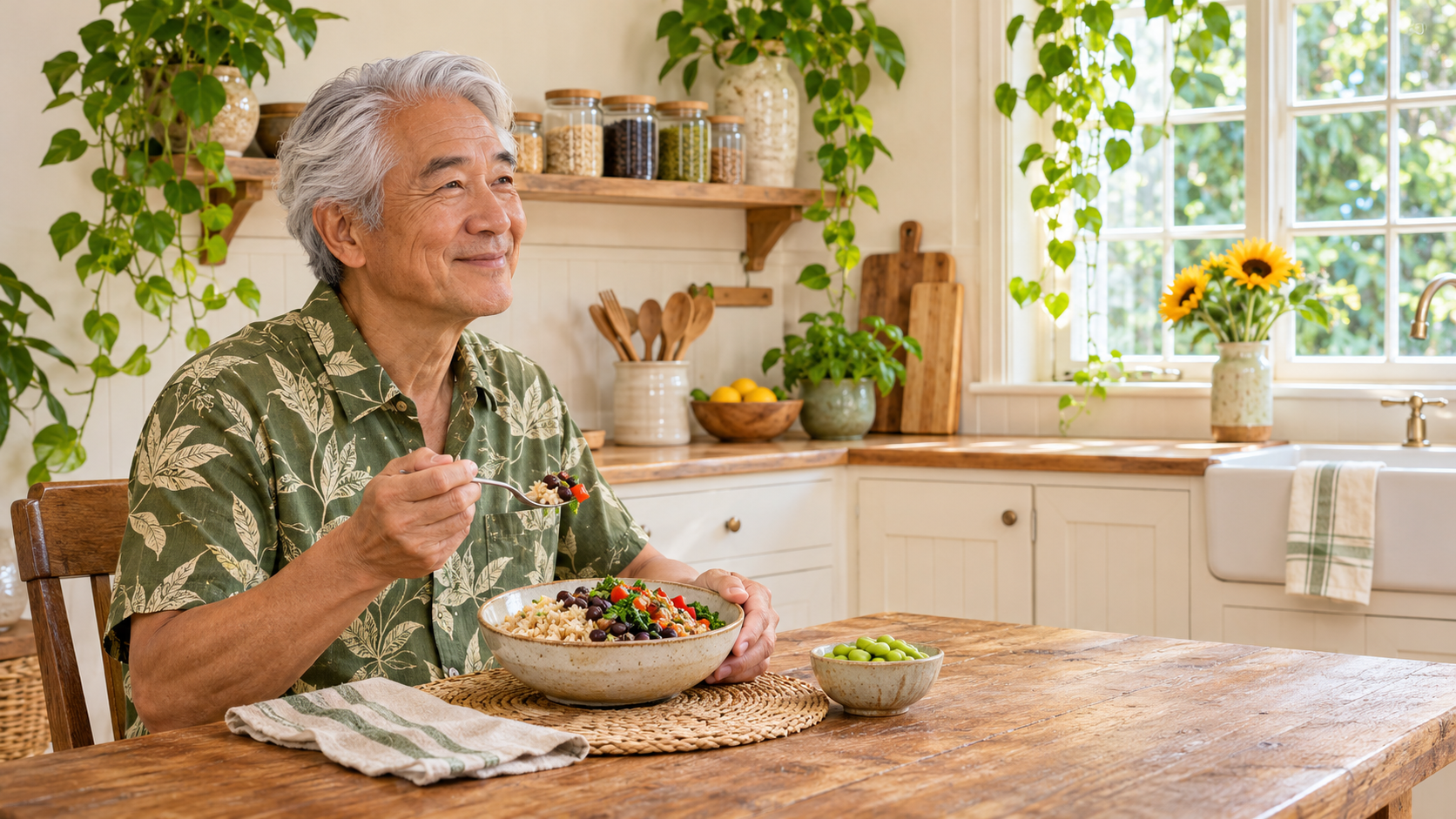

Most of us know that beans, rice, and wheat are valuable foods to store for emergencies. They’re inexpensive, filling, and easy to keep on hand. But have you ever wondered whether those foods provide enough protein to keep you healthy, especially if meat becomes scarce or unavailable?
For older adults, that question matters more than many people realize. Fortunately, you can build a nutritious emergency pantry around affordable plant foods, provided you understand how to use them together and how much protein you actually need.
🌿 From My Homestead
Living on five rural acres has taught me that food security usually comes from small systems working together: growing some food, keeping a dependable pantry, preserving what you can, and planning ahead.
As I’ve gotten older, I’ve also learned to make self-reliance easier on the body. My goal with this series is to help you build more control over your food supply in practical ways that fit your space, budget, energy, and abilities.
The tips I share come from real experience, along with research and current homesteading best practices. My goal is simple: help you keep homesteading safely, comfortably, and for many years to come.
I’ve always believed that food storage should involve more than filling shelves with whatever happens to be on sale.
Having enough food is important. But having the right kinds of food matters just as much.
When I think about storing beans, rice, wheat, and other pantry staples, I want to know what those foods will actually do for my body if I have to depend on them.
As we get older, maintaining our strength becomes especially important. We still need to manage our homes, tend our gardens, care for our animals, and handle whatever life throws our way.
That means paying attention to protein, not just calories.
I want my food storage to help me stay independent, not simply keep me from going hungry.
A Pantry Full of Food Isn’t Necessarily a Balanced Pantry
Rice, beans, pasta, flour, and oats are useful emergency foods. But relying on a few staples without understanding their nutritional value can leave important gaps in your diet. A little planning can help you store foods that provide sufficient protein, essential vitamins, minerals, and energy.
TL;DR for Seniors: Getting Complete Protein without Meat
You don’t need meat at every meal to get enough protein. Many plant foods provide protein, and eating a variety of legumes, grains, nuts, seeds, and soy foods can supply the essential amino acids your body requires. The important part is getting enough total protein and maintaining a balanced diet.
🌿 Key Points:
✅ Protein helps seniors maintain muscle, strength, and the ability to perform everyday tasks.
✅ Your body needs nine essential amino acids from food.
✅ Beans and rice complement each other nutritionally, but they don’t have to be eaten at the same meal.
✅ Soy foods provide all nine essential amino acids in useful proportions.
✅ Dried beans, lentils, peanut butter, whole grains, and canned legumes make practical emergency pantry staples.
✅ Vitamin B12, calcium, iron, vitamin D, iodine, and other nutrients also deserve attention in a meatless diet.
✅ Older adults may benefit from more protein than the standard adult minimum, depending on their health.
🌻 Takeaway: A good survival pantry provides more than enough calories. It should help you maintain your strength, health, and independence.
1. Why Protein Becomes More Important as We Age
When most people think about protein, they picture meat, fish, eggs, or dairy products.
But protein isn’t just about what we eat. It’s about what our bodies need to function.
Protein helps us maintain muscles, repair tissues, support the immune system, and produce essential substances our bodies use every day.
As we age, maintaining muscle can become more difficult. Without enough protein, adequate calories, and regular physical activity, we may lose strength and mobility.
That can make ordinary activities harder, from carrying groceries to getting out of a chair.
And during a prolonged emergency, physical strength can become particularly valuable.
You may need to carry water, prepare meals without electricity, care for animals, or manage household chores without your usual conveniences.
A pantry containing plenty of calories but very little protein won’t fully support those needs.
The National Institute on Aging encourages older adults to include varied protein foods throughout the day to help maintain muscle and overall nutrition.
2. What Is a Complete Protein?
Think of protein as a structure built from small pieces called amino acids.
Your body uses these amino acids to build and repair its own proteins.
There are 20 commonly used amino acids involved in making human proteins. Nine are called essential because your body cannot manufacture them in sufficient amounts.
You must obtain them from your diet.
The nine essential amino acids
- Histidine
- Isoleucine
- Leucine
- Lysine
- Methionine
- Phenylalanine
- Threonine
- Tryptophan
- Valine
A food is commonly described as a complete protein when it provides all nine essential amino acids in adequate proportions.
Meat, dairy, and eggs are familiar examples.
But some plant foods, especially soy foods, can also provide high-quality complete protein.
Other plant foods contain all nine amino acids but have relatively smaller amounts of one or more of them.
That doesn’t make those foods useless.
It simply means variety matters.
3. Do You Really Need to Eat Beans and Rice Together?
For years, people were taught that vegetarians needed to carefully combine different plant foods at every meal.
- Beans with rice.
- Peanut butter with whole-wheat bread.
- Lentils with grains.
The idea was that one food supplied the amino acids another food lacked.
There’s truth behind the nutritional relationship, but the old rule was too rigid.
You do not have to combine complementary proteins at the same meal.
Eating a variety of protein-rich plant foods throughout the day generally provides the necessary amino acids, assuming you’re eating adequate food overall.
Tufts University’s Human Nutrition Research Center on Aging explains that strict protein combining at every meal isn’t necessary.
Why beans and grains still work well together
Beans and other legumes are generally rich in lysine but relatively lower in sulfur-containing amino acids, including methionine.
Many grains have a different amino acid balance. They tend to provide less lysine relative to human requirements.
When you eat both types of foods as part of a varied diet, their amino acid contributions complement each other.
Beans and rice remain a smart, affordable pantry combination.
But you could eat beans at lunch and whole grains at dinner and still benefit.
That’s good news for anyone building an emergency pantry.
It means you don’t need complicated recipes or perfectly matched food combinations.
You need variety, enough calories, and enough total protein.
4. The Best Plant-Protein Combinations for a Survival Pantry
Here are several traditional and practical combinations worth keeping in mind.
| Food combination | Why it works | Pantry advantage |
| Beans + rice | Legumes and grains complement their amino acid profiles | Inexpensive and versatile |
| Lentils + wheat bread | Provides protein from legumes and grains | Easy soup-and-bread meal |
| Peanut butter + whole-wheat bread | Combines legumes with grains | Little preparation needed |
| Chickpeas (hummus) + whole-wheat pita | Complementary plant proteins | Good for simple meals |
| Black beans + corn tortillas | Grains and legumes complement each other | Familiar, filling meals |
| Split peas + barley | Protein from legumes and grains | Excellent soup combination |
| Hummus + whole-grain crackers | Convenient complementary foods | Useful when cooking is limited |
These combinations are examples, not rules.
You don’t have to eat them together for the proteins to count.
Also remember that complementary foods don’t automatically make a meal high in protein. The amount you eat still matters.
A tablespoon of peanut butter on one cracker won’t provide the same nutrition as a hearty serving of lentils and grains.
5. Plant Foods That Provide Complete Protein
Some plant foods are especially helpful because their amino acid profiles are already well balanced.
Soybeans and soy products
Soy is one of the most useful high-quality plant-protein sources.
Examples include:
- Soybeans
- Edamame
- Tofu
- Tempeh
- Soy milk
Soy foods can make it easier to meet protein needs without relying on meat.
For an emergency pantry, shelf-stable soy milk, properly stored dried soybeans, and textured vegetable protein, or TVP, are worth considering.
However, ordinary tofu and tempeh usually require refrigeration unless specifically packaged as shelf-stable products.
Quinoa
Quinoa is another plant food containing all nine essential amino acids.
It stores well when dry and can be used in place of rice.
However, it contains less protein per serving than many legumes or soy foods.
A cup of cooked quinoa provides roughly 8 grams of protein, compared with approximately 18 grams in a cup of cooked lentils.
That makes quinoa useful, but not a substitute for planning sufficient total protein.
Hemp seeds
Hemp seeds also contain all nine essential amino acids.
They can be sprinkled on oatmeal, mixed into grains, or added to other meals.
However, their oil content makes them more vulnerable to rancidity than dry beans or grains.
Store them according to package directions and rotate them regularly.
The lesson: Complete protein is useful, but food quality, quantity, storage life, and preparation requirements matter too.
6. How Much Protein Do Seniors Actually Need?
There is no single protein target that’s right for every older adult.
The standard adult Recommended Dietary Allowance is 0.8 grams of protein per kilogram of body weight daily.
However, some expert groups recommend approximately 1.0 to 1.2 grams per kilogram for many generally healthy older adults to help preserve muscle function.
University of Florida IFAS Extension discusses this higher range in its guidance on vegetarian diets for older adults.
Here is what that range looks like at different body weights.
| Body weight | Approximate daily protein at 1.0 to 1.2 g/kg |
| 120 lb | 55 to 65 g |
| 140 lb | 64 to 76 g |
| 160 lb | 73 to 87 g |
| 180 lb | 82 to 98 g |
| 200 lb | 91 to 109 g |
These are general reference figures, not individual prescriptions.
Older adults with kidney disease may need a different target. Certain kidney guidelines recommend around 0.8 g/kg for some people with chronic kidney disease who are not receiving dialysis, while dialysis can change protein requirements.
People who are underweight, recovering from illness, or experiencing muscle loss may also need individualized advice.
For most readers, the practical message is simple:
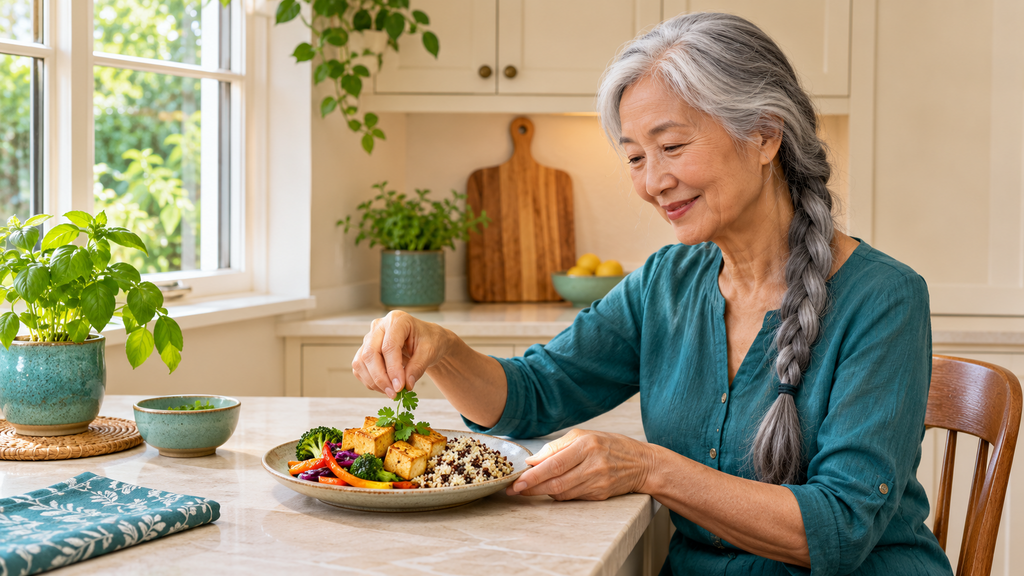
Include a meaningful source of protein at breakfast, lunch, and dinner instead of trying to catch up with one large evening meal.
7. How Much Protein Is in Common Pantry Foods?
Knowing the actual protein content of foods makes pantry planning much easier.
| Food | Serving | Approximate protein |
| Cooked lentils | 1 cup | 18 g |
| Cooked black beans | 1 cup | 15 g |
| Cooked chickpeas | 1 cup | 14–15 g |
| Cooked quinoa | 1 cup | 8 g |
| Peanut butter | 2 tbsp | 7 g |
| Dry oats | ½ cup | 5 g |
| Almonds | 1 oz | 6 g |
| Cooked brown rice | 1 cup | 5 g |
| Cooked edamame | 1 cup | 18 g |
Approximate values from USDA food-composition data. Actual amounts vary with food variety, serving size, and preparation.
One important distinction: a cup of dry beans is not the same as a cup of cooked beans.
Dry beans absorb water during cooking. Their weight and volume change, but adding water doesn’t create extra protein.
When planning meals, always pay attention to whether nutritional values refer to dry or cooked portions.
This is especially important when comparing emergency food supplies.
8. Building a Meatless Emergency Pantry
I’m a Dietitian—This Is My Go-to High Protein Pantry Dinner – Parade
A nutritious meatless pantry doesn’t need to be expensive or complicated.
Start with several different protein-rich foods rather than depending on one staple.
Legumes
Dried beans, lentils, split peas, and chickpeas are excellent foundational foods.
Canned versions are particularly useful when power, cooking fuel, or water supplies are limited.
Look for lower-sodium options when practical.
Whole grains
Rice, oats, wheat, barley, and other grains provide calories, useful nutrients, and additional protein.
Whole grains are nutritious, but their natural oils may shorten storage life compared with properly stored refined grains.
For long-term reserves, consider both nutritional value and realistic storage conditions.
Nuts and seeds
Peanut butter, peanuts, sunflower seeds, and pumpkin seeds can add protein, calories, and beneficial fats.
They’re also convenient when cooking isn’t possible.
Rotate them regularly, since their oils can become rancid.
Soy-based pantry foods
Shelf-stable soy milk and dry textured vegetable protein can expand meatless meal options.
Check product labels for protein content and nutrient fortification.
Refrigerate any product that requires refrigeration after opening.
Canned vegetables and fruit
These may not provide much protein, but they’re important for dietary variety.
A pantry with nothing but beans and rice won’t supply every vitamin and mineral your body needs.
Include vegetables, fruit, and other nutrient-rich foods in your storage plan.
9. Five Nutrition Gaps Vegetarians Should Watch
Protein gets most of the attention, but it’s only one part of balanced nutrition.
For seniors eating little or no animal food, several other nutrients deserve special consideration.
Vitamin B12
Vitamin B12 supports healthy nerves and red blood cells.
It does not naturally occur in reliable amounts in unfortified plant foods.
Vegans need a dependable source through fortified foods or an appropriate supplement.
Older adults may also have difficulty absorbing B12 naturally present in food. The NIH recommends that adults over 50 obtain most of their B12 from fortified foods or supplements.
Iron
Beans, lentils, whole grains, and some seeds provide iron.
However, the iron found in plants is generally less readily absorbed than iron from meat.
Vitamin C-rich foods, such as citrus, peppers, and tomatoes, can help your body absorb plant iron.
Calcium
Calcium helps maintain bone health.
Fortified plant milks, calcium-set tofu, and certain vegetables can contribute to calcium intake.
Check labels because calcium content varies considerably.
Vitamin D
Vitamin D helps your body use calcium.
Fortified foods and supplements can help when dietary sources and sun exposure aren’t adequate.
Iodine and zinc
Iodine supports thyroid function, while zinc contributes to immune function and many other body processes.
Iodized salt, fortified foods, legumes, whole grains, nuts, and seeds can help, depending on the nutrient.
Don’t assume specialty salts contain iodine.
For someone following a fully vegan diet, a registered dietitian can help identify any gaps and determine whether supplementation is appropriate.
Every small step toward growing, storing, or preserving your own food helps build a more secure and independent future.
Food Sovereignty Is about Nourishment, Not Just Calories
A shelf full of emergency food is valuable. But true food security means knowing how to turn those supplies into meals that support your strength, health, and independence.
When meat is unavailable, a carefully planned combination of legumes, grains, nuts, seeds, fortified foods, and vegetables can help you continue eating well.
10. A Seven-Day Meatless Emergency Pantry Menu
Here’s a practical starting point for preparing meals when meat is unavailable.
The menu uses familiar foods and emphasizes ingredients that can be stored or purchased in shelf-stable forms.
This is a sample meal framework, not a complete individualized nutrition plan. Portions, snacks, calories, protein totals, and vitamins must be adjusted for the person eating it.
| Day | Breakfast | Lunch | Dinner |
| Mon | Oatmeal with peanut butter and shelf-stable soy milk | Lentil soup with whole-grain crackers | Black beans, rice, and canned vegetables |
| Tue | Fortified cereal with soy milk and nuts | Chickpea salad with whole-grain bread | Split pea soup with barley |
| Wed | Oatmeal with pumpkin seeds and dried fruit | Peanut butter sandwich and shelf-stable fruit | Lentil chili over rice |
| Thu | Whole-grain cereal with soy milk | Black bean and corn tortillas | TVP vegetable pasta |
| Fri | Oatmeal with peanut butter | Chickpea and quinoa bowl | Bean soup with whole-wheat bread |
| Sat | Fortified cereal with nuts and soy milk | Hummus with whole-grain crackers | Lentil and vegetable stew |
| Sun | Peanut butter oatmeal with fruit | Black bean soup with tortillas | Soy protein, rice, and mixed vegetables |
Use generous, appropriate portions of beans, lentils, soy foods, and other protein sources rather than treating them as small side dishes.
Add snacks such as peanut butter, nuts, roasted chickpeas, or shelf-stable protein-containing foods when needed.
Choose fortified foods strategically, especially for vitamin B12.
And don’t forget adequate calories. Protein cannot do its job effectively when someone is consistently eating too little overall.
These meals should also be adapted for people with diabetes, kidney disease, swallowing difficulties, food allergies, or other dietary needs.
11. What Happens When You Can’t Cook?
A long power outage changes how you plan your meals.
Dried beans are affordable and useful, but they often require significant water, cooking time, and fuel.
That’s not ideal if your electricity and water supplies are both interrupted.
Canned beans are particularly valuable because commercially canned beans are already cooked.
Other practical choices include peanut butter, ready-to-eat nuts, shelf-stable fortified soy milk, and foods that can be served safely without heating.
University of Minnesota Extension recommends several low-equipment emergency meals, including peanut butter sandwiches, bean-and-corn mixtures, and simple grain-based dishes.
Keep a no-cook protein reserve
Store a separate supply of foods you can eat safely when cooking isn’t possible.
For example:
- Commercially canned, ready-to-eat beans
- Peanut butter or other suitable nut butters
- Ready-to-eat nuts and seeds
- Shelf-stable fortified soy milk in small packages
- Whole-grain crackers
- Appropriate ready-to-eat vegetarian meals
Remember to include a manual can opener.
Choose package sizes you can finish after opening if refrigeration isn’t available.
And store enough safe drinking water for both hydration and food preparation.
12. How to Store Protein Foods for Long-Term Preparedness
Different foods have different storage needs.
Dried beans and grains generally keep better in cool, dry conditions than high-fat foods like nuts and peanut butter.
Moisture, heat, oxygen, insects, and damaged packaging can shorten storage life.
For a practical pantry, consider using sturdy food-safe containers and maintaining a simple inventory.
Label foods with purchase or packaging dates and rotate them.
Don’t assume every product has the same shelf life just because it’s dry.
Pay special attention to high-fat foods
Nuts, seeds, whole-grain flours, and peanut butter may deteriorate sooner than low-fat dry staples.
Use and replace them regularly.
Don’t rely on questionable preservation methods
Dry beans should be cooked properly before eating. Some beans, especially red kidney beans, can cause illness when undercooked.
Follow authoritative preparation guidance.
And if you home-can beans, use a tested pressure-canning process. Low-acid beans are not safe for ordinary boiling-water canning.
13. Build a 30-Day Protein Reserve before Attempting 90 Days
One of the easiest mistakes in emergency food storage is buying large quantities without calculating how many meals the supplies will actually provide.
Start with a manageable goal.
For each person in your household, determine an appropriate daily protein target.
Then review your stored foods and estimate their usable protein content.
Here’s a simple example.
Suppose a healthy older adult and their healthcare professional decide that approximately 70 grams of daily protein is appropriate.
For 30 days:
70 grams × 30 days = 2,100 grams of dietary protein.
That’s the total protein the menu must supply over the month, not the weight of food to purchase.
The total could come from a mixture of beans, lentils, grains, soy products, nuts, seeds, and other foods.
But protein grams are only one part of planning.
You must also provide enough calories, essential fats, vitamins, minerals, drinking water, and safe food preparation options.
The best system is one built around meals you already enjoy, with quantities calculated from realistic serving sizes.
And here’s something particularly important for older adults:
A reserve you cannot comfortably prepare isn’t a practical emergency food reserve.
Choose foods and cooking methods that match your abilities, especially if standing, lifting, or gripping is difficult.
14. Growing Some of Your Own Protein
If you have a garden, you may already be growing foods that contribute to your protein supply.
Beans and peas are obvious examples.
Depending on your climate, garden space, and growing conditions, you might also consider dry beans, cowpeas, or soybeans.
These crops can contribute to a more self-reliant food supply.
But homegrown protein requires realistic expectations.
Growing enough beans to supply a meaningful portion of your annual protein needs takes more garden space, time, and labor than many people realize.
It’s usually more practical to combine homegrown crops with purchased pantry staples.
If you garden with physical limitations, raised beds, suitable containers, and carefully planned work areas may help reduce strain.
The goal isn’t to produce every bite of food yourself.
It’s to increase your options and reduce unnecessary dependence.
Why This Matters for Preparedness
During a short emergency, most healthy adults can manage with a limited selection of familiar foods.
But prolonged disruptions are different.
If meat, eggs, dairy, or fresh foods become difficult to obtain, a pantry built mainly around starches and convenience foods may not support good nutrition for very long.
Protein matters for maintaining muscle, recovering from injury, and carrying out everyday tasks.
For older adults, losing strength can affect independence.
A thoughtful mix of plant-based foods can help protect that independence while providing affordable meals.
The secret isn’t complicated protein formulas.
It’s understanding your food, eating enough, and keeping a variety of nutritious supplies available.
Food sovereignty means more than having food in the pantry. It means having the knowledge to nourish yourself with what you’ve stored.
That knowledge is one of the most valuable preparedness skills we can develop.
🌿 Trusted Food Sovereignty Sources
Building food independence is easier when you have the right tools and systems. These trusted products can help make growing, storing, preserving, and preparing food more manageable while reducing unnecessary lifting, bending, gripping, and strain.
Whether you’re working with a small garden, building a dependable pantry, preserving a harvest, or adding simple food-production systems at home, these are practical products worth considering.
My Favorite Tools for Building a Nutritious Survival Pantry
A dependable emergency pantry doesn’t need to be complicated or expensive.
A few useful supplies can make storing beans, grains, and other protein-rich foods more convenient. I prefer tools that are manageable for older adults, especially those who have trouble lifting heavy containers or opening difficult lids.
Choose containers you can comfortably handle and tools that simplify everyday food preparation.
-
 $89.95Buy Now
Starter Kits Set for Beginners -
Stainless Steel Water Bath Canner Kit & Rack-Rack, XL Ladle, Measuring Cups, Kitchen Funnel
The BEST canning pot and rack in the market that comes with a food-grade stainless steel canning kit + ½ pint (8 oz) canning scoop + 6 measuring cups - steelcore core porcelain lightweight chemical free pot (Assembled in USA, 365 day back warranty, US & UK based 24/7 customer care).
*Customers usually keep this item.
We earn a commission if you make a purchase, at no additional cost to you.
10/31/2026 10:07 pm GMT -
 $109.90Buy Now
400lbs Weight Capacity, Gardening Cart Bench, Ergonomic Backrest & Tool Storage, for Yard, Patio
We earn a commission if you make a purchase, at no additional cost to you.
10/31/2026 10:09 pm GMT -
 $89.99Buy Now
13 in All Terrain Tires, 4-in-1 Yard Wagon Cart with Removable Side Panels for Outdoor Lawn, Yard
I've owned one like this for 22 yrs!
We earn a commission if you make a purchase, at no additional cost to you.
10/29/2026 08:39 pm GMT -
 $59.77Buy Now
Pack of 3 BPA Free Food Storage Containers, Made in USA- 3 Colors (Aqua, Blue, Gray, Black lids)
These 5 Gallon buckets are Food Grade, bucket with lid and can be used as cleaning bucket, water bucket, paint bucket, Fermentation bucket, wash bucket.
These food storage buckets can be used for many foods. Easy open lid can be opened and closed easily.
*Customers usually keep this item.
We earn a commission if you make a purchase, at no additional cost to you.
10/29/2026 09:49 pm GMT -
 $62.99Buy Now
Cucumber Trellis with High-Density Rhombus SteelGrats for Climbing Plants, Tomatoes & Raised Beds, Outdoor Use
Strong enough to support heavy cucumbers, melons, pumpkins, and dense foliage without bending or collapsing. Built to handle several times of ordinary garden trellises.
We earn a commission if you make a purchase, at no additional cost to you.
10/29/2026 09:53 pm GMT -
 $103.17Buy Now
COMPLETE HOME AND GARDEN TOOLKIT - Tackles indoor and outdoor maintenance jobs with a comprehensive 6-piece set featuring ergonomically designed PowerGear Lopper, 9-in-1 Shears, Bypass Pruner, Folding Saw, IsoCore Hammer, and Utility Knife
We earn a commission if you make a purchase, at no additional cost to you.
10/29/2026 09:58 pm GMT -
 $79.99Buy Now
Equipped with easy-lock handle, built-in cutter, sealed hose, 1 roll + 15 vacuum bags for food preservation Black Silver
95kPa Powerful Suction - 50% faster than standard sealers
With a 230W high-power motor and high-quality heating wire, the QKWXV vacuum sealer achieves a tight vacuum seal in 8–18 seconds under 95kPa suction force—50% faster than standard sealers. Its upgraded silicone sealing ring prevents leaks, enhances vacuum performance, and extends machine durability after rigorous 3,000+ cycle testing.
We earn a commission if you make a purchase, at no additional cost to you.
10/29/2026 09:59 pm GMT -
 $49.99Buy Now
350W | Expandable to 7 Trays, 48H Timer, for Jerky, Fruit, Herbs, Meat, Veggies and Dog Treats, 50-Recipes Book Included, White
Love this! Great price 🙂
We earn a commission if you make a purchase, at no additional cost to you.
10/29/2026 09:20 pm GMT -
 $68.99Buy Now
Premium Corn-Grinding Mill and Grain Grinder, Made in Colombia
MANUAL MILLING MACHINE: This grain mill has a durable cast-iron hand crank with a wooden handle and high-performance white iron discs for grinding all types of grain. Simply adjust the screw to change the coarseness and fineness of your milling.
VERSATILE GRINDER: Use this grain grinder for home brewing, corn, barley, grains, coffee, cheese, vegetables, seeds, nuts, coconut, spices, dried beans, cooked meats, and more. Please note that this grinder cannot grind to a superfine texture and will not grind whole wheat into a fine powder.
Looks like the meat grinder my grandmother left me!
We earn a commission if you make a purchase, at no additional cost to you.
10/29/2026 09:36 pm GMT -
 $99.95Buy Now
15" Tall Large Plant Pots with Trellis for Flowers Plants Decor, Cream White
Innovative Watering System in Raised Garden Planter: A reliable and efficient solution for delivering water to your plants without having to worry about overflow.
The water storage volume of the tomato planter box is about 9L, fill it once to water your planter for up to 1.5 months! This innovative design gives new gardeners a hassle-free way to start growing!
We earn a commission if you make a purchase, at no additional cost to you.
10/29/2026 09:45 pm GMT

🌱 Continue the Food & Water Sovereignty Series
Every household’s food and water security plan looks a little different. These related articles can help you build yours one practical piece at a time.
As I complete these associated posts, the link will be underlined.
Popular Guides
🌱 10 Low-Lift Root Cellar Tips for Seniors with Bad Backs and Shoulders.
🌼 Off-Grid Water Filtration for Joint Health
🧰 Building a 90-Day Pantry on a Fixed Income
🪶 Dehydrating and Canning When Standing Too Long Hurts
🫘 Complete Proteins without Meat: Building a Nutritious Survival Pantry for Seniors
🛒 Seed Saving Basics for a Self-Sufficient Pantry
🥕 Bartering and Local Food Networks for Seniors Who Prep Alone
🗺️ Your Local Food Backup Plan: Who Will Still Have Food after a Disaster?
📋 A Caregiver’s Emergency Food and Information Plan for an Older Adult
👉 See Every Food Sovereignty Article
Discover practical food sovereignty tips that make growing, storing, preserving, and preparing food easier, safer, and more manageable for older adults.
FAQs
Do beans and rice make a complete protein?
Beans and rice have complementary amino acid profiles. Together, they can contribute a well-balanced mix of essential amino acids. However, they don’t need to be eaten at the same meal. What matters most is eating enough protein from varied sources throughout the day.
Can seniors get enough protein without eating meat?
Yes. Beans, lentils, soy foods, nuts, seeds, whole grains, and other plant foods can provide adequate protein. Older adults should pay attention to total protein intake, adequate calories, and other essential nutrients.
Is peanut butter and whole-wheat bread a complete protein combination?
Peanut butter and whole-wheat bread provide complementary amino acids. They make a convenient pantry meal, although the protein content depends on portion sizes. They should be part of a varied diet rather than the only source of protein.
Which plant foods are complete proteins?
Soy foods such as tofu, tempeh, and soybeans are notable examples. Quinoa and hemp seeds also provide all nine essential amino acids, although their protein amounts per serving differ.
How much protein does a senior need every day?
The standard adult minimum is 0.8 grams per kilogram of body weight daily. Some expert recommendations for generally healthy older adults suggest 1.0 to 1.2 grams per kilogram. Individual needs differ, especially with kidney disease or other medical conditions.
What are the best vegetarian protein foods for emergencies?
Dried and canned beans, lentils, split peas, peanut butter, nuts, seeds, grains, shelf-stable soy milk, and textured vegetable protein are useful options. Include some ready-to-eat foods for power outages.
Do vegetarians need vitamin B12 supplements?
People eating fully vegan diets need a reliable source of vitamin B12 from fortified foods or supplements. Older adults may also absorb naturally occurring B12 less effectively. A healthcare professional can help determine an appropriate approach.
Comments
What’s Your Favorite Meatless Pantry Meal?
Do you keep dried beans, lentils, rice, or other plant proteins in your emergency food supply?
Maybe you have a favorite beans-and-rice recipe, a lentil dish your family loves, or a clever way to use pantry staples without relying on meat.
Share your favorite meatless pantry meal in the comment section below. Your idea might help another senior discover an inexpensive, nutritious way to strengthen their emergency food supply.