
10 Low-Lift Root Cellar Tips for Seniors With Bad Backs and Shoulders
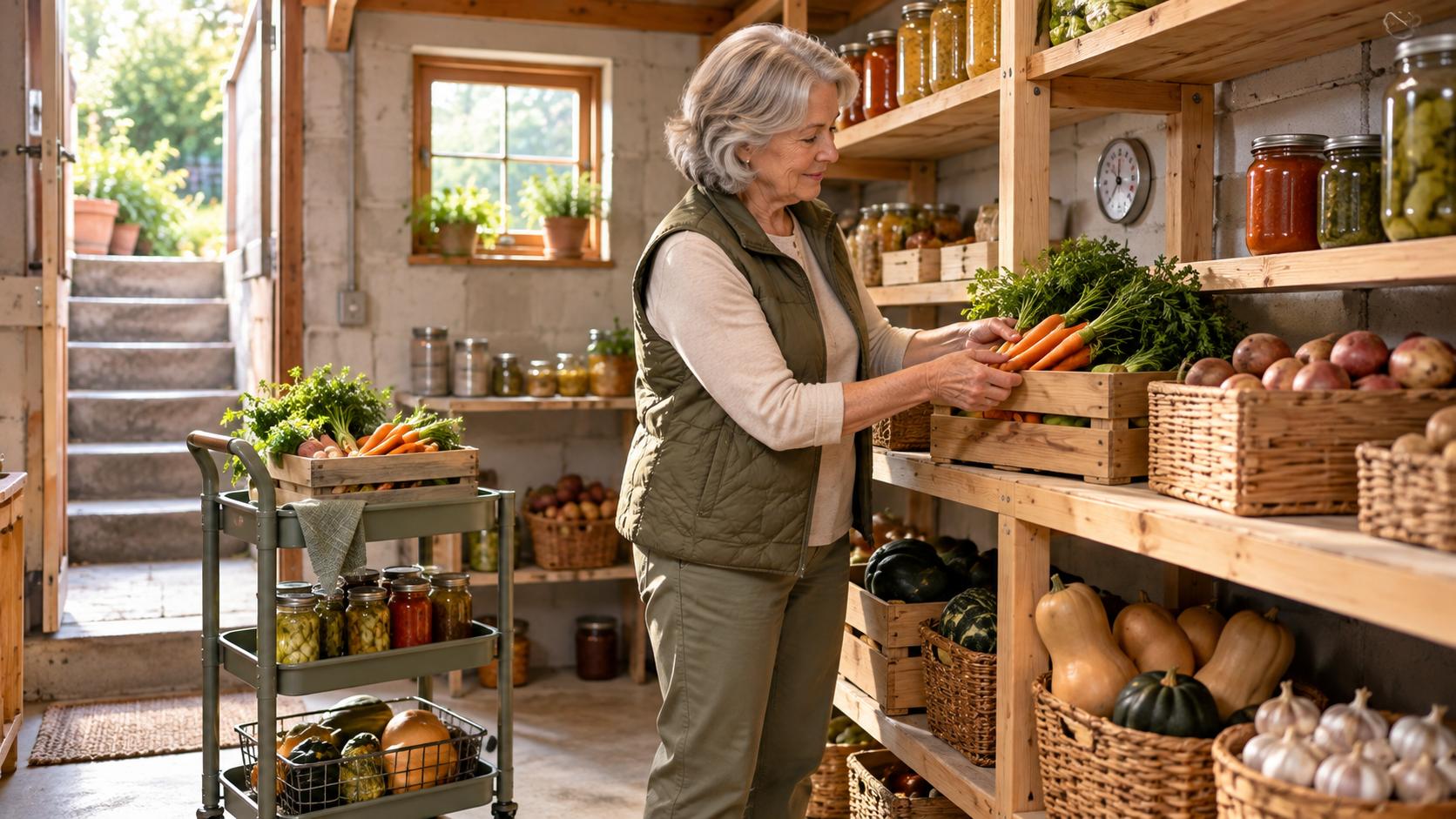
I’ll say this up front: a classic root cellar, dug into a hillside with a shovel and a wheelbarrow, was never a realistic project for a body like mine. Shoulder replacements, back pain and hand surgeries rule out the digging, the hauling and the heavy lids. They do not rule out storing food well.
This guide is a root cellar for seniors, built around ten low-lift tips. It starts where the harvest ends. If you need help growing food that stores well, my posts on the best vegetables to grow for survival and easy crops cover that part.
🌿 From My Homestead
Living on five rural acres has taught me that food security usually comes from small systems working together: growing some food, keeping a dependable pantry, preserving what you can, and planning ahead.
As I’ve gotten older, I’ve also learned to make self-reliance easier on the body. My goal with this series is to help you build more control over your food supply in practical ways that fit your space, budget, energy, and abilities.
The tips I share come from real experience, along with research and current homesteading best practices. My goal is simple: help you keep homesteading safely, comfortably, and for many years to come.
The goal isn’t to build the biggest or fanciest root cellar. It’s to store a useful amount of food without making your back, shoulders, or hands pay the price. Let’s look at ways to make that happen.
A Little Less Lifting, A Lot More Independence.
A good food storage system should fit your body, your space, and your climate. Smaller containers, comfortable shelf heights, and simple storage routines can make preserving your harvest much easier.
Pick one low-lift storage option from this guide and set up a cheap thermometer-hygrometer this week to see what temperature and humidity your space really has before you spend anything else.
TL;DR for Seniors: Low-Lift Root Cellar Storage
Food sovereignty means building small, dependable food systems you control so you are less vulnerable to shortages, rising prices, transportation problems, or supply disruptions.
🌿 Key Points:
✅ accessible space
✅ monitor temperature/humidity/darkness/airflow
✅ small bins and cart
✅ separate crops
✅ inspect regularly
✅ simple inventory
🌻 Takeaway: Start with a small, manageable storage system that protects both your food and your body.
1. A dug-in cellar is not the only kind
Old books describe a root cellar as a hole in the ground with a door. Those books assume a strong back, a free month and a spare tractor, or at least a few grown sons.
Cold storage does not have to be underground. But it does require the right temperature, humidity, darkness, and ventilation for each crop. A basement, closet, or storage unit works only when its measured conditions are suitable.
The rest of this guide treats a dug-in cellar as one option among several, and the hardest one.
If your body has limits, choose the version that asks the least of it. The food does not care how it was kept cool.
2. Know the four jobs a root cellar does
Every working cellar, whatever it looks like, does four things:
- Keeps cool. Most root crops keep best between about 32 and 40°F. Winter squash and pumpkins prefer warmer, around 50 to 60°F.
- Stays dark. Light makes potatoes turn green and sprout. Green potatoes should not be eaten.
- Holds humidity. Carrots, beets, turnips and parsnips like damp air, roughly 85 to 95 percent. Dry air wilts them.
- Moves air. Stale air lets mold grow and traps the gases produce gives off as it ages.
Check any option below against those four. If it fails one, fix that before you fill it with food.
Different vegetables need different storage conditions. The University of Missouri Extension’s guide to root cellar storage explains how temperature and humidity affect stored produce and why choosing the right conditions matters.
3. Four low-lift options
Option A: A basement corner
This is the easiest place to start. Pick the corner on the north or east side, against an outside wall and a concrete floor, as far as you can get from the furnace and water heater. Close it off with a simple partition or a curtain to hold in the cool air and keep out light.
A basement corner may work well for certain storage crops during the cooler months, but not every vegetable needs the same conditions. Potatoes, onions, squash, and apples have different temperature and humidity requirements.
Before storing anything, use a thermometer and hygrometer to check the conditions. If additional ventilation is needed, have someone experienced evaluate and install it safely.
Option B: A buried cooler or barrel
A buried container is an old-fashioned way to use the earth’s naturally stable temperature to store vegetables. You don’t need a full underground cellar. A smaller container can provide storage for potatoes, carrots, beets, and other suitable root crops when outdoor temperatures allow.
A clean, approximately 20-gallon metal or food-safe plastic container designed for outdoor storage can work. Choose a well-drained location away from areas that flood. The container needs proper drainage, protection from rodents, and an insulated cover that sheds rainwater.
Here’s where you save your back and shoulders: Have someone else do the digging and installation. A shorter container is easier to reach into than a deep barrel, although even a small buried container may require uncomfortable bending.
Place the produce in manageable layers using suitable insulating or packing materials, such as clean straw, following crop-specific storage recommendations. Check the contents regularly for moisture and spoilage.
Senior-friendly tip: Before installing anything, check whether your climate provides suitable soil temperatures. In Florida and other warm regions, buried storage may not get cold enough to preserve vegetables for extended periods.
Option C: An insulated closet
An unheated closet on an outside wall, or a closet beside a basement stairwell, can be converted without any digging. Insulate the door and the shared walls, add a vent to the outdoors if you can, and keep a thermometer inside. Foam board is light enough to cut and place with little strain on your hands, especially if you score it with a sharp knife and snap it.
Closets suit small harvests. They hold a few bins of storage crops, not a full season of potatoes for a family.
Insulation slows temperature change, but cannot make a warm closet cold. Verify temperatures before storing food, and use qualified help for ventilation or electrical modifications.
Option D: A ready-made unit
Prefabricated cellars and insulated cold-storage rooms exist, and they trade money for effort. Before you order, find out who delivers and installs it, what base it needs and how much it weighs. A kit that arrives in heavy pieces could cost your shoulders more than the shovel would.
4. Shelves, bins and carrying tricks that spare bad shoulders and hands
Most injuries around storage happen while carrying, not while digging. Plan the shelving so you never have to reach overhead or lift from the floor.
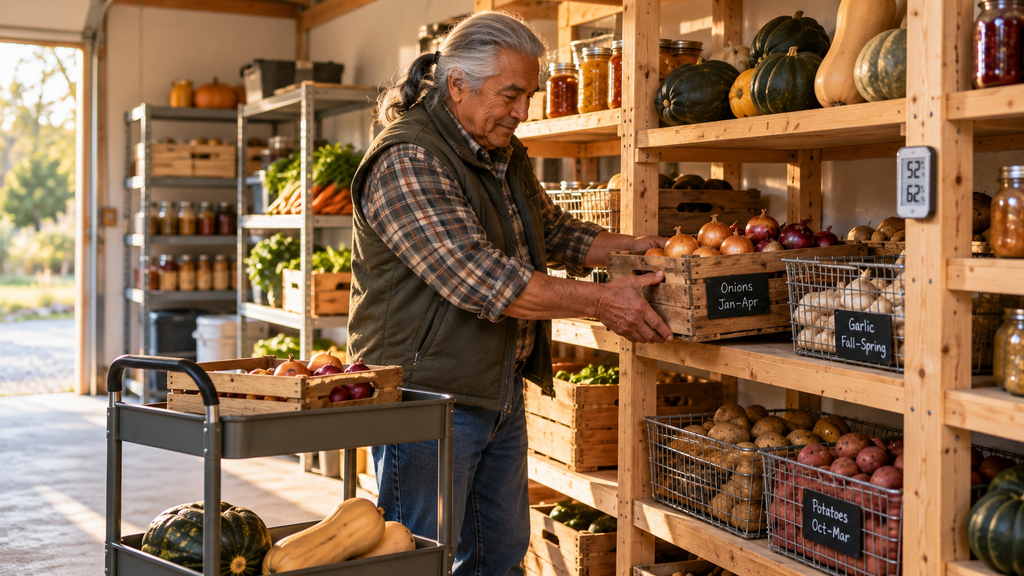
- Use shallow, small bins. A bin you can carry with one arm against your body is safer than a big crate you have to hug. Keep each filled bin to a weight you can lift comfortably.
- Put heavy items at waist height. Shelves from hip to chest are easiest on shoulders and backs. Leave the floor and the top shelf for light things, such as empty bins.
- Pick bins with real handholds. Cutout handles beat wire grips for hands that are weak or sore. If hand strength is your limit, my post on gardening with weak hands has more ideas.
- Use a cart. A small rolling cart takes the weight off your arms from the garden to the cellar door. I cover options in garden carts, kneelers and rolling seats.
- Move produce in several short trips. Three light loads cost your back less than one heavy one.
- Slide, don’t lift. Shelves with a smooth surface let you slide a bin forward instead of raising it.
5. Crops that store well, which to keep apart, and how to check them without bending
Not every vegetable belongs in the cellar. The reliable keepers are potatoes, carrots, beets, turnips, parsnips, cabbage, onions, garlic, winter squash and apples.
Keep these apart:
- Apples away from potatoes. Apples give off ethylene gas, which can make potatoes sprout sooner.
- Onions and garlic away from damp crops. They want drier air, and they can spoil if kept beside carrots or beets.
- Cabbage by itself, or near the door. Its smell can carry to other foods.
- Squash in the warmest, driest spot. It does poorly in the cold, wet air that carrots like.
Carrots and beets keep longest packed in damp sand or sawdust inside a bin. Preparation and packing depend on the crop and storage method. Follow tested crop-specific storage guidance.
To check without bending, put the bins you inspect most at waist height and use a flashlight. A long-handled reacher helps for anything lower. Look through the bins once a week, because one rotting potato spreads trouble fast. Remove anything soft, moldy or sprouting and use it up, if it is still safe, or throw it away.
Every small step toward growing, storing, or preserving your own food helps build a more secure and independent future.
6. Safety points the old books skip
Most root cellar guides treat safety as an afterthought. These points matter more when your balance, strength or recovery time is limited.
Mold. Damp conditions and poor ventilation can encourage mold growth. Keep air circulating, check for leaks or condensation, and discard moldy produce promptly. Clean small areas of mold on hard surfaces using appropriate protection and cleaning methods. If mold covers a large area or keeps returning, have a qualified professional address the problem. An ordinary dust mask is not enough protection for serious mold cleanup.
Gas buildup. Vegetables continue to breathe after harvest, and enclosed storage areas may develop unsafe air conditions if ventilation is inadequate. Underground cellars need properly designed ventilation. Simply opening a door for a few minutes does not guarantee the air is safe. Never enter a cellar if you suspect poor air quality or inadequate oxygen. Have a qualified professional evaluate the space before using it.
Stairs. If your cellar is down steps, fit a sturdy handrail on at least one side, preferably both, and mark the edge of each step with bright tape. Do not carry a bin down stairs when it blocks your view of your feet.
Lighting. Put in a bright light at the top of the stairs and another inside. A motion-sensing LED light means you never fumble for a switch. A headlamp leaves both hands free.
Getting help. Let someone know when you are going down, and keep your phone in a pocket. Ask for help with the heaviest jobs: filling the cellar, moving big crates and clearing out spoiled food. Asking is a sensible plan.
7. Gear worth having in a low-lift cellar
You do not need much. These items cover the basics.
- Thermometer-hygrometer. This single device reads temperature and humidity. It tells you whether your space meets the four jobs from tip 2. Choose one with a large, easy-to-read display and, if possible, a memory function that shows the highest and lowest readings since you last reset it. That way you do not have to visit every day.
- Ventilation. A small intake vent low and an exhaust vent high lets cool air in and warm, stale air out. In a basement corner, this can be as simple as a vent pipe through a window well. A hardware store clerk can help you match parts to your space.
- Sturdy bins. Look for stackable, ventilated plastic or wooden crates with real handholds, sized so that a full one stays manageable.
- Reacher. A lightweight grabber saves bending.
- LED light and headlamp. Bright light prevents falls.
- Mask and gloves. Both protect you when you clean out mold or handle damp produce.
Start with the thermometer-hygrometer. Everything else depends on knowing the real conditions in your space.
8. Link your cellar to what you grow
A cellar works best when the garden is planned around it. Choose varieties known as good keepers. Seed catalogs and packets often say “good for storage” on the label. Time your harvests so the crops go into the cellar dry and undamaged, since bruised produce rots first.
Match the size of the cellar to what you can actually grow and carry. Starting small is fine. A food reserve built from one well-kept bin of potatoes, one of carrots and a few squash is worth more than a big cellar you cannot manage.
If the larger goal is a dependable food supply, see food sovereignty for seniors, which covers how storage fits into the whole plan.
9. Why safe storage matters when your body has limits
When you cannot easily replant, rebuild or restock, every pound of harvest counts. Food that rots in storage is food you worked for and lost. For a senior with physical limits, that loss costs more than money, because the effort of growing and carrying it was real.
Safe storage also protects your health. Moldy or spoiled produce can make anyone ill, and recovery is slower as we get older. A cellar that holds steady temperature and humidity, with good airflow, keeps food edible longer and lowers the risk of eating something that has turned.
Safe design protects you as well. A cellar with good lighting, handrails and small bins keeps your own body from becoming the weak point in the system.
10. Keep a Simple Root Cellar Inventory
You don’t need a complicated spreadsheet to keep track of your stored harvest. A simple notebook or clipboard can save you unnecessary trips, bending, and lifting.
Write down what you’ve stored, when you stored it, and approximately how much you have.
Keep your inventory near the entrance, where you can read it without moving heavy containers.
A few simple habits make a difference:
- Label every container. Include the vegetable name and storage date.
- Use older produce first. Rotate your supply so nothing gets forgotten.
- Update your list when you remove food. That way, you’ll know what remains without searching through bins.
- Check for spoilage weekly. Remove anything that has begun to rot.
A good inventory saves energy, reduces food waste, and helps you plan meals around what you already have.
Senior-friendly tip: Use large-print labels and keep a flashlight nearby so you can read them easily.
Why This Matters for Preparedness
Growing your own food is only part of becoming more self-reliant. Keeping that food usable after harvest matters just as much.
A properly managed root cellar can reduce food waste and give you more flexibility between shopping trips. In hot or humid climates, refrigeration or other safe preservation methods may work better than a naturally cooled cellar.
That’s why I prefer several small food systems working together: a rotating pantry, fresh vegetables, preserved foods, and dependable local food connections.
You don’t have to do everything yourself. You need practical options that fit your abilities and your home.
🌿 Trusted Food Sovereignty Sources
Building food independence is easier when you have the right tools and systems. These trusted products can help make growing, storing, preserving, and preparing food more manageable while reducing unnecessary lifting, bending, gripping, and strain.
Whether you’re working with a small garden, building a dependable pantry, preserving a harvest, or adding simple food-production systems at home, these are practical products worth considering.
-
 $89.95Buy Now
Starter Kits Set for Beginners -
Stainless Steel Water Bath Canner Kit & Rack-Rack, XL Ladle, Measuring Cups, Kitchen Funnel
The BEST canning pot and rack in the market that comes with a food-grade stainless steel canning kit + ½ pint (8 oz) canning scoop + 6 measuring cups - steelcore core porcelain lightweight chemical free pot (Assembled in USA, 365 day back warranty, US & UK based 24/7 customer care).
*Customers usually keep this item.
We earn a commission if you make a purchase, at no additional cost to you.
10/29/2026 08:35 pm GMT -
 $109.90Buy Now
400lbs Weight Capacity, Gardening Cart Bench, Ergonomic Backrest & Tool Storage, for Yard, Patio
We earn a commission if you make a purchase, at no additional cost to you.
10/29/2026 08:40 pm GMT -
 $89.99Buy Now
13 in All Terrain Tires, 4-in-1 Yard Wagon Cart with Removable Side Panels for Outdoor Lawn, Yard
I've owned one like this for 22 yrs!
We earn a commission if you make a purchase, at no additional cost to you.
10/29/2026 08:39 pm GMT -
 $59.77Buy Now
Pack of 3 BPA Free Food Storage Containers, Made in USA- 3 Colors (Aqua, Blue, Gray, Black lids)
These 5 Gallon buckets are Food Grade, bucket with lid and can be used as cleaning bucket, water bucket, paint bucket, Fermentation bucket, wash bucket.
These food storage buckets can be used for many foods. Easy open lid can be opened and closed easily.
*Customers usually keep this item.
We earn a commission if you make a purchase, at no additional cost to you.
10/29/2026 09:49 pm GMT -
 $62.99Buy Now
Cucumber Trellis with High-Density Rhombus SteelGrats for Climbing Plants, Tomatoes & Raised Beds, Outdoor Use
Strong enough to support heavy cucumbers, melons, pumpkins, and dense foliage without bending or collapsing. Built to handle several times of ordinary garden trellises.
We earn a commission if you make a purchase, at no additional cost to you.
10/29/2026 09:53 pm GMT -
 $103.17Buy Now
COMPLETE HOME AND GARDEN TOOLKIT - Tackles indoor and outdoor maintenance jobs with a comprehensive 6-piece set featuring ergonomically designed PowerGear Lopper, 9-in-1 Shears, Bypass Pruner, Folding Saw, IsoCore Hammer, and Utility Knife
We earn a commission if you make a purchase, at no additional cost to you.
10/29/2026 09:58 pm GMT -
 $79.99Buy Now
Equipped with easy-lock handle, built-in cutter, sealed hose, 1 roll + 15 vacuum bags for food preservation Black Silver
95kPa Powerful Suction - 50% faster than standard sealers
With a 230W high-power motor and high-quality heating wire, the QKWXV vacuum sealer achieves a tight vacuum seal in 8–18 seconds under 95kPa suction force—50% faster than standard sealers. Its upgraded silicone sealing ring prevents leaks, enhances vacuum performance, and extends machine durability after rigorous 3,000+ cycle testing.
We earn a commission if you make a purchase, at no additional cost to you.
10/29/2026 09:59 pm GMT -
 $49.99Buy Now
350W | Expandable to 7 Trays, 48H Timer, for Jerky, Fruit, Herbs, Meat, Veggies and Dog Treats, 50-Recipes Book Included, White
Love this! Great price 🙂
We earn a commission if you make a purchase, at no additional cost to you.
10/29/2026 09:20 pm GMT -
 $68.99Buy Now
Premium Corn-Grinding Mill and Grain Grinder, Made in Colombia
MANUAL MILLING MACHINE: This grain mill has a durable cast-iron hand crank with a wooden handle and high-performance white iron discs for grinding all types of grain. Simply adjust the screw to change the coarseness and fineness of your milling.
VERSATILE GRINDER: Use this grain grinder for home brewing, corn, barley, grains, coffee, cheese, vegetables, seeds, nuts, coconut, spices, dried beans, cooked meats, and more. Please note that this grinder cannot grind to a superfine texture and will not grind whole wheat into a fine powder.
Looks like the meat grinder my grandmother left me!
We earn a commission if you make a purchase, at no additional cost to you.
10/29/2026 09:36 pm GMT -
 $99.95Buy Now
15" Tall Large Plant Pots with Trellis for Flowers Plants Decor, Cream White
Innovative Watering System in Raised Garden Planter: A reliable and efficient solution for delivering water to your plants without having to worry about overflow.
The water storage volume of the tomato planter box is about 9L, fill it once to water your planter for up to 1.5 months! This innovative design gives new gardeners a hassle-free way to start growing!
We earn a commission if you make a purchase, at no additional cost to you.
10/29/2026 09:45 pm GMT

🌱 Continue the Food Sovereignty Series
Every household’s food security plan looks a little different. These related articles can help you build yours one practical piece at a time.
As I complete these associated posts, the link will be underlined.
Popular Guides
🌱 The Senior Survivalist Guide to Root Cellars
🌼 Off-Grid Water Filtration for Joint Health
🧰 Building a 90-Day Pantry on a Fixed Income
🪶 Dehydrating and Canning When Standing Too Long Hurts
🛒 Seed Saving Basics for a Self-Sufficient Pantry
🥕 Bartering and Local Food Networks for Seniors Who Prep Alone
👉 See Every Food Sovereignty Article
Discover practical food sovereignty tips that make growing, storing, preserving, and preparing food easier, safer, and more manageable for older adults.
Additional Root Cellar Resources
- University of Minnesota Extension: Harvesting and Storing Home Garden Vegetables provides guidance on storing different vegetables, including temperature and humidity requirements.
- National Center for Home Food Preservation offers research-based instructions for preserving food safely through canning, freezing, and drying.
1. Can seniors build a root cellar without digging?
Yes. Consider a naturally cool basement area, refrigerator, or professionally designed temperature-controlled space, provided the conditions suit the crop.
2. What is easiest for someone with back pain?
Accessible shelving, small containers, and a space that requires no climbing or heavy carrying.
3. What temperature should a root cellar be?
Many root crops prefer roughly 32–40°F, but potatoes, onions, squash, and other crops may require different conditions.
4. Can I use my garage?
Only when measured conditions remain suitable. Warm garages may be unsuitable.
5. How can I protect my shoulders?
Use smaller bins, comfortable shelf heights, and a stable cart.
6. How often should I inspect produce?
Weekly is a useful starting point, and more often when conditions fluctuate.
7. Do root cellars work in Florida?
Naturally cool storage can be difficult in hot, humid climates. Refrigeration and other preservation may be more practical.
8. Are root cellars useful in emergencies?
Yes, as one part of a broader food reserve when proper conditions can be maintained.
Join the Conversation
Have you ever stored potatoes, carrots, squash, or other vegetables in a root cellar, basement, or garage?
I’d love to hear what works for you, especially if you’ve found ways to reduce lifting, bending, or carrying heavy containers.
Share your experience in the comments. Your ideas may help another senior create an easier, more dependable food storage system.