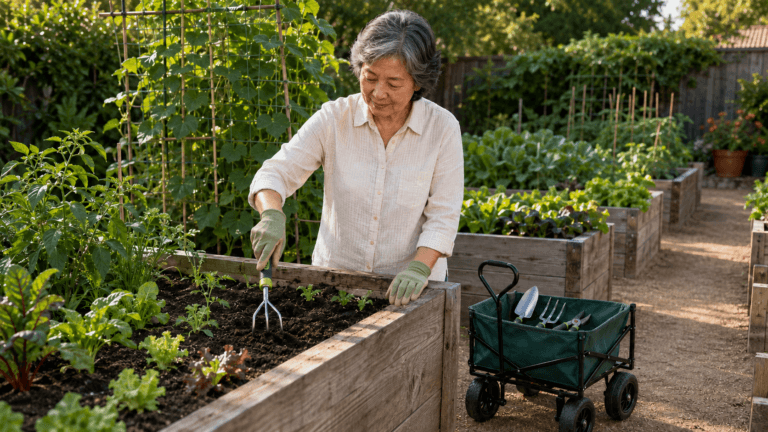

Garden Carts, Kneelers, and Rolling Seats for Seniors
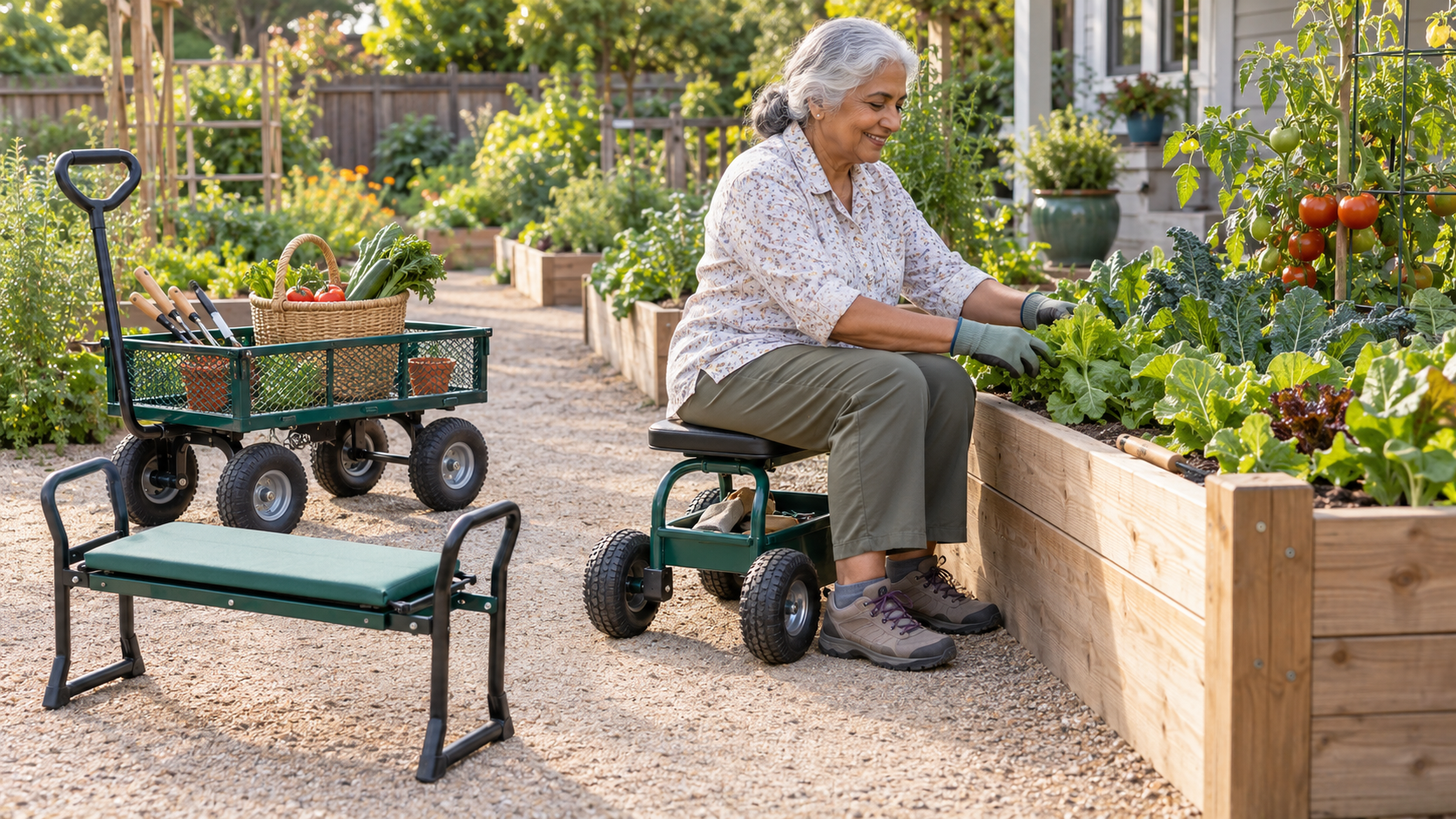

🌱 From My Garden
I know how frustrating it is when gardening leaves you sore for days.
I don’t write these articles because I read about them. I write them because I’ve lived them. Between multiple shoulder surgeries, including two left shoulder replacements, chronic back pain, knee surgery, and surgeries on my right hand for carpal tunnel syndrome and Dupuytren’s contracture, and most recently, breast cancer surgeries, I’ve had to learn how to keep gardening without making my pain worse.
The tips I share come from real experience, along with research and current gardening best practices. My goal is simple: help you keep gardening safely, comfortably, and for many years to come.
Gardening Should Not Require Carrying Everything by Hand
Gardening involves more carrying than many people realize. Bags of soil, hand tools, plants, hoses, weeds, mulch, and harvested vegetables all need to move from one place to another.
When you are younger, you may grab what you need and carry it across the yard without thinking about it. As you get older, those repeated trips can become one of the hardest parts of gardening.
A loaded bucket pulls on your hands and shoulders. A heavy bag can aggravate your back. Carrying an awkward container can affect your balance. Even a lightweight tool becomes tiring when you must walk back to the shed several times to retrieve something you forgot.
Garden carts, kneelers, and rolling seats can reduce much of that unnecessary strain. They are not luxuries. They are practical tools that help you move supplies, work closer to the ground, and conserve energy.
The right equipment can make the difference between enjoying an afternoon in the garden and spending the next several days recovering from it.
Work Smarter by Moving the Load
The safest load is often the one you do not carry.
- A garden cart lets the wheels support the weight instead of your hands, shoulders, back, and knees.
- A kneeler reduces the distance you must lower and raise your body.
- A rolling seat allows you to move along a garden bed without repeatedly standing up.
These tools address different problems, but they serve the same purpose. They reduce the physical cost of gardening.
Choosing the right one depends on your garden layout, balance, strength, mobility, storage space, and the type of work you usually do.
Add a green highlighted box containing the following:
A Simple Rule for Easier Gardening
Before carrying, kneeling, or bending, ask yourself three questions:
* Can I put this load on wheels?
* Can I bring the work closer to a comfortable height?
* Can I complete this task without repeatedly getting up and down?
Small changes can prevent a great deal of pain and fatigue.
TL;DR for Seniors: Garden Carts, Kneelers, and Rolling Seats
Garden carts, kneelers, and rolling seats can reduce lifting, bending, carrying, and repeated standing. The best choice is stable, easy to move, comfortable to use, and suited to your garden paths and physical needs.
🌿 Key Points:
✅ Use a cart instead of carrying heavy or awkward supplies.
✅ Choose four wheels when stability matters more than tight maneuvering.
✅ Look for large wheels if your ground is sandy, soft, or uneven.
✅ Test handles, brakes, seat height, and balance before buying.
✅ Avoid kneelers if getting onto the ground is unsafe for you.
✅ Choose a rolling seat that will not tip when you reach sideways.
✅ Keep loads small enough that the cart remains easy to control.
✅ Store frequently used tools in the cart to reduce extra walking.
✅ Ask for help with bags, repairs, steep ground, and heavy loads.
✅ Use short work sessions and stop before pain or fatigue builds.
🌻 Takeaway: Wheels and supportive seating can do more than save time. They can protect your joints, improve balance, and help you keep gardening safely.
Why Wheels Make Such a Difference
Wheels change how your body handles weight.
When you carry a bag, bucket, or tool, your muscles and joints support the entire load. When you place it in a cart, the cart supports most of the weight. You still need to push or pull, but that is usually easier than lifting and carrying.
That does not mean a cart makes every load safe. An overloaded cart can be difficult to start, stop, steer, or control on a slope. A poorly balanced cart can tip. Small wheels may sink into soft Florida sand or catch on roots.
The goal is not to move the largest possible load. The goal is to move a manageable load with less strain.
Two smaller trips are often safer than one overloaded trip.
Choosing a Garden Cart
Garden carts come in many shapes and sizes. Some resemble wagons. Others have two wheels and a long handle. Utility carts may have removable sides, dumping beds, tool holders, or seats.
The best cart is not automatically the largest or strongest model. A heavy-duty cart may weigh so much that it becomes difficult to move before you put anything inside it.
Look for a cart that is light enough to control but sturdy enough for your normal garden work.
Two-Wheel Garden Carts
Two-wheel carts are usually easier to balance than traditional one-wheel wheelbarrows. Their two wheels support the load, so you do not have to prevent the cart from tipping from side to side.
They can be useful for moving:
- Bags of potting mix
- Compost
- Mulch
- Plants and containers
- Hand tools
- Weeds and garden debris
- Harvest baskets
- Watering supplies
A two-wheel design can maneuver through narrower areas. However, you may still need to lift part of the cart’s weight through the handles.
Before buying one, check how high you must lift the handles. If raising them strains your shoulders or back, choose another design.
Four-Wheel Garden Wagons
Four-wheel wagons provide a stable platform and do not require you to lift the load while moving it. They are often a better choice for gardeners with weak hands, shoulder problems, balance concerns, or limited lifting ability.
A wagon can also hold a bucket, water bottle, phone, gloves, hand tools, and harvested vegetables. Keeping these supplies together reduces trips across the yard.
The main drawback is steering. A wagon can become difficult to pull around tight corners, particularly when heavily loaded. It may also roll away on sloped ground unless it has reliable brakes.
For a rural property, look for larger wheels that can travel over grass, pine needles, packed dirt, roots, and sandy areas.
Dump Carts
Dump carts have a bed that tilts so the contents can slide out. This can make unloading mulch, weeds, soil, or small branches easier.
However, the dumping mechanism should be easy to release without bending deeply or pulling a stiff lever. The bed should not snap upward or shift suddenly when the load moves.
A dump cart can save work, but only if you can operate it comfortably and safely.
Collapsible Carts
Collapsible wagons are lighter and easier to store. They can be useful for carrying tools, plants, light bags, or harvested produce.
They are not always suitable for heavy garden materials. Fabric sides may sag, and small wheels can struggle on soft soil or rough paths.
Use a collapsible wagon for lighter work unless the manufacturer clearly states that it is designed for heavier outdoor loads.
Features That Matter Most in a Garden Cart
Do not choose a cart based only on its weight capacity. A manufacturer may advertise that a cart can hold several hundred pounds, but that does not mean you should attempt to move that much.
Pay closer attention to these features:
Large, Stable Wheels
Large wheels generally travel over uneven ground more easily than small wheels. Wide tires are less likely to sink into soft soil or sand.
Pneumatic tires provide cushioning but may go flat. Solid tires require less maintenance but can feel rougher over roots and gravel.
A Comfortable Handle
The handle should allow you to keep your wrist relatively straight. It should not force you to bend forward or raise your shoulders.
A padded or textured grip may help if you have arthritis, weak hands, carpal tunnel symptoms, or reduced grip strength.
A Manageable Empty Weight
Check the cart’s empty weight before buying it. If the cart is already difficult to move, adding supplies will only make the problem worse.
Brakes or Wheel Locks
Brakes are especially important if your property has slopes. Lock the wheels before loading, unloading, or using the cart for support.
Never assume a stationary cart will remain still.
A Reasonable Bed Height
A deeper cart may hold more, but reaching into the bottom can require considerable bending. A shallower bed may be easier to load and unload.
Easy Storage
Consider where the cart will be kept. Leaving it outdoors can damage fabric, plastic, tires, and metal parts. Choose a model that fits inside your shed or another protected area.
Use the Cart as a Mobile Garden Station
A garden cart can do more than carry heavy materials. It can become a mobile work station that keeps your supplies close.
You might keep the following items in a small removable container:
- Gloves
- Hand pruners
- Ergonomic trowel
- Cushioned-handled cultivator
- Plant ties
- Small trash bags
- Sunscreen
- Insect repellent
- Phone
- Water bottle
- Basic first-aid supplies
This prevents repeated trips to the house or shed. It also reduces the temptation to carry too many tools in your hands or pockets.
Do not leave medications, electronics, batteries, or products that can overheat inside a cart stored in the Florida sun.
Safe Cart Use
A cart reduces lifting, but it can introduce new hazards if it is overloaded or used carelessly.
Keep the load low and balanced. Place heavier items in the center rather than stacking them along one side. Secure tools so they cannot slide, fall, or point toward you.
Push when that gives you better control and visibility. Pull only when the cart is designed for pulling and the path is clear. Avoid walking backward while dragging a heavy cart.
Never use a rolling cart as a support when standing unless it was specifically designed for that purpose and its wheels are locked.
If the cart becomes difficult to start, steer, or stop, the load is too heavy. Remove part of it and make another trip.
When a Traditional Wheelbarrow May Not Be Best
A one-wheel wheelbarrow requires you to lift, balance, push, and steer the load at the same time. This can place considerable strain on your hands, wrists, shoulders, back, and knees.
It can also tip suddenly if the wheel hits a root, hole, or soft patch of ground.
Some experienced gardeners use wheelbarrows comfortably. However, a two-wheel cart or four-wheel wagon is often more stable and forgiving for an older gardener.
There is no prize for using the equipment you have always used. Choose what works safely for your body now.
Garden Kneelers Can Reduce Pressure and Strain
A garden kneeler provides a padded surface between your knees and the ground. Many models also have raised handles that help you lower yourself and stand again.
Some kneelers can be flipped over and used as a small bench. This two-in-one design can be useful if you alternate between sitting and kneeling.
However, a kneeler is not right for everyone.
If you have knee problems, balance difficulties, joint replacements, severe back pain, limited leg strength, or trouble getting off the floor, kneeling may still be unsafe. Padding does not remove the physical effort required to lower and raise your body.
Think of a kneeler as a comfort aid, not a mobility aid.
Features to Look For in a Garden Kneeler
Stable Handles
The handles should feel firm when you put weight on them. They should not flex, wobble, or slide.
Check the manufacturer’s weight limit. Your body weight may shift heavily onto one handle while you are standing, especially if one side is stronger than the other.
Place the kneeler on firm, level ground before using it. The legs can sink into loose soil, mulch, or Florida sand.
Thick, Firm Padding
Very soft padding may feel comfortable at first, but it can compress until your knees are nearly touching the frame beneath it.
Look for padding that is thick enough to cushion your knees but firm enough to provide stable support. A waterproof or water-resistant surface is easier to clean after working in damp soil.
A Comfortable Seat Height
When the kneeler is flipped into a bench, the seat should be high enough that you can stand without pulling hard on your knees, shoulders, or back.
Very low seats may create more difficulty than they solve. If you must rock forward or push forcefully with your arms to stand, the seat is probably too low.
Secure Folding Mechanisms
Some garden kneelers fold for storage. Make sure the legs lock securely when opened.
Keep your fingers away from hinges while folding or unfolding the frame. Pinch points can be particularly dangerous if you have arthritis, numbness, or reduced hand strength.
Tool Pouches
Removable tool pouches can keep a trowel, cultivator, gloves, plant ties, and pruners within reach. This reduces repeated standing and walking.
Do not overload the pouches. Heavy items hanging from one side could affect the kneeler’s stability.
How to Use a Garden Kneeler Safely
Set the kneeler on dry, level, firm ground. Test it with your hands before transferring your weight onto it.
Stand close to the kneeler. Hold both handles and lower one knee at a time. Avoid twisting while lowering yourself.
When you are ready to stand, bring one foot forward so it is flat on the ground. Push evenly through your leg and both handles. Pause after standing to make sure you are steady before walking.
Do not kneel for long periods. Remaining in one position can cause stiffness, numbness, and increased pain.
Change positions every 10 to 15 minutes. Stand, walk a short distance, and gently straighten your legs before returning to the task.
If standing from the kneeler feels uncertain, stop using it when you are alone.
When to Skip the Kneeler
Do not use a kneeler simply because it is marketed to seniors.
It may be the wrong choice if you:
- Have difficulty getting onto or off the floor
- Have severe knee pain
- Experience dizziness or balance problems
- Cannot safely bear weight through both arms
- Have shoulder restrictions
- Have recently undergone joint surgery
- Work on soft, sloped, wet, or uneven ground
- Frequently garden alone without anyone nearby
An elevated bed, standing planter, or rolling seat may be safer.
Rolling Garden Seats
A rolling garden seat allows you to sit while moving along a garden bed. It can reduce squatting, kneeling, and repeated standing.
Some models are simple stools mounted on wheels. Others have swiveling or adjustable seats, steering handles, storage baskets, tool trays, or small wagon beds.
A rolling seat can be useful for:
- Weeding
- Harvesting low-growing vegetables
- Planting
- Pruning small plants
- Deadheading flowers
- Working around containers
- Moving between nearby garden beds
The seat should let you reach the work without leaning, twisting, or stretching too far.
Choosing the Correct Seat Height
Seat height is one of the most important considerations.
If the seat is too low, your knees may rise above your hips. This can make standing difficult and place additional pressure on your knees and lower back.
If the seat is too high, your feet may not rest firmly on the ground. That reduces stability and makes it harder to control the seat.
When seated, you should be able to place both feet flat on the ground. Your knees should remain comfortable, and you should be able to stand without pulling forcefully on nearby plants, fences, or raised beds.
An adjustable-height seat offers more flexibility, but its locking mechanism must remain secure.
Stability Matters More Than Convenience
A rolling seat must remain stable when you reach toward the garden. Narrow seats with a high center of gravity may tip if you lean sideways.
Look for:
- A wide wheelbase
- Four sturdy wheels
- A seat that does not wobble
- A strong frame
- Reliable wheel locks or brakes
- Large wheels for rough ground
- A comfortable seat with enough room to change position
- Clearly stated weight limits
Never assume a rolling seat is safe on a slope. Even a slight incline can cause it to move while you are sitting down or standing up.
Do not use a rolling seat on wet grass, loose gravel, deep mulch, soft sand, exposed roots, or muddy paths.
Swiveling Seats
A swiveling seat lets you turn toward the work without twisting your back as much. This can be helpful when moving between the garden bed and your tool tray.
The swivel should move smoothly but should not spin unexpectedly. Some models include a locking mechanism.
Test the seat before using it near plants. If the movement feels too loose or difficult to control, a fixed seat may be safer.
Rolling Seats Are Not Walkers
A rolling garden seat may look sturdy, but it is not automatically designed to support you while walking.
Do not lean on it as you move through the garden unless the manufacturer specifically says it is designed for that use.
The wheels can move away from you unexpectedly. This is especially dangerous when sitting down or standing up.
Lock the wheels when possible. If the model does not have brakes, place it against a secure stop before transferring your weight.
Match the Equipment to Your Garden
Your paths determine which carts and seats will work.
A small rolling stool may operate well on smooth concrete or tightly packed paths. It may become useless in thick grass or sandy soil. A large garden wagon may move easily across the property but be too wide for the space between raised beds.
Measure your narrowest garden path before buying equipment. Include enough room for your hands, feet, wheels, and turning space.
Wide, level paths make almost every mobility tool safer. Keep paths free from hoses, tools, roots, loose edging, fallen fruit, and other tripping hazards.
If a cart or seat repeatedly gets stuck, the answer may be improving the path rather than buying more equipment.
Which One Should You Choose?
Your main gardening difficulty can help determine the best option.
| Your challenge | Equipment to consider |
| Carrying tools and supplies | Four-wheel wagon or lightweight garden cart |
| Moving mulch, soil, or debris | Two-wheel cart or dump cart |
| Knee pressure while gardening | Padded garden kneeler |
| Difficulty standing after kneeling | Elevated bed or rolling seat instead of a kneeler |
| Back pain from bending | Adjustable rolling seat or tall raised bed |
| Weak hands or shoulders | Four-wheel wagon with a comfortable handle |
| Balance concerns | Stable seated equipment used on firm, level ground |
| Rough rural paths | Cart with large, wide wheels |
| Limited storage space | Folding kneeler or collapsible wagon |
| Frequent harvesting | Wagon with baskets or a cart used as a mobile station |
You may benefit from more than one tool. A wagon can transport supplies to the garden while a stable seat helps you work.
Do not buy several pieces at once. Start with the equipment that solves your biggest problem.
Try before You Buy
Product photographs rarely show whether equipment will fit your body.
If possible, test the equipment in person. Sit on the seat. Stand back up. Grip the handles. Turn the cart. Check the empty weight. Try the brakes and folding mechanisms.
If you order online, check the dimensions rather than relying on words such as “comfortable,” “lightweight,” or “senior-friendly.”
Read the return policy before assembling the item. Some retailers will not accept equipment after it has been used outdoors.
Maintain Your Cart, Kneeler, or Seat
Inspect the equipment regularly. Tighten loose bolts and replace missing fasteners before using it again.
Check:
- Tire pressure
- Wheel condition
- Brakes and wheel locks
- Axles
- Handles and grips
- Seat supports
- Folding mechanisms
- Rust or cracked metal
- Torn fabric
- Loose tool trays
- Weight-limit labels
Wash off soil and fertilizer residue. Fertilizer can corrode metal parts. Allow fabric and padding to dry before storage to prevent mildew.
Store the equipment under cover. Florida sun, or anyplace with extra-hot sun, and rain can weaken plastic, fade fabric, damage tires, and encourage rust.
If a seat or kneeler begins to wobble, stop using it until it has been repaired or replaced.
Avoid Turning the Equipment into Another Burden
Garden equipment should reduce work, not create more of it.
A large cart that you cannot steer is not helpful. A folding kneeler that hurts your hands is not senior-friendly. A rolling seat that constantly sinks into the soil will spend more time in the shed than in the garden.
Choose equipment for your actual garden and current abilities.
It is better to have one dependable cart that you use every week than three specialized tools that are heavy, awkward, or difficult to store.
🌿 Trusted Gardening Resources
Enjoying your garden is easier when you have the right tools. These trusted gardening products can help reduce strain on your shoulders, protect your joints, and make everyday gardening tasks safer and more comfortable.
Whether you’re dealing with arthritis, recovering from surgery, or simply looking for easier ways to garden, these are products worth considering.
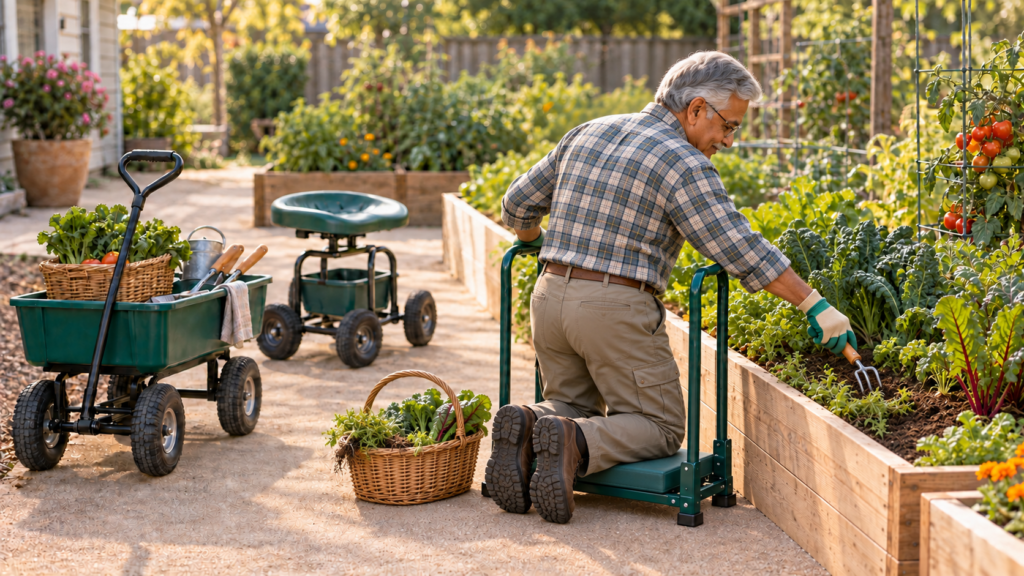
My Favorite Tools for Easier, Safer Gardening
Gardening should not leave you hurting for days. I put together this collection of senior-friendly gardening tools, raised planters, and helpful accessories. I own and use several of them myself, while others were chosen because they may reduce bending, lifting, gripping, and reaching.
-
 $109.90Buy Now
400lbs Weight Capacity, Gardening Cart Bench, Ergonomic Backrest & Tool Storage, for Yard, Patio
We earn a commission if you make a purchase, at no additional cost to you.
09/27/2026 10:05 pm GMT -
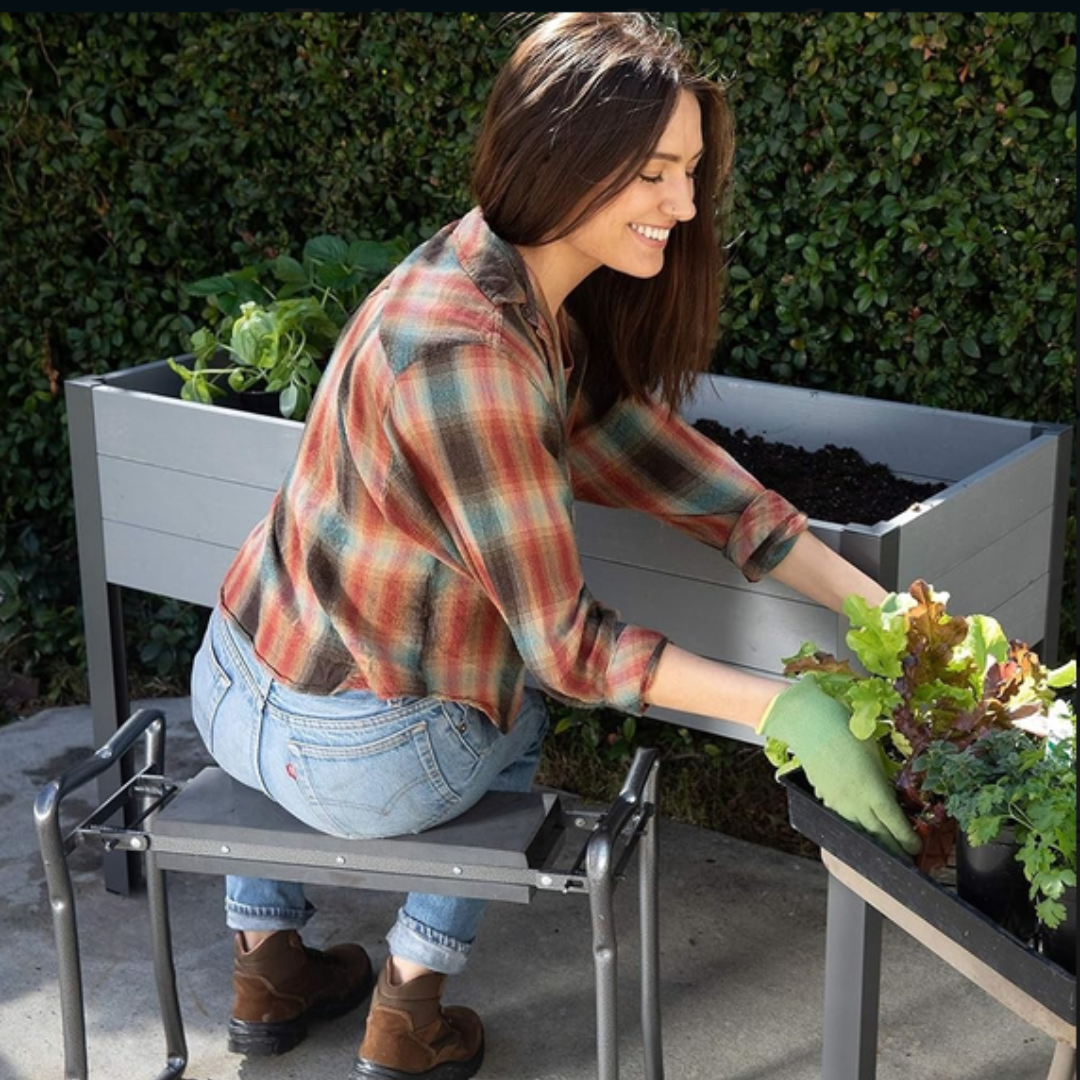 Buy Now
Converts from a comfortable bench for sitting to a cushioned kneeler by simply flipping it over.
We earn a commission if you make a purchase, at no additional cost to you.
-
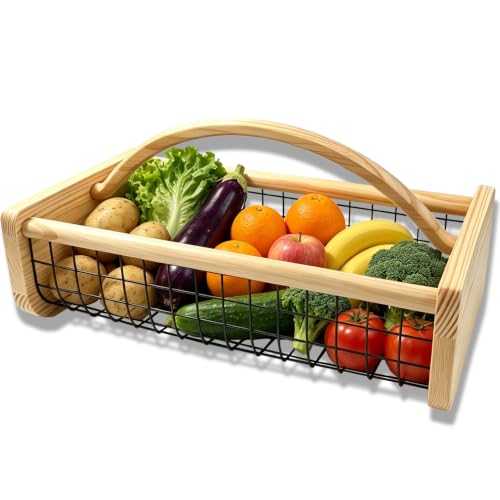 $38.99Buy Now
With Bent Solid Handle and Coated Mesh, Rinse & Deain Fresh Produce Easily for Kitchen and Outdoor Pick...
We earn a commission if you make a purchase, at no additional cost to you.
09/10/2026 12:11 am GMT -
 $99.99Buy Now
Swivel-Wheel Garden Stool Designed for Seniors Ideal for Lawn, Patio, and Outdoor Gardening Scooter
This swivel-wheel garden cart is a game-changer, especially for those recovering from knee or joint surgery or managing arthritis.
We earn a commission if you make a purchase, at no additional cost to you.
09/10/2026 07:23 pm GMT -
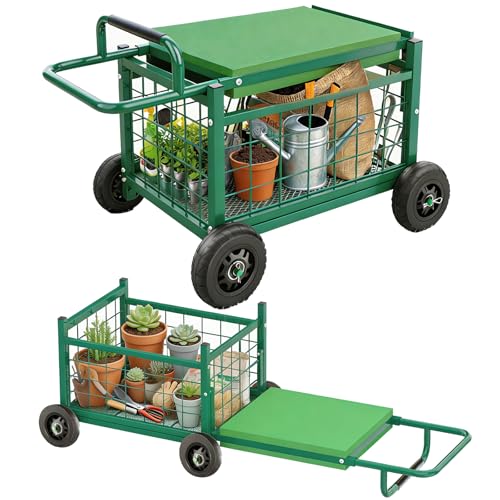 $77.99Buy Now
Heavy Duty Gardening Cart with Seat and Kneeler, Rolling Stools with Wheels for Seniors Gardening
We earn a commission if you make a purchase, at no additional cost to you.
09/27/2026 09:43 pm GMT -
 $76.49Buy Now
Steel Frame, Storage Basket, Basic Version, for Patio, Lawn, Yard – Mobile Workseat for Gardening Tasks
We earn a commission if you make a purchase, at no additional cost to you.
09/10/2026 05:20 pm GMT -
 $109.99Buy Now
40% LARGER: with Rotatable 360-Degree Wheels and Extended Handle
SENIOR-FRIENDLY DESIGN: Comfortable seated position reduces strain on knees and back, making gardening more accessible and enjoyable for seniors and those with limited mobility
We earn a commission if you make a purchase, at no additional cost to you.
09/27/2026 09:43 pm GMT -
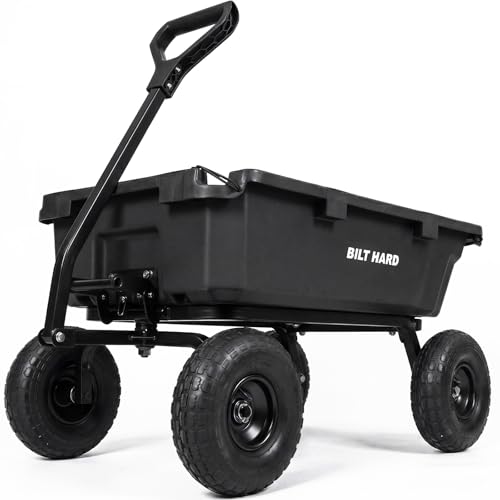 $94.99Buy Now
with 10" All Terrain Wheels & Quick-Release System, Heavy Duty Utility Wagon for Yard, Farm & Garden
I still have my cart like this since 2008!
We earn a commission if you make a purchase, at no additional cost to you.
09/27/2026 09:43 pm GMT -
 $89.99Buy Now
13 in All Terrain Tires, 4-in-1 Yard Wagon Cart with Removable Side Panels for Outdoor Lawn, Yard
I've owned one like this for 22 yrs!
We earn a commission if you make a purchase, at no additional cost to you.
09/10/2026 05:43 pm GMT -
 $89.99Buy Now
360° Swivel,10-Inch All-Terrain Inflatable Tires,Extendable Steering Handle, Metal Tool Tray for Planting Weeding, Yard Work
We earn a commission if you make a purchase, at no additional cost to you.
09/10/2026 05:51 pm GMT -
 $99.00Buy Now
Overall pick for a compact 2-wheel poly dump cart for gardeners in tight spaces needing an easy-to-maneuver hauler for soil and mulch.
We earn a commission if you make a purchase, at no additional cost to you.
09/27/2026 09:43 pm GMT -
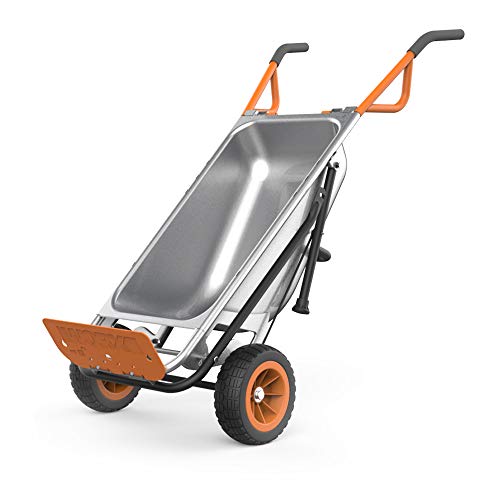 $134.99Buy Now
Lift 200 lbs like lifting 17 lbs; 8-in-1 versatility; smart 2-wheel design; heavy-duty durable construction
Similar to the one I have owned for 20 yrs!
We earn a commission if you make a purchase, at no additional cost to you.
09/10/2026 06:09 pm GMT -
 $67.38Buy Now
for Outdoor Camping, Sports, Shopping, Gardening - Heavy Duty Portable Utility Trolley (Black)
We earn a commission if you make a purchase, at no additional cost to you.
09/10/2026 07:09 pm GMT -
 $12.76Buy Now
for Home, Kitchen, Sporting Equipment, Garden and the Outdoors, Comfortable and Versatile, 3 Grips, Blue, Green, Gray
Gardening & Outdoor Tools – Slip them onto shovels, rakes, and hand tools for comfortable all-day use while tending your garden
Ergonomic Comfort – With your focus on quality tools, these reduce hand fatigue during extended outdoor work—great for someone with your hands-on approach
We earn a commission if you make a purchase, at no additional cost to you.
09/10/2026 07:14 pm GMT -
 $69.99Buy Now
Foldable Gardning Stool with Extendable Legs - Thick Pad and Tool Pouches - Heavy Duty Gardening Bench for Seniors
We earn a commission if you make a purchase, at no additional cost to you.
09/10/2026 07:26 pm GMT

Why This Matters
Saving your strength is not the same as giving up independence.
Using wheels instead of carrying a load is smart. Sitting instead of repeatedly squatting is smart. Choosing a raised bed instead of forcing yourself to kneel is smart.
Pain and fatigue often build through repetition. One trip with a watering can may not cause trouble. Ten trips might. Kneeling once may feel manageable. Getting up and down throughout the afternoon can leave your knees and back hurting for days.
The right garden equipment removes some of that repetition.
Your goal is not to prove that you can garden the way you did 20 years ago. Your goal is to keep growing vegetables, tending plants, and enjoying your outdoor space without causing an unnecessary setback.
A cart, kneeler, or rolling seat cannot solve every physical challenge. However, the right tool can reduce strain and help you spend your limited energy on the part of gardening you actually enjoy.
🌱Continue the Smart Gardening Series
Every gardener faces different challenges. These practical guides can help you reduce pain, conserve energy, and grow more with less work.
Popular Guides
🌱 Raised Bed Gardening for Seniors
🌼 Planning a Low-Maintenance Garden
🧰 Best Ergonomic Gardening Tools for Seniors
🪶 Choosing Lightweight Garden Equipment
🛒 Garden Carts, Kneelers, and Rolling Seats
🥕 Best Vegetables to Grow for Survival
👉 See Every Smart Gardening for Seniors Article
Discover practical gardening tips that make growing vegetables, herbs, and flowers easier, safer, and more enjoyable for older adults.
FAQs
Is a garden cart better than a wheelbarrow for seniors?
A two-wheel cart or four-wheel wagon is often more stable than a traditional one-wheel wheelbarrow. A four-wheel wagon also carries the load without requiring you to lift the handles. The best choice depends on your strength, balance, paths, and typical loads.
Are rolling garden seats safe for older adults?
They can be safe on firm, level ground when the seat has a wide wheelbase and a stable frame. They may be dangerous on slopes, soft sand, wet grass, loose gravel, or uneven paths. Lock the wheels before sitting or standing whenever possible.
What is the best garden cart for uneven ground?
Look for a lightweight cart with large, wide wheels. Small wheels are more likely to sink into soft soil or catch on roots and holes. Make sure the loaded cart remains easy for you to steer and stop.
Is a garden kneeler safe after knee surgery?
That depends on your surgery, recovery, strength, and medical restrictions. A padded kneeler does not eliminate pressure on the knee or the effort required to stand. Ask your healthcare professional before kneeling after surgery.
How high should a rolling garden seat be?
You should be able to keep both feet flat on the ground. Your knees should feel comfortable, and you should be able to stand without pulling forcefully with your arms. An adjustable seat may help you find the safest position.
Can I use a garden cart for support while walking?
Only if the manufacturer specifically designed it as a walking or mobility aid. Standard garden carts can roll away and should not be used like walkers.
Should I push or pull a garden cart?
Use the method recommended by the manufacturer. Pushing may provide better visibility and control with some carts, while wagons are usually designed for pulling. Avoid twisting or walking backward with a heavy load.
How much weight should I put in a garden cart?
The manufacturer’s limit is the maximum the cart can hold, not necessarily the amount you can safely move. Use smaller loads that you can start, steer, and stop without straining.
Join the Conversation
Do you use a garden cart, kneeler, or rolling seat? Has it made gardening easier, or did you discover a problem you wish you had known about before buying it?
Share your experience in the comments below. Your advice may help another older gardener choose safer, more comfortable equipment.