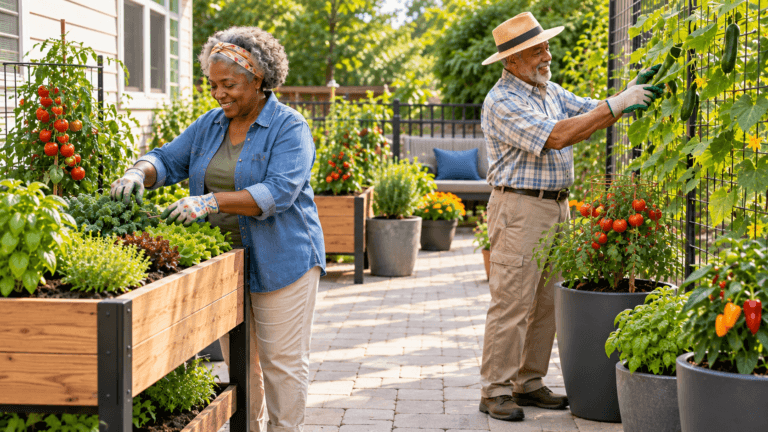

Best Ergonomic Gardening Tools for Seniors: Garden with Less Strain

🌱 From My Garden
I know how frustrating it is when gardening leaves you sore for days.
I don’t write these articles because I read about them. I write them because I’ve lived them. Between multiple shoulder surgeries, including two left shoulder replacements, chronic back pain, knee surgery, and surgeries on my right hand for carpal tunnel syndrome and Dupuytren’s contracture, and most recently, breast cancer surgeries, I’ve had to learn how to keep gardening without making my pain worse.
The tips I share come from real experience, along with research and current gardening best practices. My goal is simple: help you keep gardening safely, comfortably, and for many years to come.
Gardening Shouldn’t Be a Test of Strength
I have been gardening long enough to remember when I didn’t think twice about the weight of a shovel, how hard I had to squeeze a pruner, or how many times I bent down to pull weeds.
Those things matter a lot more to me today.
I have learned that the right gardening tool can mean the difference between getting a job done comfortably and paying for it later. I don’t need a tool to do all the work for me. But I certainly don’t see any reason to make my hands, shoulders, back, or knees work harder than necessary.
Some of the tools I use today were specifically designed to reduce strain. Others simply happen to be lighter, provide better leverage, or let me work from a more comfortable position.
And a few have been in my garden for years.
I bought my first Fiskars stand-up weeder in 2016. I liked it enough that I bought another one in 2026. I have used a lightweight expandable garden hose for more than five years. I have had an O-handle digging shovel similar to the Radius Root Slayer for around a decade.
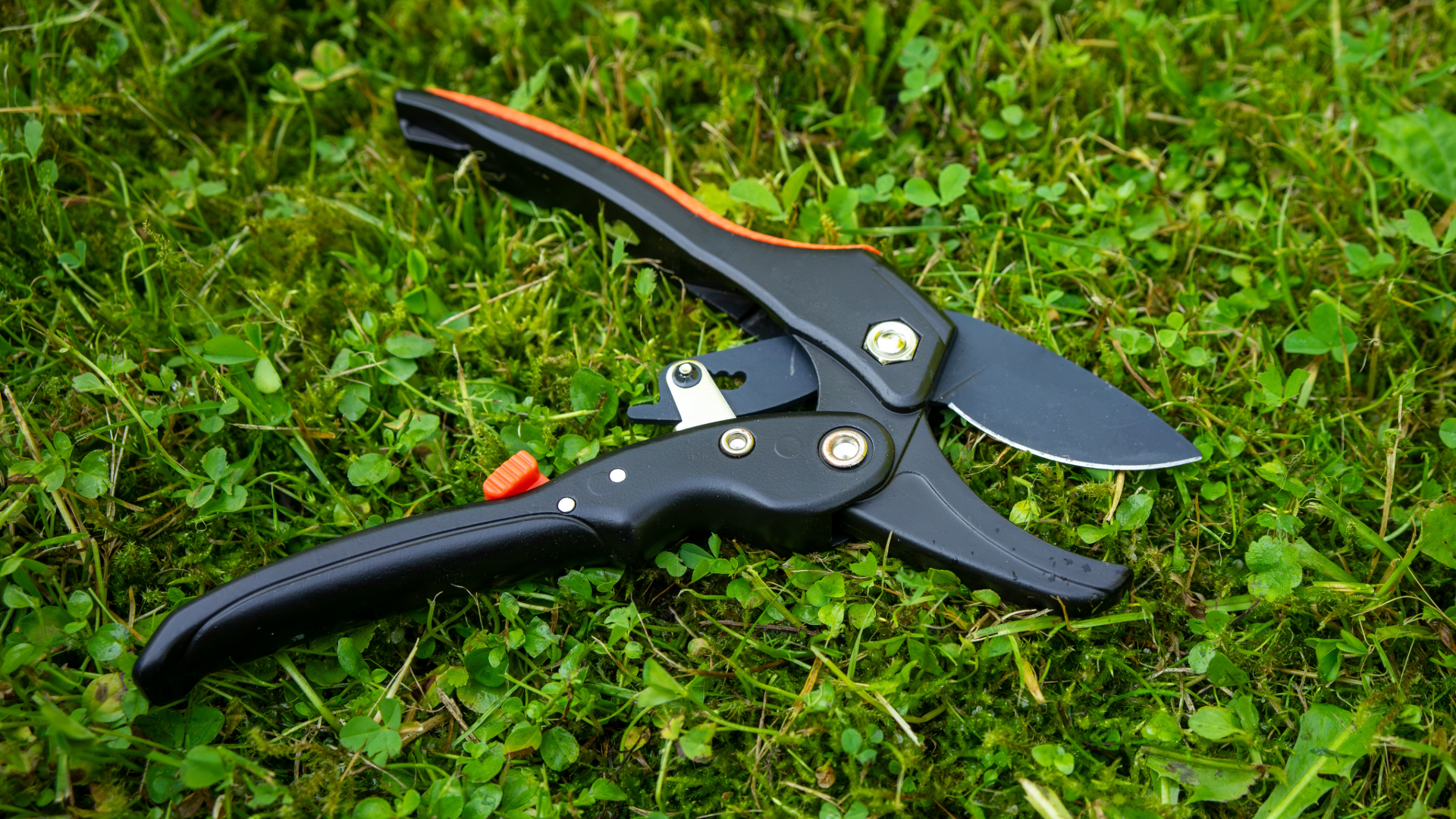
I also have several pruning tools that use leverage to make cutting easier, including a small Fiskars PowerGear lopper that I particularly like.
That experience has taught me something important:
The best ergonomic gardening tool isn’t necessarily the one with “ergonomic” printed on the package. It is the tool that makes the job easier on your body.
That is what we are going to look for in this guide.
Gardening Smarter Starts with the Tools in Your Hands
As we get older, gardening doesn’t have to become harder. Sometimes we simply need to change how we do the job.
Ergonomic gardening tools can reduce gripping, squeezing, bending, kneeling, reaching, lifting, and repetitive movements. The right tool may help you use leverage instead of brute strength or keep your wrist, back, and shoulders in a more comfortable position.
The goal isn’t to buy a shed full of special equipment.
It is to find a few tools that solve the problems you have in the garden.
TL;DR for Seniors: Best Ergonomic Gardening Tools
Gardening tools should make the job easier, not leave your hands, back, knees, or shoulders hurting afterward. Look for tools that reduce the amount of force, bending, reaching, lifting, and gripping required for the job.
🌿 Key Points:
✅ Choose lightweight tools whenever possible.
✅ Look for padded, enlarged, or comfortable non-slip grips.
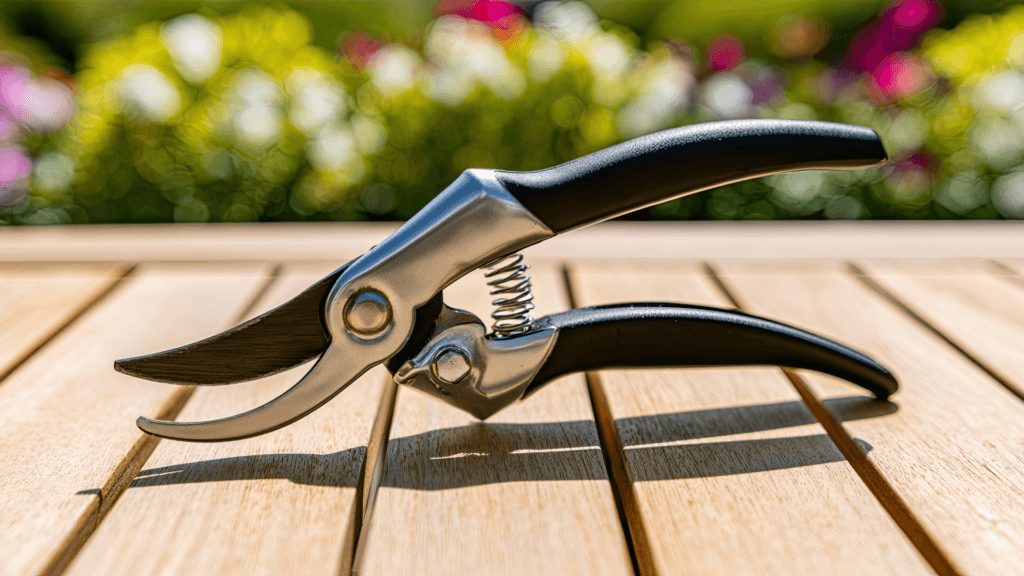
✅ Ratcheting and geared pruners can reduce the force needed to cut.
✅ Longer handles can reduce bending and increase leverage.
✅ Stand-up weeders can eliminate much of the bending and kneeling involved in weeding.
✅ Lightweight hoses are easier to pull, carry, and store.
✅ D-grip and O-grip handles provide more ways to hold and control digging tools.
✅ A tool should fit your hand, height, strength, and physical abilities.
✅ Keep cutting tools sharp because dull tools require more force.
✅ Don’t assume a tool is right for you just because the manufacturer calls it ergonomic.
🌻 Takeaway: The best ergonomic garden tool is one that fits your body and lets you accomplish the job with less effort and strain.
Continue reading for detailed tips, helpful tools, and practical techniques that can help you garden more comfortably and confidently.
What Makes a Gardening Tool Ergonomic?
The word ergonomic gets thrown around a lot.
A manufacturer can put a soft rubber handle on a trowel and call it ergonomic. That doesn’t necessarily mean it will be comfortable for you.
A genuinely useful ergonomic tool should reduce some type of physical stress.
It might keep your wrist straighter. It might provide more leverage. It might reduce the amount of squeezing required. It could allow you to stand instead of kneel, or reach a garden bed without bending from the waist.
Ergonomic tools can also be surprisingly simple.
A lightweight hose is an ergonomic improvement if your old rubber hose is difficult to drag around the yard. A garden cart can be an ergonomic tool because it replaces carrying. A sharp pair of pruners can require far less hand strength than a dull pair.
The University of California Master Gardeners recommend choosing tools that promote good body alignment, comfortable grips, and natural hand and wrist positions. They also emphasize that handles need to be the right length for the person using them.
That last part matters.
The Tool Needs to Fit YOU
There is no single “best ergonomic tool for seniors.”
A long-handled tool may be wonderful for someone with back or knee problems because it reduces bending. But that same tool might be too heavy or awkward for someone with shoulder weakness.
A large padded handle might make gripping easier for someone with arthritis. But if the grip is too large for your hand, it may actually make the tool harder to control.
Penn State Extension recommends choosing equipment according to your size, build, and capabilities and avoiding tools that are too heavy.
Think of gardening tools the way you think about shoes.
A beautifully made shoe in the wrong size isn’t comfortable just because it is expensive. A gardening tool works the same way.
Before buying, consider:
- Can I comfortably grip it?
- Is it too heavy?
- Can I operate it without twisting my wrist?
- Does it require a hard squeeze?
- Will it reduce bending or make me reach farther?
- Can I control it safely?
- Does it actually make this particular job easier?
Whenever possible, pick up a tool before buying it. Move it around. Open and close it. Pretend you are doing the gardening task.
A tool that feels heavy in the store isn’t going to become lighter after 20 minutes in the garden.
1. Ratcheting and Geared Pruners: Let Leverage Do the Work
Pruning is one of the first gardening jobs that can become difficult when hand strength decreases.
Traditional pruners depend heavily on your grip. You squeeze the handles together, and your hand provides most of the cutting force.
Ergonomic pruning tools change the equation.
Ratcheting pruners divide a difficult cut into several easier squeezes. Geared pruning tools multiply the force you put into the handles.
In simple terms, the mechanism helps your muscles.
This is why I like this type of pruning tool.
One of My Favorites: The Small Fiskars PowerGear Lopper
I have a compact Fiskars PowerGear lopper that I really like.
What I appreciate most isn’t just its cutting ability. It is the combination of a relatively small tool and added mechanical leverage.
For many gardening jobs, I would rather use a smaller tool that gives me more cutting power than wrestle with an unnecessarily large lopper.
That is especially important for seniors.
A long 32-inch lopper can provide tremendous leverage, but you still have to lift it, position it, open the handles, and control it. I do use our large lopper to cut things like my bamboo to use in my garden.
Sometimes smaller and lighter wins.
I also use larger pruning tools when the job requires them. The trick is matching the tool to the branch rather than automatically grabbing the biggest cutter in the shed.
Don’t Use a Pruner for a Lopper’s Job
Trying to force a small pruner through a branch that is too large defeats the whole purpose of ergonomic gardening.
You squeeze harder. Your wrist twists. Your shoulder joins the fight. Eventually you may find yourself using both hands on a tool designed for one.
Stop.
Get the right tool.
Hand pruners are generally intended for relatively small branches. Loppers provide greater leverage for larger branches. Once branches become too large for the lopper’s rated cutting capacity, move to an appropriate pruning saw or other suitable tool.
You want the tool doing the hard part, not your joints.
2. Stand-Up Weed Pullers: One of My Best Garden Purchases
If there is one gardening chore that seems almost designed to annoy an aging back and knees, it is pulling weeds.
See weed.
Bend down.
Pull weed.
Stand up.
Walk three feet.
Repeat.
Do that dozens of times and your back may have something to say about it. Ouch, says MY bad back.
This is why I am such a fan of stand-up weed pullers.
I’ve Used Mine for about 10 Years
I bought my first Fiskars stand-up weed puller in 2016.
Then, in 2026, I bought another one.
That should tell you something.
The tool lets me position the claws over a weed while I am standing. I use my foot to push the tool into the ground. The claws grab around the root, and leverage helps pull the weed from the soil.
Then I can eject the weed without having to reach down and remove it by hand.
That changes the entire movement. Whoo hoo!
Instead of repeatedly bending and kneeling, I can remain upright for much of the job.
For seniors with troublesome knees or backs, that can be a big improvement.
It also illustrates something I want you to notice throughout this article.
The tool transfers work from a weaker or uncomfortable part of your body to a stronger one.
Rather than pulling with your fingers and back, you can use your leg, body weight, and leverage.
That’s smart tool design.
There Is a Limitation
Stand-up weed pullers aren’t magic.
They tend to work best on individual weeds with substantial roots, especially when the soil isn’t rock hard.
They aren’t necessarily the best solution for hundreds of tiny weeds in a vegetable bed.
That’s why I still believe in having more than one weeding method.
Use mulch to prevent weeds. Use a hoe or cultivator for small weeds. Use the stand-up puller for the stubborn ones you would otherwise have to bend down and dig out.
3. Lightweight Garden Hoses: Stop Wrestling with Your Water
Garden hoses don’t usually appear on lists of ergonomic gardening tools.
They should.
Think about what you actually do with a traditional hose.
You pull it.
Drag it.
Lift it over the corner of a raised bed.
Untangle it.
Move it around plants.
Then you have to haul the whole thing back when you are finished.
A long, heavy hose full of water can become a workout.
I’ve Used a Lightweight Expandable Hose for More Than Five Years
I switched to a lightweight expandable hose more than five years ago, and I much prefer it to dragging a heavy traditional hose around the garden.
The difference is especially noticeable when moving between beds and containers.
When the water is off, the hose contracts and becomes much easier to carry and store.
This is another example of an ergonomic improvement that doesn’t look particularly high-tech.
Less weight means less work.
If you have weak hands, shoulder trouble, back pain, or limited stamina, reducing the amount of hose you’re hauling around can make watering considerably easier.
Don’t Forget the Nozzle
The nozzle matters too.
Older pistol-style nozzles often require you to keep squeezing a trigger while watering.
That can quickly fatigue your hand.
Look for a nozzle that can remain on without constant squeezing. Thumb controls, easy levers, and comfortable rubberized grips can be easier for some gardeners.
And if turning hose connections is difficult for your hands, consider quick-connect fittings.
One little fitting can eliminate a surprising amount of twisting.
4. Ergonomic Shovels and Spades: Change the Grip
Most traditional shovels have a straight shaft with either a straight handle or a small D-shaped grip.
There is nothing inherently wrong with that design. But it isn’t the only option.
Some modern digging tools use a large circular or O-shaped handle.
I have had a root-cutting shovel with this general type of handle for probably 10 years.
I like being able to change where and how I hold it.
An O-shaped handle gives your hands more possible positions than a small traditional grip. Depending on the job, you can use one hand, both hands, or reposition your grip as you work.
Some root-cutting shovels also use serrated blade edges to help cut through small roots while digging.
Again, the tool is helping with the hard part.
But Watch the Weight
This is where marketing can get misleading.
A shovel can have a wonderful ergonomic handle and still be too heavy for you.
If you have shoulder weakness, limited arm strength, or fatigue easily, weight may matter more than handle design.
Don’t buy a five-pound shovel because somebody online called it “the best ergonomic shovel for seniors.”
Pick it up first if you can.
Imagine digging ten holes with it.
Your body gets the final vote.
5. Oversized Hand Scoops: Move More Soil with Fewer Trips
I recently bought an oversized potting scoop, and I think the idea behind this tool is pretty clever.
It looks a little like somebody crossed a garden trowel with a feed scoop.
The scoop is deeper and wider than a standard trowel, which means it can move considerably more potting mix, compost, or soil at one time.
That can reduce repetitive scooping.
Instead of making six little trips from the bag of potting soil to the container, you may be able to do the job in two or three.(Although, in my case, I have my son bring the bag of potting soil I keep in a round garden cart over to either the plant or a bucket.)
Mine is still new, so I’m not going to tell you I’ve used it for years or declare it one of my all-time favorite gardening tools.
I haven’t. But, I did use it today and I give it a green thumb up!
But I bought it because I liked the idea of a lightweight hand tool that could move more material with fewer repetitive motions, plus easily dig in to the sometimes hardened soil. I previously was using a horse feed scoop that has a square shape. It’s good for lightweight things like feed.
Bigger Isn’t Always Better
There is a tradeoff here too.
A large scoop filled completely with wet soil will obviously weigh more than a small trowel filled with the same material.
So don’t automatically fill it to the top.
The benefit is having the option to move more material when the material is light and your body is comfortable doing it.
Ergonomic gardening is not about maximizing how much you can lift.
It is about controlling the workload.
🌿 Trusted Gardening Resources
Enjoying your garden is easier when you have the right tools. These trusted gardening products can help reduce strain on your shoulders, protect your joints, and make everyday gardening tasks safer and more comfortable.
Whether you’re dealing with arthritis, recovering from surgery, or simply looking for easier ways to garden, these are products worth considering.
6. Ergonomic Trowels and Cultivators: Keep Your Wrist Straighter
One of the most interesting ergonomic garden-tool designs is also one of the strangest looking.
Instead of placing the handle directly in line with the tool, some ergonomic trowels and cultivators use an upright or angled handle.
There is a good reason.
With a traditional hand trowel, you may bend your wrist while digging. An upright handle can allow your wrist and forearm to remain in a more natural position.
This can be particularly helpful for gardeners who struggle with gripping or wrist discomfort.
Look for hand tools with:
- Upright or angled handles
- Wide grips
- Soft or cushioned surfaces
- Non-slip material
- Lightweight construction
- A shape that allows your whole hand to participate in the movement
But remember our rule.
Try it if possible.
A strangely shaped ergonomic handle that fits someone else’s hand perfectly might feel terrible in yours.
7. Long-Handled and Telescoping Tools: Bring the Job to You
Sometimes the best way to make gardening easier is simply to stop reaching for the ground.
Long-handled and telescoping tools can help you weed, cultivate, rake, or prune while standing or sitting.
This can reduce bending and make it easier to work across raised beds.
They can be especially useful for gardeners who use a walker or wheelchair because the tool extends your working range.
But I want to put a big caution sign here.
Longer Does Not Automatically Mean Better
Every extra inch of handle moves some of the tool farther away from your body.
That can create leverage in your favor, but it can also make a tool feel heavier and harder to control.
If you have shoulder problems, a very long tool held away from your body can become uncomfortable quickly.
This is why telescoping tools can be particularly useful.
You can shorten the handle when working nearby and extend it only when you need additional reach.
Use the shortest comfortable length that allows you to maintain good posture.
That gives you reach without unnecessarily turning the tool into a long, awkward lever.
8. Garden Kneelers and Seats: Stop Making Your Knees Do All the Work
Getting down on the ground is only half the problem.
You have to get back up.
For many senior gardeners, that second part is considerably harder.
Garden kneelers can help by cushioning your knees and providing sturdy handles you can use when lowering yourself or standing again. Many models can also be flipped over and used as a small bench.
That makes them useful for gardeners who still kneel comfortably but need a little assistance getting up.
But I don’t think every senior gardener needs to kneel.
I usually don’t – I don’t remember the last time I kneeled while working in the garden! If I don’t have my rolling cart next to me, I have ‘mounting’ steps I used to use for my horse placed in all the necessary places.
I’ve Used a Rolling Garden Cart Instead of Kneeling Since 2007
I have had a rolling garden cart with a seat since 2007, and I use it instead of kneeling.
That is almost two decades of using the same basic gardening strategy.
I sit down to work near ground level and move the cart along as I work. I don’t have to repeatedly lower myself onto my knees and then push myself back up.
That makes a huge difference.
A rolling garden seat can be useful for jobs such as planting, weeding, harvesting low-growing vegetables, deadheading flowers, and working around garden beds.
Some carts also provide storage underneath the seat, which means your hand tools, gloves, seed packets, and other supplies can move with you.
That’s another small ergonomic advantage.
You aren’t constantly standing up because the tool you need is six feet away.
Look Carefully at the Seat Height
Don’t assume every garden seat is senior-friendly.
Some rolling garden stools are extremely low.
If you have knee, hip, or mobility problems, getting up from a 12-inch-high seat may not be much easier than getting up from the ground.
Look for a height that allows you to sit and stand comfortably.
Also check:
- Weight capacity
- Seat stability
- Wheel size
- Whether the wheels work on your garden surface
- Whether the seat swivels
- Storage space
- Overall weight
- How easy the cart is to move while seated
Large wheels generally handle uneven ground better than tiny plastic wheels.
If you garden on grass, gravel, or rough paths, that can matter a lot.
9. Garden Carts and Wagons: Roll It Instead of Carrying It
I learned the value of carts long before I started thinking about ergonomic gardening.
When I had horses, I had to move heavy bales of hay, bags of feed, saddles, tack, and plenty of other equipment. I learned pretty quickly that if something heavy could be put on wheels instead of carried, that was the smarter way to move it.
Over the years, I’ve accumulated several different carts for different jobs.
I have a larger utility cart that I pull behind my riding mower. Today I use it around my property for things such as picking up fallen limbs, branches, and other debris after storms.
I also had a smaller cart that we used around the barn. We had a zippered hay bag to move hay and feed, and the cart was handy for hauling saddles and other equipment too. Especially helpful for horse shows.
I have an unusually round shaped cart that’s on 3 wheels. It’s very lightweight, so we could carry it in the truck or horse trailer for horse shows where I could carry heavy things in it.
This cart has been repurposed for the garden now. It’s very handy-dandy to store a large bag of soil plus a smaller bag of compost for easy and quick access.
The same principle works beautifully in the garden.
Bags of soil, mulch, plants, tools, compost, harvested vegetables, and garden supplies don’t need to be carried just because you can carry them.
If it can ride, let it ride.
A garden cart or utility wagon lets the wheels carry the load instead of your hands, shoulders, and back.
For senior gardeners, I consider that basic energy management. Save your strength for the gardening you actually enjoy.
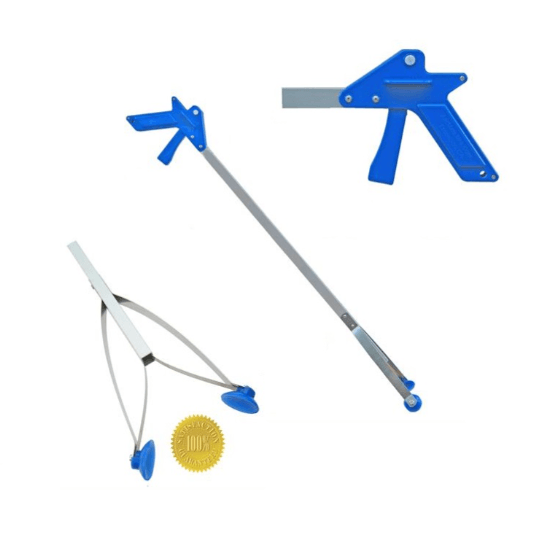
10. Grabbers and Reaching Tools: Extend Your Reach without Stretching Your Body
A reaching tool isn’t technically a gardening tool.
I don’t care.
If it helps you garden more comfortably, it belongs in the garden shed.
A grabber can retrieve an empty pot, glove, plant tag, dropped hand tool, or other lightweight object without making you repeatedly bend over.
It can also help gardeners working from a chair, rolling seat, walker, or wheelchair reach objects slightly outside their comfortable range.
But use some common sense.
A grabber is not designed to lift a bag of potting soil or yank a stubborn weed out of the ground.
Use it for lightweight objects.
The idea is to eliminate unnecessary movements throughout the day.
One bend may not matter.
Fifty unnecessary bends might.
11. You May Be Able to Make Your Existing Tools More Ergonomic
Before replacing every gardening tool you own, look at what is already hanging in your shed.
Sometimes a small modification is enough.
Make Thin Handles Larger
A thin handle can require a surprisingly tight grip.
Adding a padded grip or foam tubing can increase the diameter of a handle and make it easier to hold for some people with arthritis or reduced hand strength.
This can work on trowels, cultivators, rakes, hoes, and other tools.
But don’t make the grip enormous.
Your fingers should still wrap around it comfortably.
Add Non-Slip Material
If a tool slips in your hand, you instinctively grip harder.
A textured or non-slip surface can reduce that problem.
Garden gloves with good grip can help too.
Again, we’re looking for small ways to reduce unnecessary effort.
Add Length Carefully
Handle extensions can sometimes turn a short tool into one you can use with less bending.
Just remember what we discussed in Part 1.
Longer tools aren’t automatically easier.
Adding length changes the balance of the tool and can put more strain on your shoulders.
Make changes gradually and test them.
Keep Cutting Tools Sharp
This may be the cheapest ergonomic improvement of all.
A dull cutting tool requires more force.
That means more squeezing, more pushing, and often more awkward body movements as you try to force the tool through something it should have cut cleanly.
Keep pruners, loppers, hoes, shovels, and other cutting edges properly maintained.
Let the edge do the work.
Match the Tool to the Problem You’re Trying to Solve
This is where shopping for ergonomic garden tools becomes much easier.
Don’t start by searching for “best gardening tools for seniors.”
Start with the physical problem.
If Your Hands Are Weak or Painful
Look for:
- Ratcheting pruners
- Geared pruners and loppers
- Larger comfortable grips
- Non-slip handles
- Thumb-control watering nozzles
- Lightweight tools
- Tools requiring less squeezing
- Sharp blades
You want to reduce gripping and repetitive hand force.
If Your Back Bothers You
Look for:
- Stand-up weeders
- Long-handled cultivators
- Raised beds
- Rolling garden seats
- Garden carts
- Lightweight hoses
- Grabbers
- Tools that let you work upright
The goal is to reduce repeated bending and lifting.
If Your Knees Are the Problem
Look for:
- Rolling garden seats
- Elevated planters
- Raised beds
- Stand-up weeders
- Long-handled tools
- Garden kneelers with sturdy support handles, if kneeling is still comfortable for you
Personally, I prefer my rolling cart to kneeling.
If Your Shoulders Are Weak or Painful
Pay particular attention to weight.
A long tool can reduce bending while simultaneously increasing the load on your shoulder.
Look for:
- Lightweight materials
- Compact tools
- Geared or ratcheting mechanisms
- Tools that can be kept close to your body
- Adjustable-length handles
- Smaller watering equipment
- Carts instead of carrying
This is one area where “more leverage” can sometimes backfire.
A giant lopper may require less squeezing force but still be too heavy and awkward to position comfortably.
If You Tire Easily
Reduce the total amount of work.
That might mean:
- A larger scoop for lightweight potting mix
- A cart instead of carrying
- A lightweight hose
- Self-watering containers
- Sharp cutting tools
- A rolling seat
- Tools stored near where you use them
Saving energy on ten little jobs can leave you with enough energy to enjoy the rest of your garden.
What to Look for before Buying an Ergonomic Gardening Tool
The gardening industry knows that older gardeners are looking for easier-to-use equipment.
That means you are going to see the word ergonomic everywhere.
Ignore the label for a minute.
Look at the actual tool.
Weight
Pick it up.
Then remember that you may be holding it for 10, 20, or 30 minutes.
A tool that feels “substantial” for 30 seconds in a store can feel downright heavy after repeated use.
Handle Size
Can you wrap your hand around the grip without squeezing hard?
A larger handle can help some people, but bigger isn’t automatically better.
Wrist Position
Hold the tool as if you were actually using it.
Is your wrist reasonably straight?
Or are you bending it sharply to make the tool work?
Required Force
Open the pruner.
Operate the nozzle.
Push the release button.
Adjust the telescoping handle.
If the supposedly ergonomic feature itself is difficult to operate, it isn’t helping you.
Balance
Weight isn’t the whole story.
A well-balanced tool can feel lighter than another tool of the same weight because you aren’t constantly fighting to control it.
Reach
Will the tool let you reach the work while keeping a comfortable posture?
More reach can be useful.
Too much reach can make a tool awkward.
Maintenance
Can you sharpen the blade?
Can parts be replaced?
Does the mechanism need oil?
Can you clean it easily?
A good tool that lasts for years is usually a better investment than a cheap tool you replace every season.
Don’t Buy Every Ergonomic Tool You See
I love a clever gardening tool.
Clearly.
But you don’t need a garage full of them.
Start with the gardening jobs that cause you the most trouble.
If pruning hurts your hands, investigate ratcheting or geared pruners.
If bending bothers your back, start with a stand-up weeder or long-handled tool.
If kneeling is difficult, consider a rolling seat.
If watering wears you out, try a lighter hose.
Solve one problem at a time.
That is a much smarter way to spend your money.
My Favorite Tools for Easier, Safer Gardening
Gardening should not leave you hurting for days. I put together this collection of senior-friendly gardening tools, raised planters, and helpful accessories. I own and use several of them myself, while others were chosen because they may reduce bending, lifting, gripping, and reaching.
-
 $41.95Buy Now
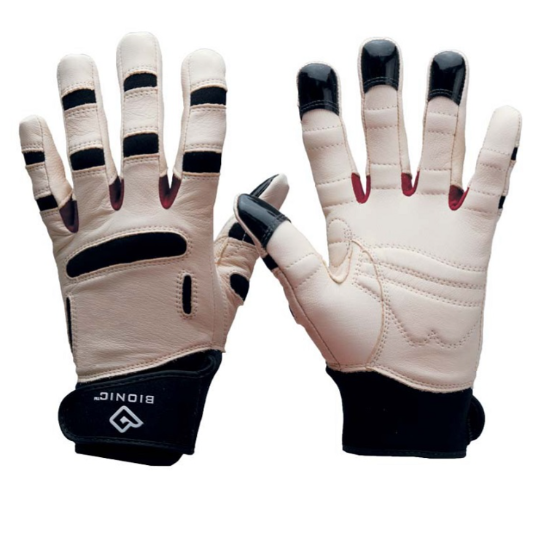
Hand support garden gloves
Lightweight and comfortable gardening gloves provide extra support and mild compression.
We earn a commission if you make a purchase, at no additional cost to you.
-
 $21.95Buy Now
Suction cup, aluminum spring reaching tool
Round silicone tips provide a powerful and secure grip with delicate sensitivity.
We earn a commission if you make a purchase, at no additional cost to you.
-
 $12.76Buy Now
for Home, Kitchen, Sporting Equipment, Garden and the Outdoors, Comfortable and Versatile, 3 Grips, Blue, Green, Gray
Gardening & Outdoor Tools – Slip them onto shovels, rakes, and hand tools for comfortable all-day use while tending your garden
Ergonomic Comfort – With your focus on quality tools, these reduce hand fatigue during extended outdoor work—great for someone with your hands-on approach
We earn a commission if you make a purchase, at no additional cost to you.
09/10/2026 07:14 pm GMT -
 $9.99Buy Now
6 Pieces Kit for Finger, Wrist, Carpal Tunnel, Arthritis Pain Relief. Stress Relief - Occupational Equipment for Disabled
I didn't think about using these for my hand! Cool beans 🙂
We earn a commission if you make a purchase, at no additional cost to you.
09/27/2026 09:35 pm GMT -
 $109.90Buy Now
400lbs Weight Capacity, Gardening Cart Bench, Ergonomic Backrest & Tool Storage, for Yard, Patio
We earn a commission if you make a purchase, at no additional cost to you.
09/27/2026 10:05 pm GMT -
 $15.79Buy Now
Heavy duty steel scoop for transplanting, moving soil & potting mix. Mini shovel design for garden beds & container planting
We earn a commission if you make a purchase, at no additional cost to you.
09/10/2026 07:09 pm GMT -
 $59.99Buy Now
Inverted V Cutting Tip with Ripsaw Teeth: The sharpened V-shaped blade tip combined with aggressive serrated edges helps cut through stubborn roots, sod, and compact soil, making planting and root removal easier.
Ergonomic O-Handle Grip for Better Control: Features a patented natural O-handle design that provides more gripping surface than traditional D-handles, helping improve leverage, control, and comfort during extended digging tasks.
We earn a commission if you make a purchase, at no additional cost to you.
09/10/2026 07:09 pm GMT -
 $42.49Buy Now
No-Kink Flexibility, 3/4 Inch Solid Brass Fittings and Double Latex Core - Black and Green
Expandable, lightweight construction without sacrificing quality! The 3750D elastic outer fabric with 4 layers of latex protects the inner tube effectively from thorns, punctures, and sharp corners.
Lightweight, yet durable for heavy duty use! Every Flexi Hose is endurance-tested to 2000 uses and can withstand water pressures up to 12 bar and temperatures between 41 and 113 degrees Fahrenheit.
We earn a commission if you make a purchase, at no additional cost to you.
09/10/2026 07:09 pm GMT -
 $48.98Buy Now
MANUAL WEEDER TOOL: Lightweight, long shaft handle weed puller with easy-eject design to help prevent sore knees and back aches from kneeling and bending; Makes weed removal quicker and easier without multiple applications or harsh, costly chemicals
EFFICIENT AND COMFORTABLE DESIGN: Offset handle helps reduce wrist strain, and the integrated viewing window allows you to see weeds while four serrated, stainless steel claws firmly grab weeds and roots for permanent removal
We earn a commission if you make a purchase, at no additional cost to you.
09/10/2026 07:09 pm GMT -
 $115.07Buy Now
COMPLETE HOME AND GARDEN TOOLKIT - Tackles indoor and outdoor maintenance jobs with a comprehensive 6-piece set featuring ergonomically designed PowerGear Lopper, 9-in-1 Shears, Bypass Pruner, Folding Saw, IsoCore Hammer, and Utility Knife
We earn a commission if you make a purchase, at no additional cost to you.
09/10/2026 07:09 pm GMT -
 $39.99Buy Now
Effort-Saving Compound Leverage: The advanced compound design with four pivot points and lever system multiplies cutting force while reducing hand fatigue. Perfect for tackling thick branches with minimal effort
Adjustable Telescopic Handles 26"-33": Extendable handles allow you to adjust from 26" to 33", making it versatile for most garden pruning tasks, hedges, shrubs, and medium-height trees
We earn a commission if you make a purchase, at no additional cost to you.
09/27/2026 09:36 pm GMT -
 $51.59Buy Now
1.75" Capacity Tree Trimmer
IDEAL TREE BRANCH CUTTER: 25-Inch steel blade bypass lopper that glides through up to 1.75-Inch thick branches for easy cuts; Tree Pruner that works well for trimming tree branches to maintain your yard and garden
MAXIMUM POWER AND PRECISION: Garden loppers with PowerGear2 technology multiplies leverage to maximize branch-cutting power over traditional designs
We earn a commission if you make a purchase, at no additional cost to you.
09/10/2026 07:09 pm GMT -
 $28.99Buy Now
Compact Design, PowerGear Multiplies Leverage to Maximize Branch-Cutting Power, Lightweight Design Reduces Strain on Muscles
My Favorite!
QUALITY GARDEN TOOLS: Designed to help you cultivate a better garden, Fiskars garden and yard tools are equipped with smart technologies and award-winning, ergonomic features that make it easier and more enjoyable to transform your outdoor space
We earn a commission if you make a purchase, at no additional cost to you.
09/27/2026 10:03 pm GMT -
 $29.99Buy Now
Requires Less Grip Strength for Gardening.
- ERGONOMIC VERTICAL GRIP - Unlike standard gardening tools that require you to bend your wrist and grip the handle tightly while pushing and pulling, putting pressure on your joints and forearms, the vertical grip on Bernini's Garden Tool Set lets you keep your wrist in a naturally straight position and use the force from larger muscles like the upper arm and shoulder to move soil.
We earn a commission if you make a purchase, at no additional cost to you.
09/10/2026 06:15 pm GMT -
 $99.99Buy Now
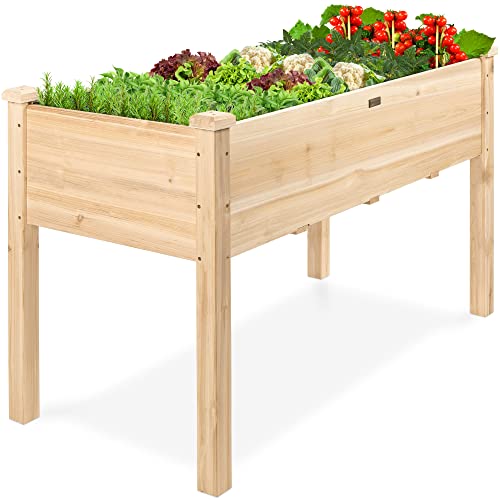
for Backyard, Patio, Balcony with Bed Liner, 200 Pound Capacity - Natural
We earn a commission if you make a purchase, at no additional cost to you.
09/27/2026 09:52 pm GMT

Tools I Personally Use or Have Used for Years
For this particular article, several types of tools in the collection aren’t theoretical recommendations for me.
I have used a Fiskars stand-up weed puller since 2016, and I bought another in 2026.
I’ve used a lightweight expandable garden hose for more than five years.
I’ve had an O-handle/root-cutting style shovel for around 10 years.
My rolling garden cart with a seat has been with me since 2007, and I use it instead of kneeling.
I also really like my compact Fiskars PowerGear lopper and other pruning tools that give me extra leverage.
And I recently bought an oversized potting scoop. I haven’t owned that one long enough to give it a long-term endorsement yet, but I like the idea of moving more lightweight potting material with fewer repetitive scoops. I was using the scoop I used to use for horse feed, but it was hard to get it to dig into the packed soil.
I don’t expect every tool I like to be right for every senior gardener.
That’s the point.
Over the years, I’ve gradually found tools and methods that let me keep doing the gardening I enjoy without making every job harder than it needs to be.
Why This Matters
Gardening is physical.
That’s part of what many of us enjoy about it.
We get outside. We move. We grow food and flowers. We accomplish something with our own hands.
But there is no prize for making the work unnecessarily difficult.
Using a stand-up weeder instead of bending over doesn’t make you less of a gardener.
Sitting on a rolling cart instead of kneeling doesn’t make you lazy.
Using a ratcheting pruner instead of forcing traditional pruning shears closed doesn’t mean you’re weak.
It means you’re using the right tool for the job.
I have changed the way I garden as I’ve gotten older. Some of those changes happened because my body demanded them. Others happened because I discovered there was simply a better way to do something.
The result is not less gardening.
It’s smarter gardening.
And if choosing a lighter hose, a better pruner, a rolling seat, or a stand-up weeder helps you stay in your garden for another five, ten, or twenty years, that seems like a pretty good trade to me.
🌱Continue the Smart Gardening Series
Every gardener faces different challenges. These practical guides can help you reduce pain, conserve energy, and grow more with less work.
Popular Guides
🌱 Raised Bed Gardening for Seniors
🌼 Planning a Low-Maintenance Garden
🧰 Best Ergonomic Gardening Tools for Seniors
🪶 Choosing Lightweight Garden Equipment
🛒 Garden Carts, Kneelers, and Rolling Seats
🥕 Best Vegetables to Grow for Survival
👉 See Every Smart Gardening for Seniors Article
Discover practical gardening tips that make growing vegetables, herbs, and flowers easier, safer, and more enjoyable for older adults.
FAQs
What makes a garden tool ergonomic for seniors?
An ergonomic gardening tool reduces unnecessary strain. It may provide better leverage, require less gripping force, keep your wrist in a more natural position, reduce bending or kneeling, or simply weigh less. The best design depends on your particular physical needs.
Are ratcheting pruners better for seniors?
They can be. Ratcheting pruners divide a difficult cut into several smaller squeezing motions rather than requiring one hard squeeze. That may make pruning easier for gardeners with reduced hand strength. Geared pruners and loppers can also multiply the force you apply.
Are long-handled garden tools better for seniors?
Sometimes. Longer handles can reduce bending and increase reach, which may help gardeners with back or knee problems. However, a long tool can also become heavier and harder to control, particularly if you have shoulder problems. Adjustable-length tools can provide a useful compromise.
What gardening tools are best for bad knees?
Raised beds, rolling garden seats, stand-up weeders, long-handled tools, and elevated containers can all reduce kneeling. A garden kneeler with sturdy handles can also help if you can still kneel comfortably but need assistance getting back up.
What gardening tools can help with weak hands?
Look for ratcheting or geared pruners, lightweight tools, larger comfortable grips, non-slip handles, sharp cutting edges, and watering nozzles that don’t require constant squeezing.
Is a garden kneeler or rolling garden seat better?
It depends on your mobility. A kneeler cushions your knees and may provide handles to help you stand. A rolling garden seat lets you remain seated and move along the garden without repeatedly getting down and back up. I personally use a rolling garden cart instead of kneeling.
Are lightweight garden hoses worth it for seniors?
They can be a major improvement if a traditional hose is difficult to drag, lift, or store. I have used a lightweight expandable hose for more than five years because I find it much easier to move around my garden.
Should seniors use smaller gardening tools?
Often, yes, particularly if weight and shoulder strength are concerns. But size isn’t the only factor. A compact tool with a ratchet or geared mechanism may provide considerable cutting power without the weight and awkwardness of a larger tool.
How can I make my existing gardening tools easier to use?
Try padded or enlarged grips, non-slip materials, proper sharpening, and better tool storage so frequently used equipment stays within easy reach. Avoid modifying a tool in a way that makes it unstable or interferes with its safe operation.
What is the most important ergonomic gardening tool to buy first?
Start with the job that causes you the most difficulty. For one gardener, that might be a stand-up weeder. For another, it could be a rolling seat, lightweight hose, ergonomic pruner, or garden cart. Solve your biggest problem first rather than buying a collection of tools you may never use.
Join the Conversation
What Ergonomic Gardening Tool Has Made the Biggest Difference for You? Have you found a gardening tool that lets you do something you thought you might have to give up? Maybe it’s a favorite pruner, rolling seat, stand-up weeder, lightweight hose, raised planter, or something I haven’t discovered yet. I’d love to hear about it. Tell us what tool you use and why you like it in the comments below. Your recommendation might help another senior gardener find an easier way to keep doing what they love.