

Gardening with a Walker or Wheelchair: Keep Growing with Confidence

🌱 From My Garden
I know how frustrating it is when gardening leaves you sore for days.
I don’t write these articles because I read about them. I write them because I’ve lived them. Between shoulder surgery for torn rotator cuff in both shoulders, two left shoulder replacements, chronic back pain, knee surgery, and surgeries on my right hand for carpal tunnel syndrome and Dupuytren’s contracture, and most recently, breast cancer surgeries, I’ve had to learn how to keep gardening without making my pain worse.
One thing I’ve learned is that every gardener eventually has to adapt. Sometimes it’s because of age. Sometimes it’s because of surgery, an illness, or an injury. Whatever the reason, adapting doesn’t mean giving up. It simply means finding a better way to keep doing something that brings you joy.
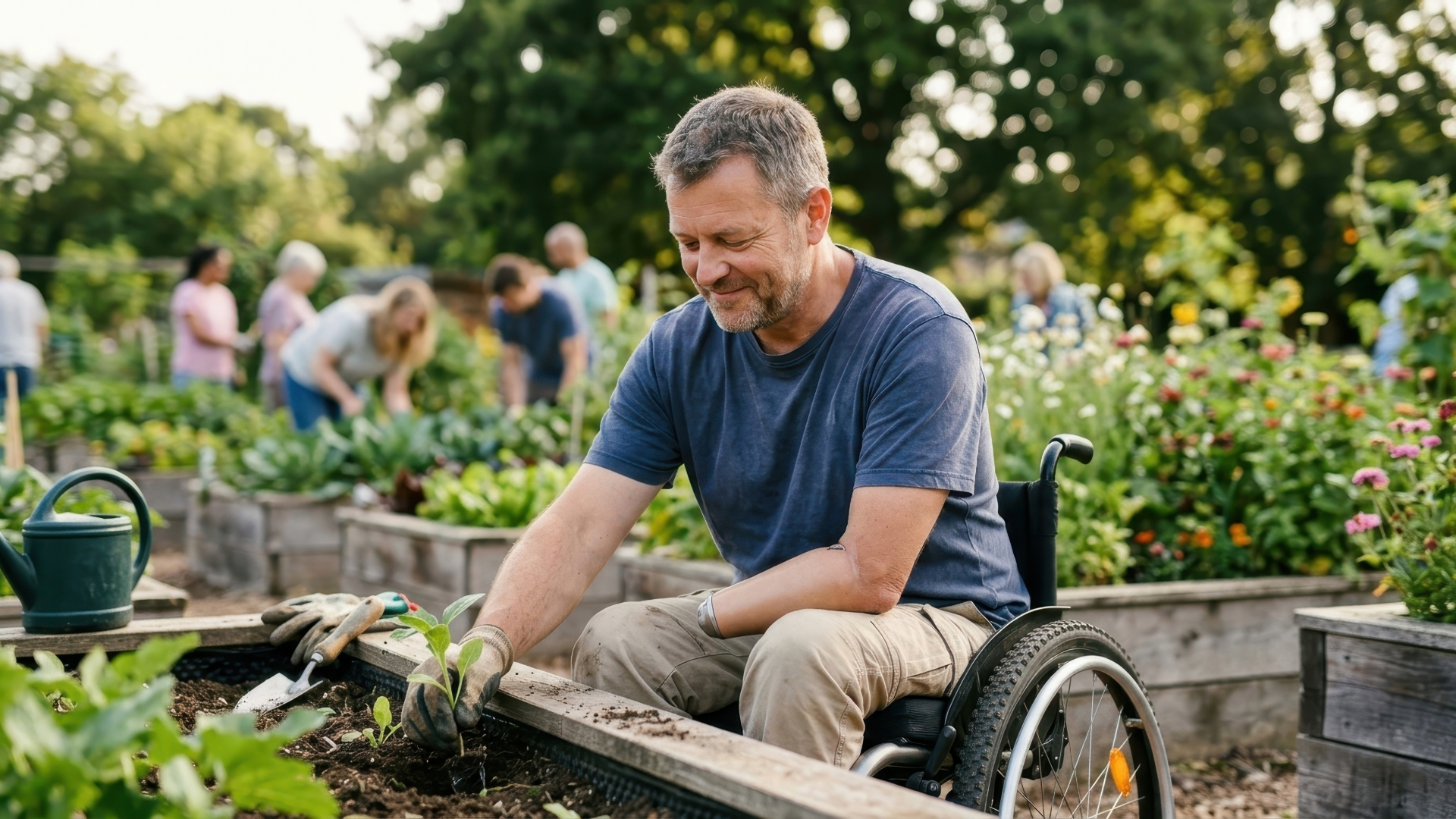
While I don’t personally garden with a walker or wheelchair, I’ve met many people who do. Some grow vegetables on a patio. Others have beautiful raised beds with wide paths that let them move around with ease. They’ve shown me that gardening isn’t about how you move. It’s about creating a space that works for you.
If you’ve recently started using a walker or wheelchair, I hope this article encourages you. There are more options available today than ever before, and with a few thoughtful changes, you can continue enjoying the rewards of gardening for many years to come.
Gardening Doesn’t End Because Your Mobility Changes
For many of us, the garden is more than a place to grow vegetables or flowers. It’s where we relax after a busy day. It’s where we watch butterflies drift through the flowers, listen to birds in the morning, and celebrate the first ripe tomato of summer. Gardening gives us exercise, purpose, and a reason to spend time outdoors.
That’s why changes in mobility can feel so discouraging.
If you’ve started using a walker or wheelchair, you may have wondered if your gardening days are over. You might even look out at your yard and feel overwhelmed by jobs that once seemed easy. I understand those feelings. After my own surgeries, there were days when I wondered if I’d ever enjoy gardening the way I used to.
What I discovered was that I had been asking the wrong question.
Instead of asking, “Can I still garden?” I needed to ask, “How can I make gardening easier?”
That simple shift in thinking changed everything.
Gardening isn’t about doing things the way you did twenty years ago. It’s about finding new ways to enjoy the hobby today. Once you stop trying to force your body to fit your old garden, you’ll discover that it’s often much easier to reshape your garden to fit your current needs.
The goal isn’t to create a perfect garden.
The goal is to create one that welcomes you every time you step outside.
TL;DR for Seniors: Gardening with a Walker or Wheelchair
🌿 Key Points:
✅ Design your garden around your mobility.
✅ Use raised beds and elevated planters.
✅ Keep pathways wide, level, and clutter-free.
✅ Grow more in containers and vertical spaces.
✅ Choose lightweight, ergonomic tools.
✅ Install drip irrigation to reduce work.
✅ Garden at your own pace.
🌻 Takeaway: A walker or wheelchair doesn’t have to end your love of gardening. With a few smart changes, you can continue growing flowers, vegetables, and confidence while enjoying the peace that only a garden can provide.
Continue reading for detailed tips, helpful tools, and practical techniques that can help you garden more comfortably and confidently.
It’s Okay to Garden Differently
One of the hardest parts of growing older isn’t always the aches and pains.
Sometimes it’s letting go of the idea that we should still be able to do everything the way we always have.
I know that feeling well.
There are jobs I simply don’t do anymore. I don’t wrestle with heavy bags of soil. I don’t spend hours bent over pulling weeds. If something is likely to leave me hurting for the next three days, it probably isn’t worth doing. I’ve learned that protecting my body today means I’ll still be able to enjoy my garden tomorrow.
The same idea applies if you use a walker or wheelchair.
Your goal isn’t to prove you can still garden the old way. Your goal is to keep gardening in a way that’s safe, comfortable, and enjoyable. There is absolutely no shame in changing the layout of your garden, replacing difficult flower beds with containers, or asking someone to build a raised bed at a better height.
In fact, those changes often make gardening more enjoyable than it was before.
Many experienced gardeners eventually discover that working smarter gives them more energy to appreciate the parts they love most. Instead of spending an afternoon struggling with difficult chores, they spend that same afternoon planting flowers, harvesting tomatoes, or simply sitting outside with a cup of coffee while enjoying everything they’ve grown.
That’s a trade I’ll happily make.
Start by Looking at Your Garden with Fresh Eyes
Before buying new tools or building raised beds, spend a little time studying your garden.
Walk through it slowly, or roll through it if you use a wheelchair. Pay attention to the places that feel comfortable and the places that don’t. Notice where you have to stretch too far, squeeze through narrow spaces, or navigate uneven ground. These are often the areas that create frustration without us even realizing it.
Now imagine you were designing your garden from scratch.
Would you still put the vegetable garden at the far end of the yard? Would you leave narrow pathways between raised beds? Would you place your favorite herbs where you have to walk across wet grass every morning?
Probably not.
Sometimes the best improvements cost very little. Moving a few containers closer to the house, widening a pathway, or relocating a favorite plant can make your entire garden feel more welcoming. Those small changes add up quickly, making each gardening session a little easier than the last.
The easier it is to reach your garden, the more often you’ll find yourself outside enjoying it.
My biggest issues are the trees that have grown too big and cover my plants, giving me shorter sun exposure. Plus, some of these are invasive ‘popcorn’ trees the previous neighbor planted for quick shade. It has popcorn looking seeds that drop and fly everywhere giving my beds a 3-4 inch matting I have to dig through every year
The tree trim or removal is out of our fixed-income budget, so I have to plant around them. Every year is a lot of work digging though this matted mess of popcorn roots, but I deal with it. I have new round raised beds and planters I’m using.
Raised Beds Make Gardening More Comfortable
If there’s one improvement that consistently helps gardeners with limited mobility, it’s adding raised beds.
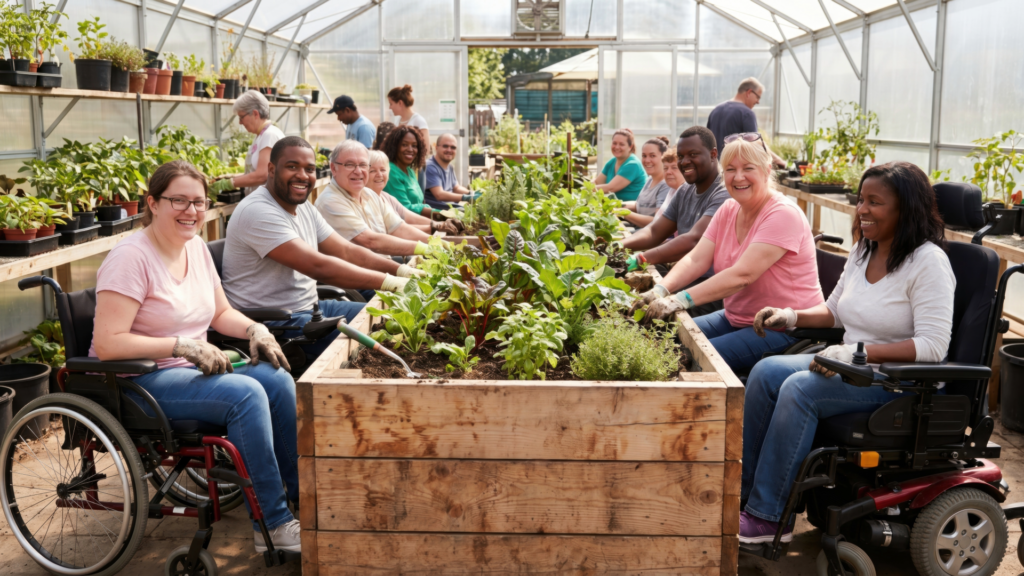
Raised beds bring the plants to a more comfortable working height, reducing the need to bend, kneel, or stretch. For someone using a walker, this means less strain on your back and better balance while working. For wheelchair users, taller beds with open space underneath allow you to roll closer to the plants without awkward reaching.
They also make gardening more productive.
Because the soil drains well and warms earlier in the spring, vegetables often grow better in raised beds than they do in traditional gardens. Weeds are easier to control, harvesting takes less effort, and routine maintenance becomes much more manageable.
You don’t need a large garden to enjoy these benefits, either.
Even one raised bed can provide months of fresh lettuce, herbs, peppers, bush beans, or tomatoes. Many gardeners are surprised by how much food they can grow in a relatively small space when everything is close at hand and easy to care for.
More importantly, raised beds allow you to spend your energy growing plants instead of fighting your garden.
Containers Can Bring the Garden to You
One of the biggest advantages of container gardening is flexibility. Instead of walking all over the yard to tend your plants, you can place them wherever they’re easiest to reach. A sunny patio, deck, or porch can become a productive little garden that’s only a few steps from your back door.
Large pots placed on sturdy stands or elevated planters reduce bending while making watering and harvesting much more comfortable.
If one location doesn’t work well, simply move the container next season. It’s much easier than relocating an entire garden bed.
Don’t think of containers as a compromise. Tomatoes, peppers, lettuce, strawberries, herbs, bush beans, and many flowers thrive in containers. Some gardeners actually harvest more because their plants receive more regular care.
I’m trying more container gardening this year. I even tried potato towers using stacked milk crates lined with straw or hay, then add the amended potting soil. You place the seed potatoes at the 4 corners. I got a ton of potatoes!
Think Up instead of Out
When space or mobility becomes limited, vertical gardening can make a tremendous difference. Growing upward places plants where they’re easier to see, easier to reach, and easier to harvest without bending over repeatedly.
Pole beans, cucumbers, peas, and many flowering vines naturally climb a trellis. Wall planters, fence planters, stacked containers, and garden towers also make excellent use of limited space.
They keep plants within comfortable reach while adding beauty and interest to your garden.
Vertical gardening also makes better use of patios and small backyards. Even a narrow area can produce an impressive amount of food when you grow upward instead of outward.
Choose Tools That Work for You
I’ve learned over the years that the right tool often matters more than strength. Lightweight tools with padded handles reduce strain on your hands, wrists, and shoulders while making everyday gardening tasks much easier.
Long-handled weeders, cultivators, and pruners allow you to reach farther without leaning or stretching. Ratcheting pruners require less hand strength than traditional shears, and smaller watering cans are often easier to manage than one heavy container. I love my ratcheting pruner!
Heavy-Duty Tree Trimmer for Thick, Dry, Dead Branches, Ratchet Design Compounds Force for Easy Use, Low-Friction Steel Blades


You don’t have to replace everything at once. Start with the tools you use most often. Even a few well-designed tools can make gardening more enjoyable and help you stay outside longer.
Let Your Garden Help with the Work
There’s no rule that says you have to do everything by hand. In fact, one of the smartest things you can do is let your garden do some of the work for you.
Drip irrigation and soaker hoses slowly deliver water right where plants need it while using less water than overhead sprinklers. Adding a simple battery-operated timer means your garden can water itself, even while you’re enjoying your morning coffee or taking a well-earned break.
Saving your energy for planting, pruning, and harvesting makes gardening far more enjoyable. After all, those are the parts most of us love anyway.
Don’t Feel Guilty about Asking for Help
Many of us take pride in being independent, but independence doesn’t mean doing everything alone. I’ve learned that asking someone to lift a heavy bag of potting soil or spread several bags of mulch isn’t giving up. It’s protecting my back so I can continue enjoying the work that matters most.
The same goes for building raised beds, moving large containers, or installing irrigation. Those jobs may only happen once every few years, but they can make every future gardening season easier.
Save your energy for planting seeds, harvesting vegetables, and admiring your flowers. Those are the memories you’ll remember, not the heavy lifting.
Gardening Feeds More Than Your Pantry
Fresh vegetables are certainly one of the rewards of gardening, but they’re only part of the story. Gardening encourages gentle exercise, fresh air, and time in the sunshine. It also gives us something to look forward to every day.
There’s a special satisfaction that comes from watching a tiny seed become a healthy plant because of your care. The garden reminds us that life continues to grow, season after season, and that we’re still capable of creating something beautiful.
For many seniors, that’s every bit as valuable as the harvest itself.
Every Harvest Builds Confidence
Here at The Golden Survivalist, I often talk about becoming more self-reliant. Gardening is one of the simplest and most rewarding ways to begin.
You don’t need acres of land or a huge vegetable garden. A few containers of herbs, several tomato plants, or a raised bed filled with lettuce and peppers can supplement your meals while reducing trips to the grocery store.
Every harvest reminds you that you still have the ability to provide for yourself and your family. That confidence grows right alongside your garden.
Why This Matters
Using a walker or wheelchair doesn’t mean giving up the hobby you love. It simply means finding new ways to enjoy it safely and comfortably.
Your garden should fit your life today, not the life you had years ago. When you make gardening easier on your body, you’ll spend less time struggling and more time enjoying the fresh air, beautiful flowers, and homegrown food that made you fall in love with gardening in the first place.
That’s what smart gardening is all about.
🌿 Trusted Gardening Resources
Enjoying your garden is easier when you have the right tools. These trusted gardening products can help reduce strain on your shoulders, protect your joints, and make everyday gardening tasks safer and more comfortable.
Whether you’re dealing with arthritis, recovering from surgery, or simply looking for easier ways to garden, these are products worth considering.
My Favorite Tools for Easier, Safer Gardening
Gardening should not leave you hurting for days.
I put together this collection of senior-friendly gardening tools, raised planters, ergonomic hand tools, and helpful accessories. I own and use several of them myself. Others were chosen because they may reduce bending, lifting, gripping, and reaching while helping you enjoy gardening with greater comfort.
Select any image below to see product details.
-
 $39.99Buy Now
Self-Standing Natural Bamboo Trellis for Plant Support
For Vines Flowers Vegetable Indoor Outdoor
We earn a commission if you make a purchase, at no additional cost to you.
09/10/2026 05:11 pm GMT -
 Buy Now$29.99
We earn a commission if you make a purchase, at no additional cost to you.
09/10/2026 05:09 pm GMT -
 Buy Now$67.99
We earn a commission if you make a purchase, at no additional cost to you.
09/10/2026 06:09 pm GMT -
 $26.99Buy Now
Heavy Duty 6" Mesh Plant Support Net for Climbing Vegetables
For Tomatoes, Cucumbers, Peas, Beans, Vine Grow Tent, Scrog, Hydroponic
We earn a commission if you make a purchase, at no additional cost to you.
09/10/2026 06:09 pm GMT -
 $73.99Buy Now
4ftx100ft, Thickened, Galvanized Cattle Panels
Chicken Wire Fencing, Durable Goat Fence, Ideal for Farm and Field Protection
We earn a commission if you make a purchase, at no additional cost to you.
09/10/2026 06:09 pm GMT -
 Buy Now$21.99
We earn a commission if you make a purchase, at no additional cost to you.
09/10/2026 06:10 pm GMT -
 $99.98Buy Now
With Enlarged Base for Stability
Ideal for Wedding Arches & Party Decorations, 55" W x 87" H
We earn a commission if you make a purchase, at no additional cost to you.
09/10/2026 05:07 pm GMT -
$57.94Buy Now
Heavy-Duty Tree Trimmer for Thick, Dry, Dead Branches, Ratchet Design Compounds Force for Easy Use, Low-Friction Steel Blades
We earn a commission if you make a purchase, at no additional cost to you.
09/27/2026 10:01 pm GMT -
 $28.99Buy Now
I LOVE THIS!: Fiskars 15-Inch Anvil PowerGear Super Pruner glides through branches up to 1.25" thick for easy cuts on dry, dead growth; trim tree branches to maintain your yard and garden and maintain overall plant health and appearance.
This is so light to carry around while you work.
We earn a commission if you make a purchase, at no additional cost to you.
09/27/2026 10:03 pm GMT -
 $109.90Buy Now
400lbs Weight Capacity, Gardening Cart Bench, Ergonomic Backrest & Tool Storage, for Yard, Patio
We earn a commission if you make a purchase, at no additional cost to you.
09/27/2026 10:05 pm GMT
🌱Continue the Smart Gardening Series
Every gardener faces different challenges. These practical guides can help you reduce pain, conserve energy, and grow more with less work.
Popular Guides
🌱 Raised Bed Gardening for Seniors
🌼 Planning a Low-Maintenance Garden
🧰 Best Ergonomic Gardening Tools for Seniors
🪶 Choosing Lightweight Garden Equipment
🛒 Garden Carts, Kneelers, and Rolling Seats
🥕 Best Vegetables to Grow for Survival
👉 See Every Smart Gardening for Seniors Article
Discover practical gardening tips that make growing vegetables, herbs, and flowers easier, safer, and more enjoyable for older adults.
FAQs
Can someone using a wheelchair have a productive vegetable garden?
Absolutely. Raised beds, elevated planters, containers, and vertical gardening systems make it possible to grow a wide variety of vegetables while remaining comfortably seated. Many gardeners find they become more productive because everything is easier to reach.
What’s the best pathway for accessible gardening?
Firm, level surfaces such as concrete, brick pavers, or compacted crushed stone are easier to navigate than loose gravel or uneven ground. Wide pathways also provide more room to turn and move comfortably with a walker or wheelchair.
Are raised beds worth the investment?
For many seniors, yes. Raised beds reduce bending, improve drainage, simplify maintenance, and make harvesting much more comfortable. They often extend the number of years people can continue gardening.
Can I grow enough food in containers?
Definitely. Tomatoes, peppers, lettuce, herbs, strawberries, bush beans, and many other vegetables grow exceptionally well in containers when given adequate sunlight and regular watering.
What if I can’t do everything myself anymore?
Focus on the gardening tasks you enjoy most, and don’t hesitate to ask for help with heavy lifting or large projects. Saving your energy for planting, tending, and harvesting will help you continue gardening safely for years to come.
Join the Conversation
Do you garden with a walker or wheelchair, or have you redesigned your garden to make it easier to enjoy?
I’d love to hear what changes have worked best for you. Share your ideas in the comments below. Your experience may encourage another gardener to discover that mobility challenges don’t have to end a lifelong love of gardening.